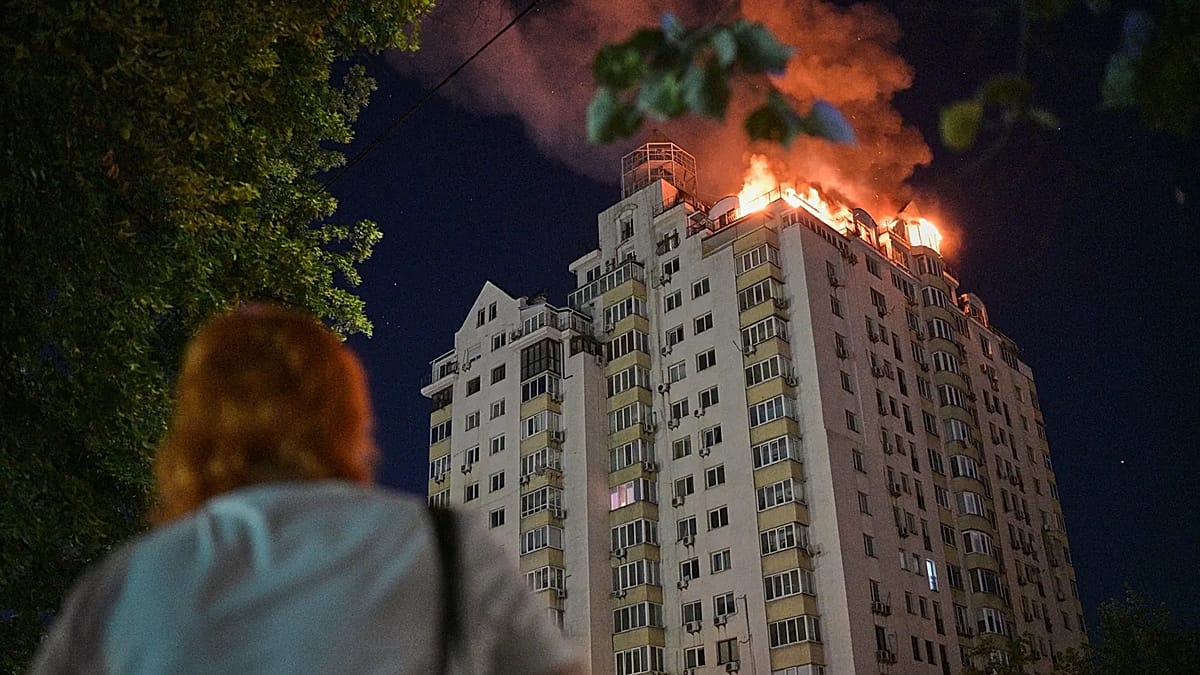
Luxury architecture is often associated with serenity, precision and beauty, yet moments of crisis reveal another defining value: resilience. The latest missile and drone assault on Kyiv, which killed two people and injured more than a dozen after warnings of a large-scale attack, is a stark reminder that the built environment is never separate from geopolitics. For architects, designers and high-end property developers, the tragedy also raises a pressing question: how should luxury spaces evolve when safety, adaptability and continuity become essential design priorities?
As Ukraine endures ongoing bombardment, the conversation around luxury architecture is shifting beyond aesthetics. In cities exposed to conflict risk, premium homes, hospitality projects and private developments are increasingly being evaluated not only for craftsmanship and exclusivity, but also for structural protection, energy independence and psychological comfort.
Luxury Architecture in an Age of Urban Uncertainty
The reported overnight attack on Kyiv involved drones, ballistic missiles and cruise missiles, affecting multiple districts across the wider region. While the immediate focus must remain on the human cost, such events also highlight how urban design responds under pressure. In this context, luxury architecture is being redefined by a new hierarchy of needs.
For decades, top-tier residential and hospitality design centered on expansive glazing, open-plan living, curated materials and seamless indoor-outdoor transitions. Today, in parts of Europe facing heightened security concerns, premium design briefs are beginning to include:
- Reinforced structural systems
- Protected lower-ground retreat spaces
- Advanced air filtration and ventilation
- Independent water and power backup systems
- Acoustic insulation for both comfort and protection
This does not mean luxury architecture is becoming bunker-like. Rather, it is becoming smarter, more discreet and more responsive. The highest standard of living now includes the ability to maintain security, privacy and daily function during disruption.
Why Resilience Is Becoming a Luxury Design Principle
Luxury design has always reflected the values of its era. In periods of stability, that may mean visual lightness and indulgence. In uncertain times, it means preparedness without compromising elegance. The renewed attacks on Kyiv underscore how quickly conditions can change, making resilience a premium feature rather than a hidden technical add-on.
From Statement Spaces to Safe Havens
High-end interiors are increasingly expected to do more than impress. They must support wellbeing during prolonged stress. In practical terms, that can translate into multipurpose rooms that convert into secure shelters, wellness spaces with filtered air systems, or private basements designed with the finish level of luxury lounges rather than utility zones.
Designers working in sensitive markets are also rethinking circulation patterns, material performance and emergency usability. A beautiful residence now needs intuitive fallback systems, durable finishes and zones that feel calming under pressure.
The Rise of Self-Sufficient Luxury Homes
As Ukraine and Russia both intensify long-range strikes on infrastructure and military-related targets, energy security has become a major concern across the region. That concern is filtering into residential design at the highest level.
Increasingly, luxury architecture includes self-sufficiency features such as:
- Battery storage integrated with solar systems
- Backup generators screened within landscape design
- Water purification and reserve storage
- Smart home systems with offline contingencies
- Secure communications infrastructure
These upgrades are no longer seen as purely technical. They are part of the luxury proposition, especially for clients who value continuity, privacy and independence.
Luxury Interiors After Crisis: Comfort, Control and Calm
Luxury interiors are also evolving in response to instability. In cities like Kyiv, where residents may face overnight alerts, explosions and interruptions, emotional durability matters as much as physical durability. Interior design at the premium level is increasingly about creating environments that restore a sense of control.
That means a growing emphasis on tactile natural materials, layered lighting, warm minimalism and layouts that support family cohesion. Rather than overt opulence, many affluent clients are moving toward interiors that feel grounded and protective.
Design Elements Gaining Relevance
- Heavier drapery and acoustic wall treatments for sound mitigation
- Stone, limewash and timber finishes that convey permanence
- Integrated storage for emergency supplies without visual clutter
- Flexible guest suites that can serve as family refuge rooms
- Spa-style bathrooms and wellness areas designed for stress relief
In this way, luxury interiors become part sanctuary, part high-performance environment. The visual language may remain refined, but the underlying goal is emotional and operational resilience.
What the Kyiv Attacks Mean for Future High-End Development
The war in Ukraine, now stretching beyond four years, has become Europe’s deadliest conflict since World War II. As attacks continue and military casualties mount, the ripple effects extend into real estate, planning and design culture. Developers, architects and interior specialists can no longer assume that prestige alone defines value.
For future-facing projects, especially in urban centers exposed to geopolitical risk, luxury architecture will likely be judged by a broader set of criteria:
- How well a property protects occupants
- Whether core systems can function during outages
- How discreetly security measures are integrated
- Whether interiors support psychological wellbeing
- How adaptable spaces remain over time
This shift may influence everything from penthouse planning to boutique hotel design and private estates. Even in markets far from direct conflict, affluent buyers are watching global instability closely. As a result, resilient design strategies first tested in higher-risk regions may soon influence mainstream luxury development worldwide.
The New Definition of Luxury Architecture
The latest deadly strikes on Kyiv are first and foremost a human tragedy, but they also illuminate a broader transformation in the design world. Luxury architecture is no longer defined solely by rarity, scale or visual impact. It is increasingly defined by foresight: the ability to create places that are beautiful, secure and enduring under extraordinary conditions.
For architects, designers and developers, the takeaway is clear. The future of luxury architecture lies in combining elegance with resilience, innovation with safety, and comfort with continuity. In a world shaped by uncertainty, true luxury may be the confidence that a space can protect, support and sustain life when it matters most.