Money trails often reveal more than political speeches ever can. The latest EU funds probe into a defunct far-right European Parliament group shows how financial oversight, reputation, and institutional trust can collide in ways that ripple far beyond Brussels.
European prosecutors have opened a new phase of scrutiny into the former Identity and Democracy group, examining allegations that €4.3 million in EU funds may have been misused between 2019 and 2024. While the political alliance itself has since been rebranded under a new banner, investigators appear focused on whether the underlying financial decisions complied with the rules that govern public money, procurement, and donations.
What the EU funds probe is about
At the center of the EU funds probe is a straightforward but serious question: were taxpayer-funded resources handled lawfully? According to the reported investigation, the European Public Prosecutor’s Office is examining whether public tender rules were bypassed when contracts were awarded and whether irregular donations were made using EU funds.
Searches have reportedly taken place across several countries, including France, Spain, Italy, and Belgium. That multinational scope underscores how cross-border political structures can create complex financial webs, especially when communications providers, contractors, and political entities operate in different jurisdictions.
Although the original parliamentary group no longer exists in the same form, the paper trail remains highly relevant. A rebrand may change the logo on a door, but it does not erase accounting records, procurement decisions, or legal obligations tied to public funds.
Why this investigation reaches beyond politics
This story is not only about ideology or parliamentary maneuvering. The EU funds probe also highlights a broader issue that resonates across luxury brands, luxury decor, and luxury design: trust is built on transparency, governance, and the credibility of institutions.
In premium markets, perception matters. Whether the subject is a couture house, a heritage furniture atelier, or a political movement, reputation can be one of the most valuable assets in play. Investigations involving procurement and misuse of funds tend to trigger questions about oversight, accountability, and operational ethics.
That matters because the modern European influence economy is deeply interconnected. Political visibility, cultural branding, event sponsorships, media strategy, and image management all shape how organizations are perceived. Even when the allegations concern parliamentary funds rather than consumer-facing products, the reputational impact can spread through adjacent networks of consultants, communications firms, and elite positioning strategies.
The key issues under review
- Possible breaches of public tender procedures
- Questions over the allocation of EU-funded contracts
- Alleged irregular donations using taxpayer money
- Cross-border searches involving offices and private residences linked to service providers
How the rebrand complicates the EU funds probe
One of the most striking aspects of the EU funds probe is that it concerns a political group that has effectively been replaced by a newer coalition. The former Identity and Democracy bloc has given way to Patriots for Europe, now a significant force in the European Parliament.
That transition creates both political and legal complexity. On the political side, supporters may frame the investigation as an attack on a movement rather than a neutral financial inquiry. On the legal side, authorities still need to determine whether prior conduct violated rules governing EU money, regardless of subsequent restructuring.
For observers, the lesson is clear: rebranding can refresh public messaging, but it does not automatically resolve legacy liabilities. In the same way that luxury brands must account for supply chain controversies or compliance failures even after a strategic repositioning, political entities remain exposed to earlier decisions that can resurface under investigative review.
Jordan Bardella, Marine Le Pen, and the timing of the case
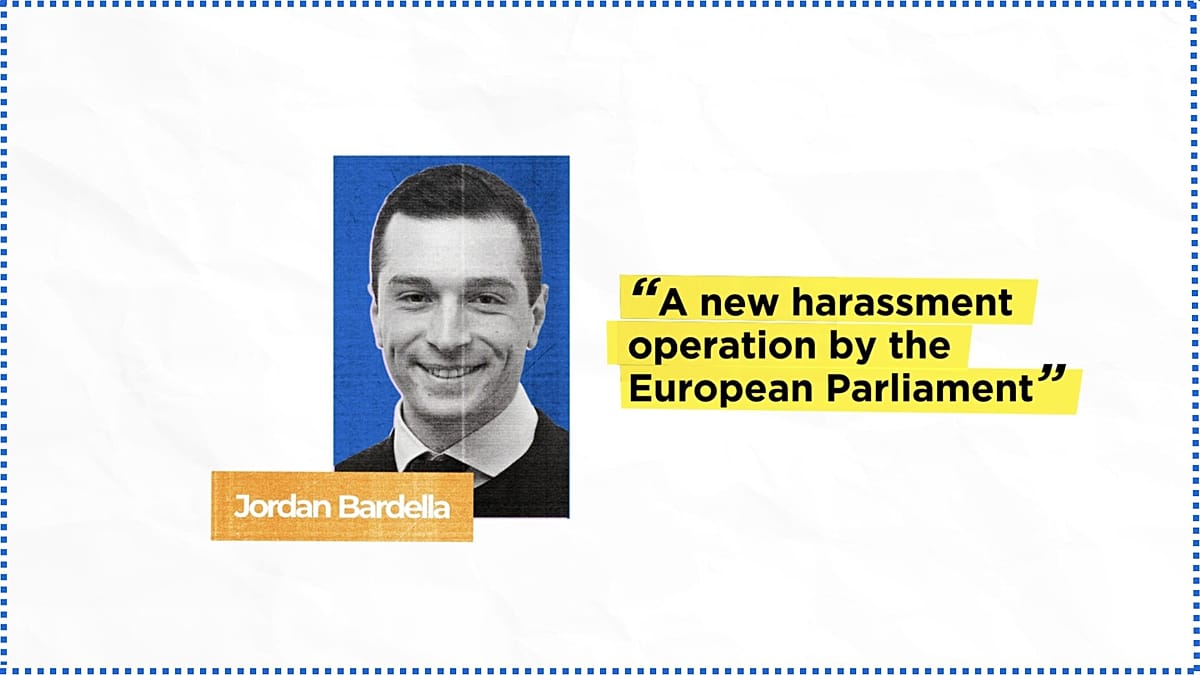
The EU funds probe lands at a particularly sensitive moment for France’s far-right leadership. Jordan Bardella, who has become one of the most visible faces of the movement, has reportedly criticized the inquiry as harassment. At the same time, Marine Le Pen faces a separate legal and political test that could affect her future eligibility for public office.
This timing amplifies the stakes. If leadership succession becomes more urgent, any investigation touching the movement’s finances or credibility will inevitably carry strategic consequences. Political momentum can be resilient, but legal scrutiny has a way of reshaping campaign narratives, donor confidence, and public trust.
For a party that presents itself as a challenger to distant elites, the optics of an EU funds probe are especially delicate. The anti-establishment message can be weakened if prosecutors frame the issue around stewardship of public money rather than ideological conflict.
Why financial governance matters in every high-visibility sector
The significance of the EU funds probe extends beyond parliamentary corridors because it speaks to a universal principle: institutions that rely on public or premium trust must show discipline in how they spend money.
That principle is familiar across sectors associated with status and influence:
- Luxury brands depend on authenticity, heritage, and clean governance to justify premium pricing.
- Luxury decor businesses often operate through bespoke contracts, where transparency and vendor selection are essential.
- Luxury design firms thrive on reputation, making compliance failures especially damaging.
Whether the audience is a voter, a client, or an investor, confidence rests on the belief that systems are fair, documented, and professionally managed. When that belief cracks, the consequences can outlast a news cycle.
What to watch next
As the EU funds probe develops, several questions will shape the next chapter:
- Will prosecutors present evidence of systematic procurement irregularities?
- Could the investigation widen to include additional contractors or decision-makers?
- How will the current political leadership contain reputational fallout?
- Will the case alter the standing of the broader far-right coalition in the European Parliament?
The answers may influence not only party strategy but also wider debates about accountability inside EU institutions.
Conclusion: the real meaning of the EU funds probe
Ultimately, the EU funds probe is about more than one parliamentary group or one political moment. It is a test of whether financial rules attached to public money are enforceable, even after rebrands, power shifts, and changing alliances.
For anyone watching European politics, influence networks, or reputation-driven sectors, the takeaway is simple: branding can evolve, but accountability follows the ledger. As this EU funds probe continues, the most important story may be not who changed names, but who can explain where the money went and why.