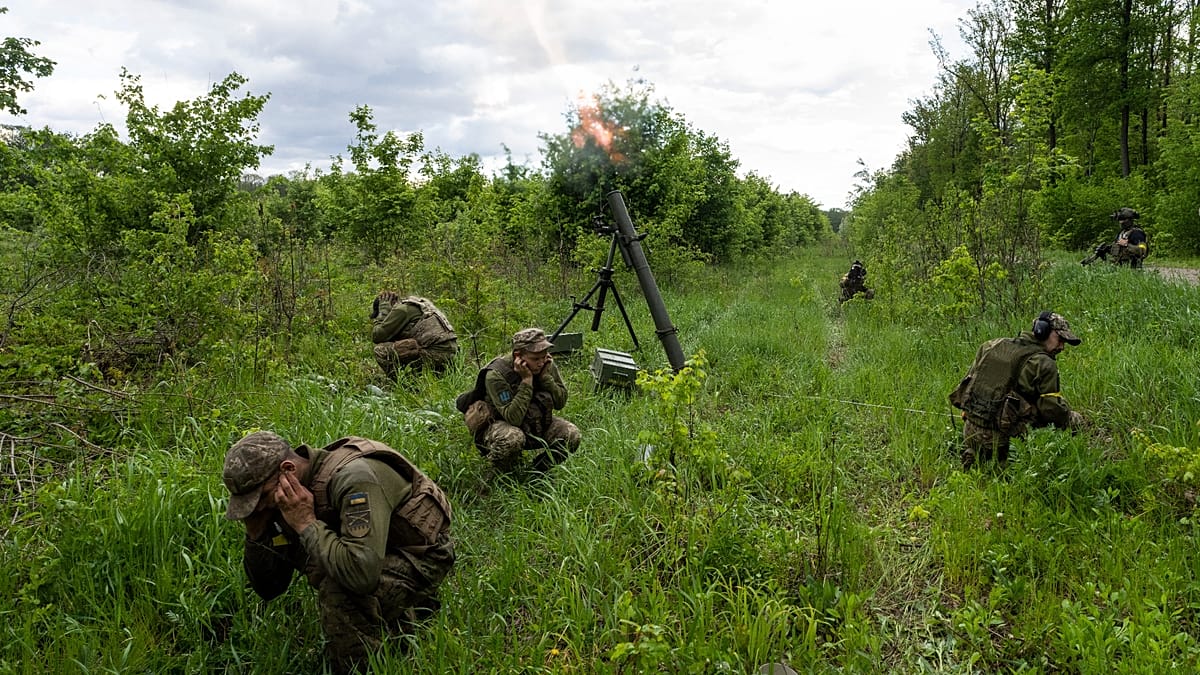
Luxury architecture is no longer defined only by beauty, scale, or exclusivity. Across Europe, shifting geopolitical realities are influencing how elite homes, hospitality spaces, and high-end interiors are imagined, built, and secured. Recent reporting on French volunteers training with Ukraine’s military intelligence-led International Legion underscores a broader truth: war and instability are changing priorities far beyond the battlefield, including in luxury architecture, luxury design, and luxury interiors.
For affluent homeowners, developers, and designers, resilience has become a premium feature. The result is a new era in which elegance must coexist with preparedness, privacy, and long-term durability.
Why Luxury Architecture Is Entering a New Security-First Era
The war in Ukraine, ongoing military mobilisation, and renewed NATO focus have sharpened awareness around civil protection and infrastructure resilience. While the source story centers on foreign volunteers training for combat, the wider European mood it reflects is equally relevant to luxury architecture. Wealthy clients are increasingly asking how their homes and properties can withstand disruption, whether from cyber threats, energy shortages, or physical insecurity.
This does not mean luxury architecture is becoming bunker-like in appearance. Instead, the shift is subtle and sophisticated. Architects are integrating fortified thinking into refined residential and hospitality environments.
Key features now shaping high-end projects
- Discreet safe rooms and hardened utility zones
- Advanced perimeter surveillance integrated into landscape design
- Backup power systems with battery storage and generators
- Independent water filtration and storage solutions
- High-performance glazing for security, acoustics, and thermal control
- Private wellness and retreat spaces that double as protected zones
In this context, luxury architecture is evolving from a status symbol into a complete lifestyle shield, designed to preserve comfort during uncertainty.
The Influence of Geopolitics on Luxury Design
Luxury design has always responded to cultural shifts, but today’s changes are unusually practical. The renewed attention on defence, intelligence, and national security across Europe is influencing the materials, technologies, and planning philosophies used in premium spaces.
Developers and private clients now favor design solutions that are:
- Flexible: rooms can shift function quickly, from entertaining to working to sheltering.
- Private: layouts reduce exposure and improve discretion.
- Autonomous: systems support off-grid or semi-independent living.
- Digitally secure: smart homes are being upgraded with stronger cyber protections.
This is particularly relevant as the Ukrainian military intelligence ecosystem mentioned in the source article spans not only defence operations but also construction, military technology, and cyber security. That combination reflects a larger European reality: physical design and digital protection are now deeply connected.
From visible opulence to intelligent luxury
Where past luxury design often celebrated openness and spectacle, the new mood favors controlled access, layered privacy, and understated strength. Hidden doors, compartmentalized circulation, acoustic insulation, and anti-surveillance detailing are increasingly attractive in elite residences.
In short, luxury design is becoming smarter, quieter, and more strategic.
How Luxury Interiors Are Responding to a More Uncertain World
Luxury interiors are also changing in response to instability. Clients still want comfort, craftsmanship, and beauty, but they now value emotional security just as highly. Interiors are being designed to soothe, insulate, and protect.
This has led to a rise in spaces that feel calm and cocooning, while also serving practical resilience goals. Think tactile natural materials, layered lighting, superior air purification, and acoustically protected rooms that support concentration and privacy.
Top interior trends linked to resilience
- Multi-use private suites for work, rest, and secure communication
- Wellness rooms with medical-grade air and water systems
- Fire-resistant and impact-resistant material selections
- Soundproofed offices and media rooms
- Storage integrated for emergency supplies without visual clutter
- Biophilic elements that reduce stress and improve well-being
In this way, luxury interiors are becoming sanctuaries. They are no longer just curated for aesthetics, but for continuity of life during periods of disruption.
Ukraine, Europe, and the Rise of Defensive Elegance
The report on French volunteers joining training with Ukraine’s International Legion offers a window into a continent under pressure. International participation, military reorganisation, language barriers in operational settings, and major NATO aid commitments all point to a prolonged climate of tension. For the luxury property sector, this creates a new design language: defensive elegance.
Defensive elegance does not reject luxury. It refines it. It asks architects and designers to merge prestige with preparedness, and indulgence with intelligence. In cities from Paris to Warsaw, and in coastal and alpine enclaves favored by global wealth, this approach is already influencing briefs for new villas, branded residences, boutique hotels, and private estates.
What high-net-worth clients are prioritising now
Many premium buyers and investors are reassessing what makes a property truly valuable. Increasingly, the answers include:
- Location stability and access to secure infrastructure
- Energy independence and utility redundancy
- Construction quality that supports resilience
- Privacy protections in both physical and digital form
- Interior environments that support health, focus, and calm
These expectations are expanding the definition of luxury architecture and reshaping the entire premium design conversation.
The Future of Luxury Architecture in a Volatile Europe
Luxury architecture will continue to embrace beauty, craftsmanship, and innovation. But in the years ahead, its most important hallmark may be how seamlessly it protects the people inside. As Europe confronts prolonged geopolitical tension, designers who can merge aesthetics with security will stand out.
The lesson is clear: luxury architecture, luxury design, and luxury interiors are entering a phase where resilience is aspirational. The most desirable spaces will not merely look exceptional. They will be intelligent, adaptable, and built for a world that values peace but plans for uncertainty.
For developers, architects, and discerning homeowners, that is the new benchmark. In this changing landscape, luxury architecture is not just about how a space appears, but how deeply it can safeguard modern life.