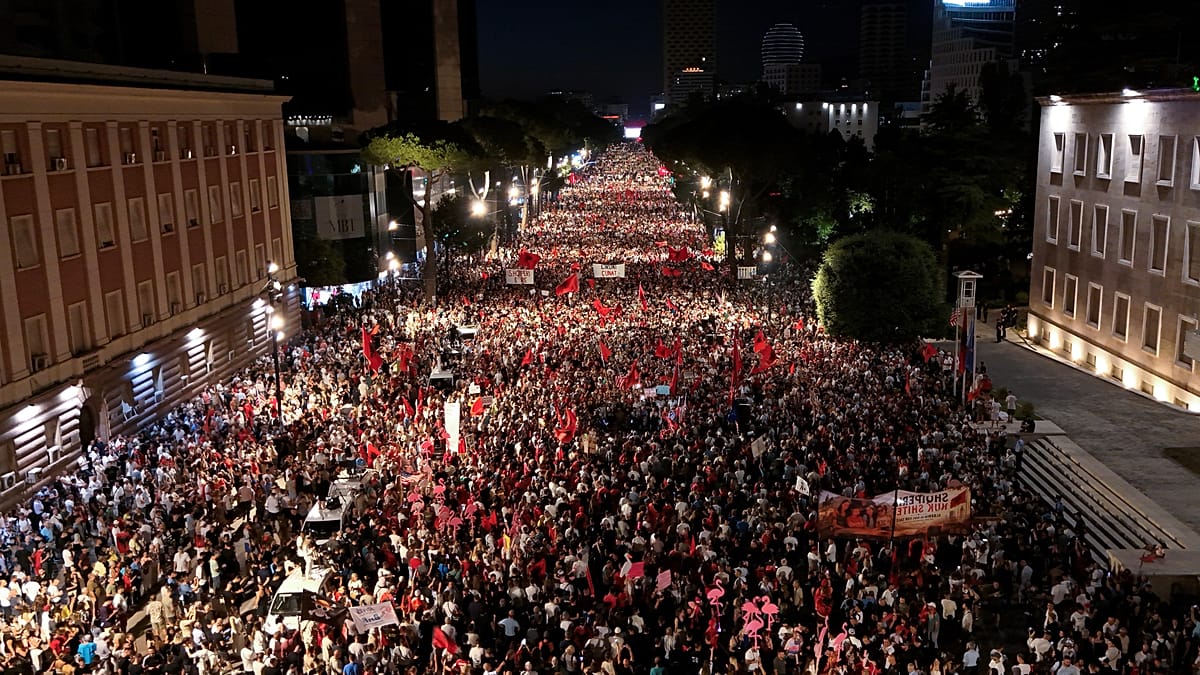
In Albania, a planned coastal mega-development has become far more than a design or tourism story. The Pink Flamingo protests have turned a controversial luxury resort project into an international flashpoint over architecture, ecology, governance and the future of high-end development in protected landscapes.
What began as environmental opposition to a proposed Trump-linked tourist complex in southwestern Albania has expanded into one of the country’s largest anti-government movements in years. For the luxury architecture and design world, the unrest raises a pressing question: how should ambitious destination projects be conceived when natural heritage, public trust and political legitimacy are all at stake?
Why the Pink Flamingo protests matter for luxury architecture
The Pink Flamingo protests center on plans for a high-end resort and hotel development associated with Ivanka Trump and Jared Kushner in the protected area of Zvërnec, near the Adriatic coast. Protesters argue that the project threatens sensitive ecosystems, including lagoon habitats connected to migratory bird routes, while critics also accuse the Albanian government of pushing the scheme forward without sufficient transparency.
From a luxury architecture perspective, this is not simply a local planning dispute. It reflects a broader global tension between:
- Exclusive hospitality development and environmental stewardship
- Iconic coastal design and protected landscapes
- Investment-led regeneration and public accountability
- Fast-tracked approvals and community consent
In today’s premium real estate and hospitality market, the most successful projects are no longer judged only by scale, branding or return on investment. They are increasingly evaluated by ecological intelligence, design sensitivity and social legitimacy.
A resort project that sparked national outrage
According to reports, tens of thousands of demonstrators filled the streets of Tirana in the 35th straight day of mobilization against the development. The movement has been dubbed the “Pink Flamingo Revolution,” referencing the migratory birds linked to the protected coastal environment where the resort is planned.
The scale of the response shows how deeply luxury development can resonate beyond the design industry. Protesters carried banners reading “Albania is not for sale” and “Repeal the law on protected areas,” signaling that opposition extends beyond the physical resort itself to the legal and political framework enabling it.
The proposed investment, estimated at roughly $4.6 billion, reportedly includes a luxury hotel and a broader high-end tourism vision that also involves Sazan Island, a former military zone targeted for transformation into an elite destination. Such a dramatic repositioning of land from historic and ecological significance to luxury leisure use can be compelling on paper, but only if planning is trusted and impact is credibly addressed.
How design becomes political
The Pink Flamingo protests illustrate a reality many developers underestimate: design is never neutral when it lands in a contested place. A waterfront resort may promise economic growth, international prestige and elevated hospitality standards, yet it can quickly become a symbol of exclusion if residents feel their coastline is being privatized or their concerns dismissed.
In Tirana, demonstrators used powerful visual symbolism, including giant pink flamingos and a concrete birthday cake, to suggest that protected nature risks being buried under speculative construction. For architects and interior designers, that imagery is a reminder that material luxury means little if the project narrative becomes one of environmental loss.
What luxury design can learn from the Albania controversy
The Pink Flamingo protests offer important lessons for the future of luxury architecture, luxury interiors and destination design. In sensitive regions, a premium project cannot rely on branding alone. It must prove that luxury and landscape can coexist.
1. Protected settings demand low-impact design
Building in ecologically significant areas requires more than polished sustainability claims. Developers need rigorous environmental studies, site-specific master planning and a visible commitment to preserving biodiversity, shoreline health and habitat continuity.
Best practices may include:
- Limiting built density and visual intrusion
- Using elevated or reversible construction strategies where appropriate
- Prioritizing native planting and water-sensitive landscaping
- Reducing hardscape that disrupts fragile coastal systems
2. Transparency is now part of luxury
In ultra-premium hospitality, discretion has long been considered a virtue. But modern luxury consumers, investors and host communities increasingly want clarity about land deals, permitting, environmental standards and who benefits economically.
The backlash seen in the Pink Flamingo protests suggests that opacity can damage a project’s value before construction is even complete. Trust has become a design asset.
3. Interiors must reflect place, not erase it
Luxury interiors in emerging resort destinations often fall into a familiar pattern: imported materials, generic global glamour and aesthetics detached from local context. Yet the most resilient high-end projects draw from regional craft, climate, textures and cultural memory.
In a place like coastal Albania, that could mean interiors inspired by stone, salt, light, vernacular forms and Mediterranean restraint rather than a placeless luxury formula. Contextual design does not solve political conflict on its own, but it can signal respect for the destination rather than domination of it.
Escalation in Tirana and the reputational risks for developers
Recent events have intensified the stakes. Demonstrations that were largely peaceful reportedly escalated into clashes with security forces, with tear gas, water cannons, arrests and allegations of disproportionate police force. Human rights concerns have since added another layer to the controversy.
For any luxury brand, architect or investor linked to a development under this level of scrutiny, reputational exposure becomes significant. Even a visually spectacular project can be overshadowed by images of civil unrest, legal controversy and environmental opposition.
That is why destination makers must think beyond renderings and market positioning. They must ask whether the project is sustainable not only ecologically, but socially and politically.
The future of the Pink Flamingo protests and luxury coastal development
The Pink Flamingo protests are ultimately about more than one Albanian resort. They point to a changing standard for luxury development worldwide: beauty is no longer enough, and exclusivity alone is not a public good.
If coastal hospitality projects want long-term legitimacy, they must integrate conservation, transparent governance and community confidence from the outset. The clearest takeaway from the Pink Flamingo protests is simple: in the modern luxury landscape, the most valuable design is the kind that protects the place that makes it desirable in the first place.