


Inside Norway’s Royal Palace Moment: How Crown Princess Mette-Marit’s First Post-Transplant Appearance Reframed Modern Royal Interiors
When the first new image of Crown Princess Mette-Marit after her lung transplant was released, public attention naturally turned to her health. But for readers interested in luxury architecture, luxury design, and luxury interiors, the photographs also offered a rare glimpse into how a modern royal palace can project comfort, privacy, and understated prestige at a deeply personal moment.
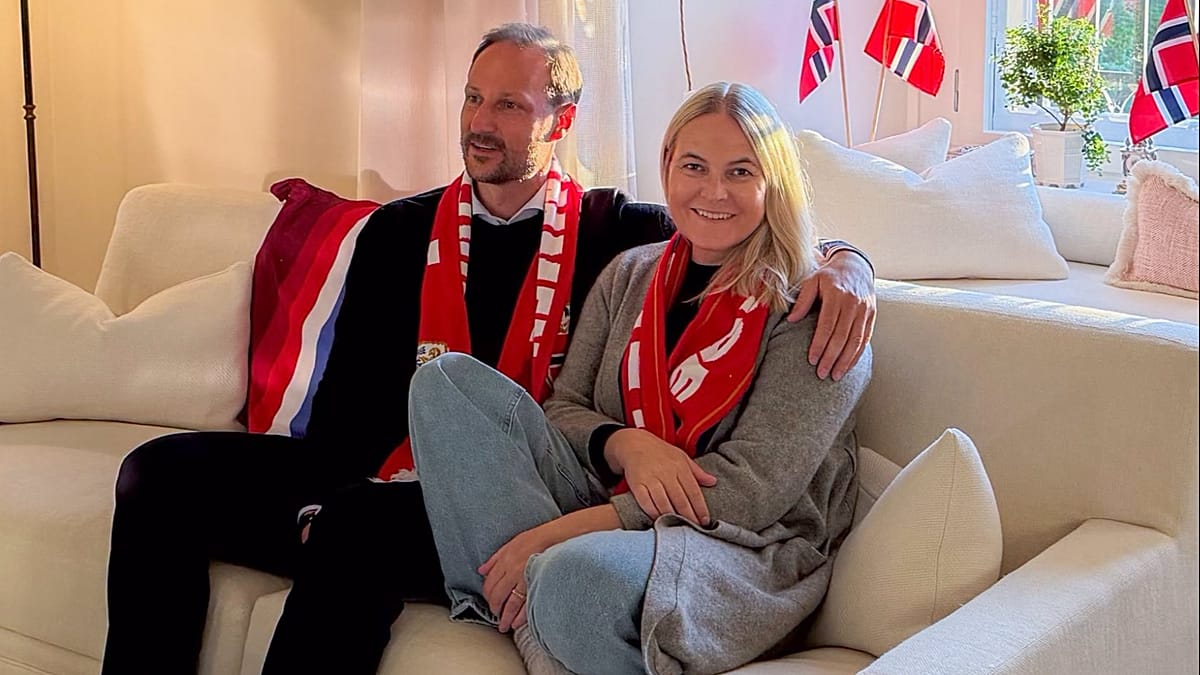
The image of Crown Princess Mette-Marit seated beside Crown Prince Haakon inside the Norwegian royal residence did more than mark a milestone in her recovery. It highlighted the power of interior space to communicate resilience, intimacy, and national symbolism without excessive grandeur. In an era when elite homes are increasingly defined by wellness, discretion, and emotional functionality, this royal scene feels unexpectedly relevant.
Crown Princess Mette-Marit and the Quiet Language of Royal Interiors
The newly released photographs show Crown Princess Mette-Marit and Crown Prince Haakon in a domestic setting within the palace as they watched Norway secure a historic World Cup victory over Brazil. A second image captured the couple looking out toward cheering crowds outside, blending private recovery with public celebration.
While the palace did not provide a design breakdown of the room, the visual messaging is clear: this is not ceremonial excess for its own sake. Instead, the setting appears to prioritise calm, softness, and human scale. That matters, especially in the context of Crown Princess Mette-Marit’s recent medical ordeal.
According to the palace and international reporting, the 52-year-old royal underwent a successful lung transplant in June after her pulmonary fibrosis worsened significantly. She had been living with the condition since 2018, scaling back public duties as symptoms progressed. The image release marked the first public sighting since surgery, although reports indicated she had not yet been discharged from hospital.
What the Palace Setting Reveals About Luxury Design Today
For design observers, the photographs underscore a major shift in high-end residential aesthetics: true luxury now often lies in emotional intelligence rather than opulence. The room surrounding Crown Princess Mette-Marit appears to support that idea through visual restraint and comfort-led composition.
1. Soft seating as a status symbol
The couch-centered composition is significant. In elite interiors, plush and inviting seating has become a marker of sophistication because it suggests ease rather than display. Instead of presenting a throne-like environment, the palace image uses familiar domestic furniture to humanise royalty.
2. Wellness-driven interiors
In the aftermath of a serious health procedure, every design detail takes on new meaning. Air quality, acoustics, natural light, and textile softness are all core principles in wellness architecture. Even without explicit architectural plans, the imagery around Crown Princess Mette-Marit aligns with a broader luxury trend toward restorative environments.
3. Controlled grandeur
Modern royal residences often balance history with liveability. The setting suggests a curated blend of formality and warmth, proving that palatial interiors can feel relevant when they avoid visual overload. This is increasingly mirrored in luxury homes worldwide, where clients want heritage character without sacrificing intimacy.
Why This Moment Resonates Beyond Royal News
The public story around Crown Princess Mette-Marit is layered. Her health struggles, the palace’s cautious updates, and the wider pressures surrounding the Norwegian monarchy have made every official image carry extra significance. Yet from a design and architecture perspective, these photographs also speak to something universal: the home as a place of recovery.
In premium residential design, spaces are no longer judged solely on aesthetics. They are also evaluated by how they support:
- Physical healing
- Emotional calm
- Privacy from public life
- Connection to meaningful events
- A sense of belonging during vulnerable periods
That is precisely why the images of Crown Princess Mette-Marit feel so compelling. They do not just document presence; they frame an environment that appears designed, or at least presented, to protect wellbeing.
Luxury Interiors as a Tool for Narrative and Reputation
Royal households understand that interiors are never neutral. Every room shown to the public helps shape perception. In the case of Crown Princess Mette-Marit, the choice to release an image from a calm, seated, lived-in interior rather than a formal reception space subtly repositions the monarchy in more relatable terms.
This approach aligns with broader design communication trends in luxury branding:
- Authenticity over spectacle: Audiences respond more positively to believable, emotionally grounded settings.
- Domestic warmth over institutional stiffness: Soft interiors suggest trust, humanity, and continuity.
- Selective visibility: Revealing just enough of a private space can create intimacy while preserving mystique.
For architects and interior designers, this is a useful case study in how space influences public narrative. A single sofa scene can express stability more effectively than a grand staircase ever could.
The Scandinavian Influence on Royal Space
Although the palace remains a royal property with ceremonial importance, the imagery is also consistent with Scandinavian design values. Norway’s design culture is widely associated with muted palettes, natural materials, practical elegance, and uncluttered composition. Those principles translate well in moments requiring dignity without theatricality.
Within that context, Crown Princess Mette-Marit’s first post-transplant appearance becomes more than a news update. It becomes a visual example of how Nordic-informed luxury interiors can communicate:
- Serenity without coldness
- Prestige without excess
- Function without losing beauty
- Privacy without appearing withdrawn
That combination is especially influential in today’s luxury property market, where buyers increasingly seek homes that feel like sanctuaries rather than showrooms.
A Royal Interior Framed by Recovery, Privacy, and Modern Taste
There is, of course, a serious human story behind these images. Crown Princess Mette-Marit has faced years of health challenges linked to pulmonary fibrosis, and the palace’s update arrives amid broader scrutiny around the royal family. Still, the visual framing of her first public image after surgery offers insight into how interior environments can soften, dignify, and contextualise major life events.
For those working in luxury architecture and luxury interiors, the lesson is clear: the most memorable spaces are not always the most ornate. They are the ones that meet the moment with grace.
As the world continues to follow Crown Princess Mette-Marit’s recovery, these photographs leave a lasting design impression. They show that in a palace, as in any exceptional home, true luxury is often found in comfort, quiet control, and spaces that allow people to heal while remaining connected to the world outside.