

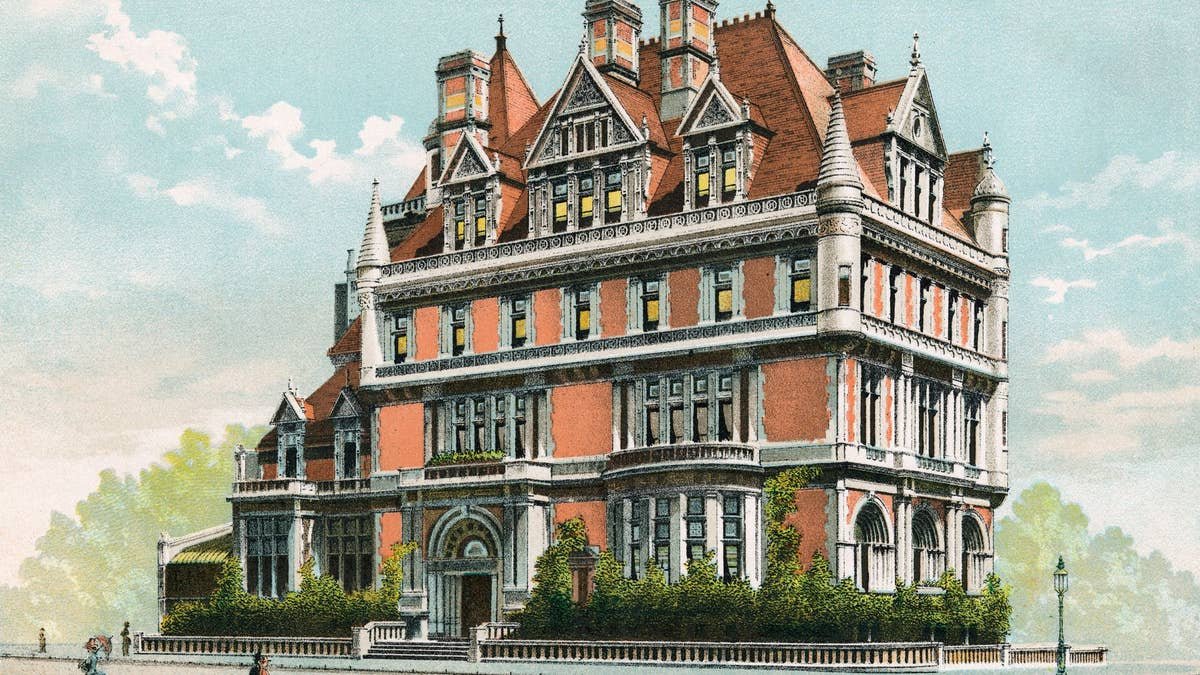
Few stories capture the rise and fall of celebrity homes quite like the Vanderbilt dynasty’s vanished mansions. Once stretching from Staten Island to Fifth Avenue in a display of extraordinary wealth, these luxury homes defined New York’s Gilded Age before many were demolished for offices, retail landmarks, and soaring apartment buildings.
Today, the Vanderbilt portfolio remains one of the most fascinating chapters in American real estate history. Long before modern luxury celebrity homes became a fixture of entertainment media, the Vanderbilts turned their residences into statements of status, architecture, and ambition — only for progress, taxation, and commercial development to erase much of their legacy.
The origins of the Vanderbilts’ celebrity homes empire
The family’s property story began in the 1830s with Cornelius Vanderbilt, the railroad and shipping titan whose fortune transformed the family into one of America’s wealthiest dynasties. Their earliest major residence stood on Staten Island, where the Commodore built a striking home on family land in 1839.
That first mansion reportedly featured Gothic-inspired styling, a formal entrance with fluted columns, and a grand portico — a sign of what Vanderbilt real estate would become. Even at this early stage, the family was establishing a pattern seen in many elite celebrity homes today: building residences not only for comfort, but also for image, scale, and social standing.
But growth changed everything. As the family business expanded, the Vanderbilts left Staten Island for Manhattan, chasing proximity to power, commerce, and society. Their move reflected a familiar urban real estate cycle: affluent families seek privacy and prestige, then relocate again as neighborhoods become denser and more commercial.
From farmhouse roots to city palaces
Several Vanderbilt descendants also grew up in large Staten Island residences, including the family’s 24-room farmhouse known as the White House in New Dorp. Though hardly modest, it represented a more transitional stage before the family fully embraced the monumental urban style that would later define their name.
The next significant step came with a residence on Washington Place in Manhattan. From there, the family’s ambitions rose alongside the city itself.
Why Fifth Avenue became the ultimate address for luxury homes
By the late 19th century, the Vanderbilts had become synonymous with Fifth Avenue. In fact, one stretch became so heavily associated with the family’s mansions that it was widely referred to as Vanderbilt Row. These were not simply townhouses. They were urban palaces — some of the most extravagant luxury homes America had ever seen.
The shift uptown followed the logic of elite New York life. As development moved north, wealthy families moved with it, always searching for quieter surroundings and grander plots. The Vanderbilts were among the clearest examples of this pattern.
- They built at scale, often commissioning richly ornamented façades and lavish interiors
- Their homes served as family residences and social theaters
- Location was as important as architecture, with Fifth Avenue symbolizing unmatched prestige
For readers interested in heritage property trends and how grand residences shape public imagination, this history sits naturally alongside wider coverage of lifestyle and property features on DailyDigest.ie and broader media analysis at MediaDigest.ie.
More than mansions — symbols of an era
These residences reflected the Gilded Age at its most theatrical. Their sheer scale helped set an early template for the fascination we still have with luxury celebrity homes. While today’s A-list estates might feature wellness wings, screening rooms, and gated compounds, the Vanderbilts pursued the same essential goal: using domestic architecture to project wealth, taste, and influence.
Why so many Vanderbilt celebrity homes were destroyed
The surprising twist is that most of these extraordinary celebrity homes did not survive for long. Despite their beauty and status, many were demolished within a few decades. The reason was not neglect alone — it was New York’s relentless appetite for reinvention.
As Manhattan land values rose, the economic case for keeping a single-family mansion on Fifth Avenue weakened dramatically. Developers could earn far more by replacing one private residence with a commercial building, luxury retail site, hotel, or apartment tower.
- Commercialization: Fifth Avenue became increasingly valuable as a business corridor
- Changing tastes: Gilded Age ornament fell out of fashion during the 1920s and beyond
- Rising taxes: Income and real estate taxes made enormous private residences harder to justify
- New housing models: “Mansions in the sky” offered prestige with less maintenance
In other words, the same forces that once pushed the wealthy uptown eventually pushed them out. It is a pattern that still shapes premium urban real estate, from legacy townhouses to contemporary luxury homes in global cities.
The preservation problem
Another crucial factor was timing. New York’s Landmarks Preservation Commission was not established until 1965, after many Vanderbilt mansions had already been razed. Without robust legal protections, architectural masterpieces were vulnerable to market pressure and changing public taste.
That tension between preservation and profit remains deeply relevant. It appears not only in old-money neighborhoods but also in coverage of redevelopment, planning debates, and city transformation across outlets such as NewsDigest.ie and cultural media reporting on MediaDigest.ie’s property and trends coverage.
What stands in their place today
One of the most striking aspects of the Vanderbilt story is what replaced these mansions. In many cases, office towers, university buildings, luxury retail stores, and commercial properties now occupy the sites where some of America’s finest luxury celebrity homes once stood.
That contrast reveals how quickly urban identity can change. A palace-like townhouse can become a flagship store. A family estate can become institutional space. A private world of drawing rooms and carriage entrances can vanish into the commercial fabric of the city.
For fans of celebrity homes, the Vanderbilt legacy offers something more than nostalgia. It shows that prestige real estate is never just about architecture. It is also about economics, social mobility, urban planning, and the cultural meaning attached to an address.
The enduring appeal of the Vanderbilts’ luxury homes
The fascination with the Vanderbilts persists because their residences represented the peak of private grandeur in New York. Even in absence, these luxury homes continue to shape how we think about elite living, legacy wealth, and the fleeting nature of status symbols in fast-changing cities.
In the end, the Vanderbilt mansions remain a defining example of how celebrity homes can become both cultural landmarks and casualties of progress. Their story is a reminder that even the grandest luxury celebrity homes are only as permanent as the city around them allows them to be.
Takeaway: The Vanderbilt saga proves that celebrity homes are never just private spaces — they are reflections of power, fashion, and economic change. And in New York, even the most spectacular luxury homes can disappear when land, money, and modernity collide.