Architecture news rarely captures the complexity of urban life as clearly as this new exhibition from the Canadian Centre for Architecture. With a major presentation dedicated to Álvaro Siza, the CCA is inviting visitors to look beyond iconic buildings and into the layered, imperfect, and deeply human processes that shape great cities.
On view in the CCA’s Main Galleries from May 21, 2026, to January 10, 2027, The fortune of the city is that it has never been perfect examines the urban work of the celebrated Portuguese architect. For readers interested in luxury architecture, luxury design, and the cultural ideas influencing high-end living environments, the exhibition offers something especially valuable: a rare look at how elegance in the built world can emerge from context, restraint, and intelligent city-making rather than spectacle alone.
Architecture News Spotlight: Inside the CCA’s Álvaro Siza Exhibition
Curated by Giovanna Borasi with Laura Aparicio Llorente as curatorial assistant, the exhibition focuses on Siza’s approach to working with existing urban environments. Instead of treating the city as a blank canvas, Siza studies what is already there—its history, topography, infrastructure, and daily rhythms—before introducing new forms.
That perspective makes this one of the most compelling architecture exhibitions of the year. It positions Siza not simply as a designer of refined buildings, but as a thinker concerned with neighborhoods, public space, and the continuity of urban life.
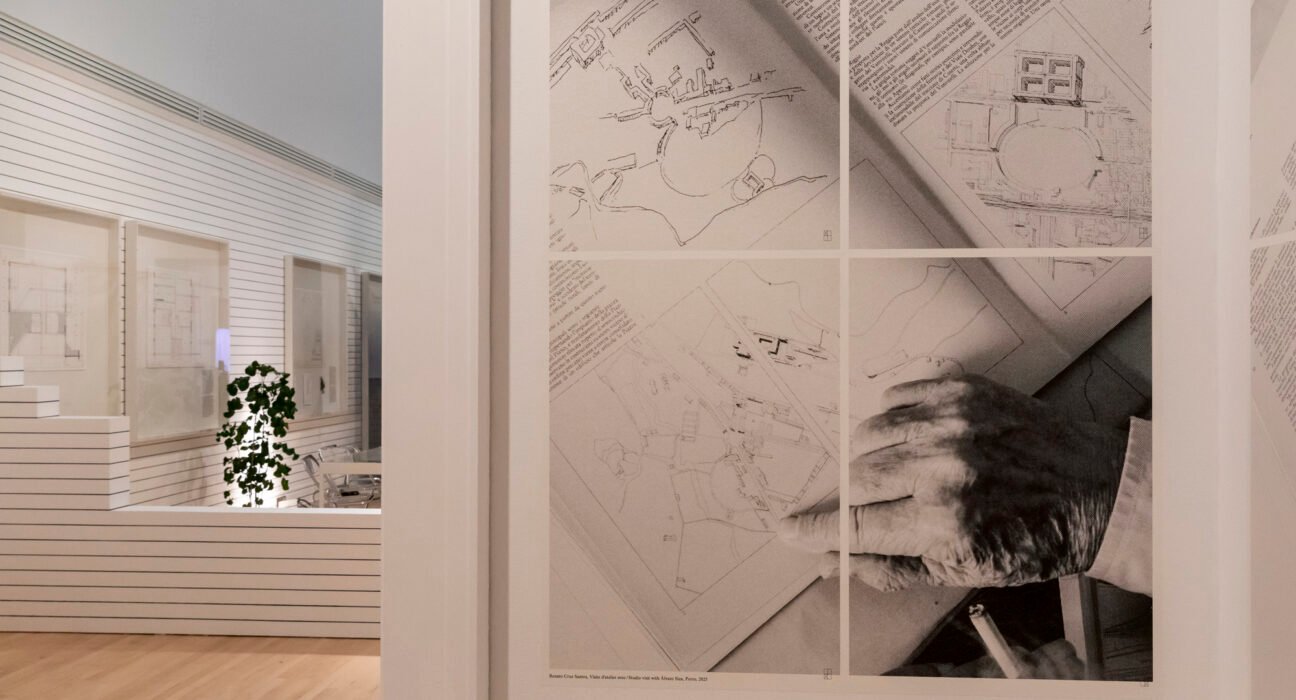
The show draws extensively from the Álvaro Siza archive donated to the CCA and includes:
- Original drawings and sketchbooks
- Architectural models
- Photo collages
- Photographs of completed projects
- Archival and research material linked to broader architectural discourse
Also featured are works by noted photographers including Gabriele Basilico, Nuno Cera, Giovanni Chiaramonte, Alessandra Chemollo, and Balthazar Korab, offering multiple visual interpretations of Siza’s buildings and urban settings.
Why Álvaro Siza’s Urban Thinking Still Matters
In today’s architecture news cycle, many projects are framed through novelty, scale, or luxury finishes. Siza’s work offers a powerful counterpoint. His method suggests that lasting design value comes from reading a place carefully and responding with precision.
Rather than proposing universal solutions, Siza develops project-specific interventions. He observes how a site functions, how people move through it, and how built form has accumulated over time. This practice is especially relevant now, when cities are grappling with growth, preservation, housing pressure, and climate adaptation.
For luxury home and luxury decor audiences, there is an important takeaway here: truly elevated design is not only about premium materials or visual drama. It is also about proportion, atmosphere, continuity, and a sophisticated relationship between architecture and its setting.
A Design Philosophy Rooted in Context
The exhibition emphasizes several recurring ideas in Siza’s work:
- Respect for existing conditions — He treats the surrounding city as a source of knowledge rather than an obstacle.
- Attention to scale — Interventions are calibrated to fit both the site and the social life around them.
- Urban continuity — New architecture should contribute to the city’s evolution, not erase its memory.
- Observation as design method — Drawing, walking, and close reading of place are central to the process.
These principles resonate far beyond institutional architecture. They are equally meaningful in luxury design, where the most successful spaces often feel inevitable, balanced, and deeply connected to their environment.
From Archive to Exhibition: What Visitors Will See
One of the most exciting aspects of this architecture news story is the depth of material on display. The CCA is using the Siza archive to build a richer narrative around city-making, showing not just finished work but also the thinking behind it.
Visitors can expect an exhibition experience that reveals the architect’s process in detail. Sketchbooks, notes, and models help explain how ideas develop from observation into form. This makes the exhibition especially appealing to architects, design collectors, students, and anyone interested in how timeless spaces are conceived.
The presentation also situates Siza within a wider intellectual network. Materials connected to figures such as Aldo Rossi, Gene Summers, James Stirling, Kenneth Frampton, and Jean-Louis Cohen help frame his work within broader debates about architecture, planning, and the city.
The Accompanying Publication
The exhibition is paired with a publication built around an oral history recorded with Siza over several days in Porto. It brings together archival documents, newly transcribed sketchbook notes, and previously unpublished material. For followers of architecture news and architectural history, that publication may become as important as the exhibition itself, offering fresh insight into Siza’s voice and methods.
What This Means for Luxury Architecture and Design
Although the exhibition is grounded in urbanism, its themes strongly connect to the world of luxury architecture and luxury home decor. The finest residential and hospitality spaces increasingly draw value from authenticity, context, and craftsmanship rather than excess alone.
Siza’s approach reinforces several ideas shaping contemporary high-end design:
- Luxury can be quiet, intellectual, and materially restrained
- Context-sensitive architecture ages better than trend-driven statements
- Public space and urban quality influence private luxury living
- Design excellence begins with careful study, not visual noise
For developers, interior designers, and design-savvy homeowners, this is a timely reminder that refined environments are often born from discipline. The relationship between a building and its city can be just as important as its finishes, furnishings, or views.
Architecture News in Context: A Strong Season for Global Design Exhibitions
This exhibition arrives amid a notable run of international architecture exhibitions. Recent highlights include Jean Nouvel’s exhibition at the Museum of Art Pudong in Shanghai, Barcelona’s Parlour Gardens: Dreams from the Rooftop, and the Danish Architecture Center’s presentation of Dorte Mandrup’s PLACE. Together, these shows point to a larger cultural shift in architecture news: a renewed interest in context, landscape, authorship, and the social role of design.
The CCA’s Siza exhibition stands out because it tackles one of the discipline’s most urgent questions—how to transform cities without flattening their complexity. In that sense, it is not only a retrospective look at an architect’s work, but also a forward-looking reflection on how better urban futures might be shaped.
Conclusion
This architecture news story is about much more than a museum show. The CCA’s exhibition on Álvaro Siza highlights an approach to design that feels increasingly essential: patient, observant, historically aware, and responsive to real urban life. For anyone invested in luxury architecture, luxury home design, or the future of beautiful cities, it offers a compelling lesson—perfection is not what makes cities great; depth, continuity, and thoughtful intervention do.
As architecture news continues to spotlight bold forms and rapid development, Siza’s work reminds us that the most enduring design often begins by listening to the city that already exists.