
Architecture news rarely captures a contradiction as sharply as this: in one of Europe’s wealthiest nations, the question is not simply access to housing, but the overconsumption of living space itself. At the 2027 Venice Architecture Biennale, the Luxembourg Pavilion will confront that tension head-on with Excess! On the Overconsumption of Living Space, a curatorial proposal that turns square meters, inequality, and ecological limits into a powerful architectural debate.
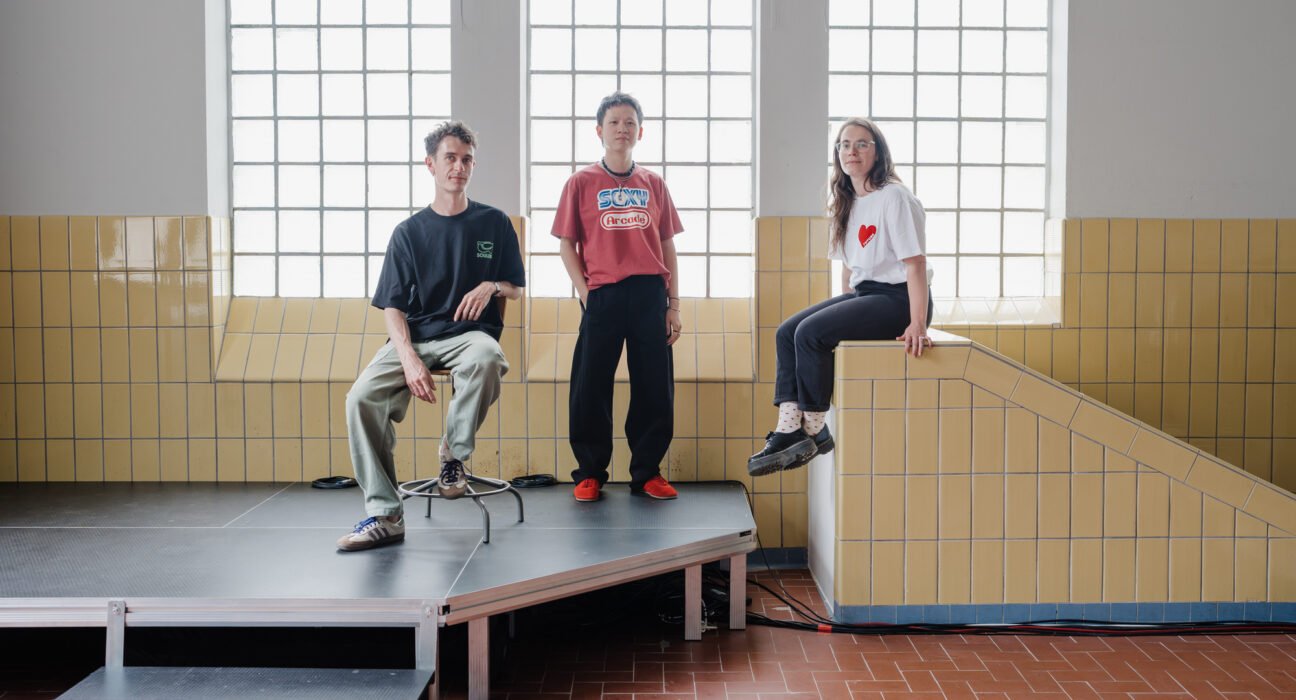
Selected by a professional jury, the pavilion will be curated by housing expert Céline Zimmer alongside architects and researchers Bùi Quý Sơn and Paul-Antoine Lucas, co-founders of the critical spatial practice Exutoire. Their exhibition will examine how unequal access to space reflects larger social and environmental crises, placing Luxembourg and Vietnam in dialogue to question how architecture, policy, and culture shape the way people live.
Architecture News From Venice: Why Luxembourg’s Pavilion Matters
This piece of architecture news stands out because it moves beyond aesthetics and spectacle to address one of the most urgent design issues of our time: how much space we consume, who gets it, and what that means for the planet.
The Luxembourg Pavilion, located on the first floor of the Sale d’Armi in the Arsenale, will open as part of the Biennale Architettura 2027 on May 8, 2027. Its chosen theme, Excess!, investigates the inequitable distribution of living space as both a housing issue and an ecological one. In luxury architecture circles, conversations often focus on scale, amenities, and exclusivity. This pavilion flips that script by asking whether bigger living environments always represent progress.
That framing is especially significant in Luxembourg, where housing is shaped by a dual system: a costly private market on one side and a tightly regulated subsidized sector on the other. Against that backdrop, the exhibition will explore the country’s high per-capita housing floor area and what that reveals about economic growth, privilege, and resource use.
The Curators Behind “Excess!”
Another reason this architecture news is generating attention is the interdisciplinary strength of the curatorial team. Rather than approaching the pavilion purely as a design showcase, the selected curators bring expertise in housing research, activism, critical theory, and spatial practice.
Céline Zimmer
Zimmer is a Luxembourg-based researcher, housing expert, and activist whose work focuses on affordability and cooperative housing. She has also founded an agency dedicated to expanding housing cooperatives in Luxembourg, positioning her at the center of current debates around sustainable and equitable living models.
Bùi Quý Sơn and Paul-Antoine Lucas
Based in Hanoi, Sơn and Lucas are co-founders of Exutoire, a critical spatial practice known for challenging conventional ideas of how environments are produced and inhabited. Their work connects housing, social justice through design, and queer theory in architecture. Exutoire’s growing influence was underscored by its recognition in the ArchDaily 2026 Next Practices Awards.
Together, the trio offers a point of view that is both rigorous and expansive. Their curatorial approach suggests that architecture is not just about buildings, but about systems of value, domestic culture, and collective life.
Luxembourg and Vietnam in Dialogue
One of the most compelling aspects of this architecture news story is the pavilion’s international comparative lens. Rather than discussing housing excess in isolation, the exhibition will create a dialogue between Luxembourg and Vietnam.
On paper, these countries appear radically different:
- Luxembourg is one of Europe’s richest nations with high per-capita residential floor area.
- Vietnam is one of Southeast Asia’s fastest-growing economies, shaped by different political, social, and urban conditions.
- Each country reflects a distinct relationship between density, domestic life, and development.
By placing these realities side by side, the curators aim to expose how spatial consumption is culturally and politically constructed. That comparison may resonate strongly with audiences interested in luxury home design, because it raises an uncomfortable but necessary question: when does comfort become excess?
What This Means for Luxury Architecture and Design
For readers following architecture news through the lens of luxury architecture, luxury decor, and luxury home trends, the Luxembourg Pavilion offers more than a critique. It provides a timely framework for rethinking what high-end living should mean in an era of climate pressure and housing inequality.
Luxury design is increasingly being judged not only by craftsmanship and exclusivity, but also by responsibility. Large residences, expansive layouts, and low-occupancy homes may still signal prestige, yet they also come with environmental costs and social implications.
The pavilion’s theme intersects with several major shifts in contemporary design:
- From size to quality: Better materials, flexible planning, and well-considered interiors may matter more than raw square footage.
- From ownership to access: Cooperative and shared models are entering mainstream housing conversations.
- From display to ethics: Designers and homeowners are being pushed to consider how space consumption affects broader communities.
In that sense, this architecture news development is not anti-luxury. Instead, it challenges the industry to define luxury in more intelligent, sustainable, and socially aware terms.
The Broader Context of the 2027 Venice Architecture Biennale
The Luxembourg Pavilion will be part of the 20th edition of the Venice Architecture Biennale, which runs from May 8 to November 21, 2027. Curated by Wang Shu and Lu Wenyu of Amateur Architecture Studio, the biennale carries the title Do Architecture — For the Possibility of Coexistence Facing a Real Reality.
That larger curatorial theme makes Luxembourg’s contribution especially timely. Questions of coexistence, shared resources, displacement, memory, and democracy are also being explored by other national pavilions. Within that context, Luxembourg’s focus on overconsumption of living space feels particularly sharp, linking domestic architecture to urgent planetary realities.
For anyone tracking major architecture news stories ahead of the event, this pavilion is likely to be one of the most intellectually provocative presentations in Venice.
Why “Excess!” Could Become One of the Biennale’s Defining Exhibitions
The strongest pavilion projects tend to do three things: reflect national conditions, open global questions, and challenge the profession to think differently. Excess! appears poised to do all three.
Its likely impact comes from several factors:
- A clear and urgent theme centered on housing and ecology
- A cross-cultural dialogue between Luxembourg and Vietnam
- An interdisciplinary curatorial team with research and practice expertise
- A direct challenge to long-held assumptions about domestic aspiration
As architecture news continues to evolve beyond form-making into deeper questions of justice, resources, and collective futures, this pavilion may become a touchstone for how exhibitions can shape public discourse.
Conclusion
In the crowded landscape of global architecture news, the Luxembourg Pavilion at the 2027 Venice Architecture Biennale stands out for asking a deceptively simple question: how much living space is enough? By confronting overconsumption through the lens of housing inequality, ecological limits, and international comparison, Excess! promises to turn a national pavilion into a wider conversation about how we define value in architecture. For designers, homeowners, and luxury audiences alike, the takeaway is clear: the future of great living may depend less on having more space, and more on using space more wisely.