
In a moment when iconic buildings still dominate headlines, Architecture news is increasingly turning toward a quieter revolution. In her recent Louisiana Channel interview, Chinese architect Xu Tiantian makes a compelling case that the future of design is not about spectacle, but about what architecture can actually do for people, place, and community.
As the founding principal of DnA_Design and Architecture, Xu Tiantian has built an international reputation for projects that move beyond image-driven design. Her work, especially in rural China, focuses on precise, small-scale interventions that support local culture, agriculture, tourism, and social life. Rather than treating architecture as a self-contained object, she positions it as a catalyst for transformation.
Architecture News and the End of Starchitecture
One of the most striking ideas from this Architecture news story is Xu’s critique of “starchitecture”—the long-standing model in which architects are celebrated for producing visually dramatic landmarks. She reflects on how architectural culture once encouraged monumental forms valued mainly for physical presence and formal originality. In many cases, that mindset created buildings disconnected from everyday life.
Xu proposes a different direction. For her, architecture should begin with a diagnosis of real conditions:
- What does a place already have?
- What is missing socially, spatially, or economically?
- What local strengths can be activated?
- How can design work with existing realities instead of overpowering them?
This perspective matters across luxury architecture and residential design as much as it does in public work. It suggests that relevance, care, and long-term usefulness may now be more valuable than signature forms alone.
Who Is Xu Tiantian?
For readers following Architecture news, Xu Tiantian is one of the most important voices in contemporary practice. Born in Fujian, China, in 1975, she studied architecture at Tsinghua University in Beijing and later earned a Master of Architecture in Urban Design from the Harvard Graduate School of Design.
Her practice, DnA_Design and Architecture, is known for working across architecture, landscape, infrastructure, and social space. Much of her recent recognition comes from rural revitalization projects in China, where she has developed an approach often described as “architectural acupuncture.” UN-Habitat has recognized this body of work as a model for urban-rural integration, underscoring its broader global relevance.
Architectural Acupuncture: Small Moves, Big Impact
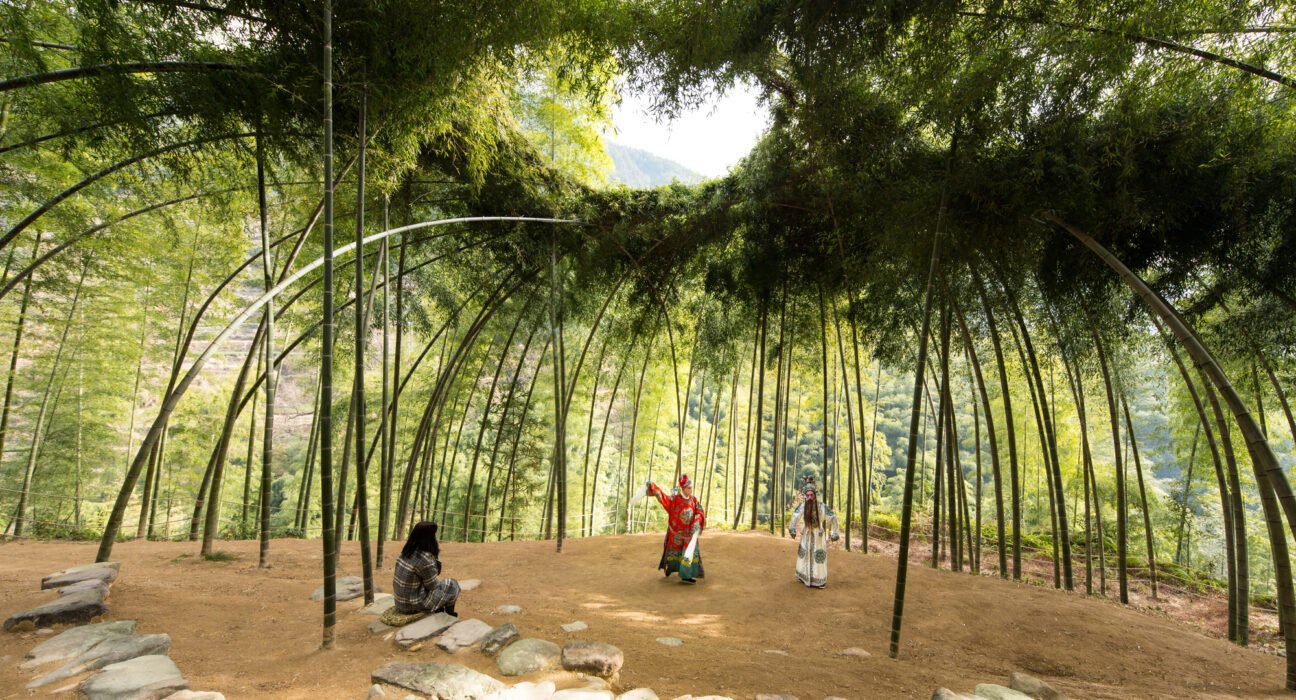
At the center of this Architecture news discussion is Xu’s concept of architectural acupuncture. The phrase captures her belief that modest, highly targeted interventions can unlock larger social and spatial change. Instead of relying on massive development or entirely new urban forms, she looks for strategic points where architecture can release dormant energy in a village or landscape.
This methodology is defined by:
- Precision: Each intervention responds to a specific need or opportunity.
- Restraint: The goal is not maximum visibility, but meaningful effect.
- Context: Local materials, traditions, and patterns of life shape the design.
- Activation: Projects aim to generate new uses, confidence, and economic activity.
In practical terms, that might mean transforming an underused structure, creating communal infrastructure, or introducing a carefully placed public facility that supports village identity. The architecture does not arrive as an alien object. It feels embedded, understandable, and open to adoption by local residents.
Why Beauty Alone Is Not Enough
Perhaps the most provocative idea in this Architecture news feature is Xu’s position on beauty. Her argument is not that beauty is irrelevant, but that beauty pursued as an isolated goal can become dangerous. When architecture prioritizes image over life, it risks becoming detached from social need, environmental reality, and cultural continuity.
Xu instead points to a more grounded understanding of beauty—one found in vernacular intelligence, practical wisdom, and sustainable adaptation. In this view, beauty emerges when architecture supports life well. A building or space becomes powerful not because it photographs beautifully, but because it strengthens the relationship between people and their environment.
This idea resonates strongly in luxury home design and luxury home decor, where buyers and designers are increasingly interested in authenticity, craftsmanship, and a deeper connection to place. True refinement today is often less about excess and more about purpose, material honesty, and emotional resonance.
Lessons for Luxury Architecture and Design
Although Xu’s work is rooted in rural revitalization, the implications extend far beyond villages. For anyone following Architecture news in the luxury sector, her philosophy offers valuable lessons.
1. Design should respond before it impresses
In high-end homes and interiors, there is growing value in design that solves real spatial needs while still feeling elegant and distinctive.
2. Local identity matters
Luxury architecture gains depth when it draws from regional craft, climate, materials, and landscape instead of relying on globally interchangeable aesthetics.
3. Smaller interventions can transform experience
A courtyard, threshold, tea space, garden wall, or adaptive reuse strategy can have as much impact as a large new addition when thoughtfully conceived.
4. Sustainability and beauty are no longer separate conversations
Xu’s thinking reinforces a broader shift in contemporary design: environmental responsibility is now central to architectural quality, not an optional extra.
A Wider Shift in Contemporary Architecture
This Architecture news story also sits within a larger cultural conversation. Across recent interviews and global practice, architects and artists are rethinking the relationship between design, craft, ecology, observation, and social responsibility. The star-architect era has not disappeared entirely, but it is being challenged by a more reflective model of practice.
That shift is especially significant in an age shaped by climate change, inequality, and rapid urban transformation. Xu Tiantian’s message is timely because it asks architects to move beyond ego and toward stewardship. Her approach reminds the profession that architecture is not just about producing objects; it is about enabling better forms of living.
Conclusion: What This Architecture News Really Means
The real takeaway from this Architecture news story is simple but profound: architecture has entered a more responsible era. Xu Tiantian’s work shows that the future may belong less to iconic gestures and more to intelligent, place-based interventions that support culture, economy, and everyday life.
For readers interested in luxury architecture, luxury decor, luxury design, and the evolving meaning of beautiful spaces, her ideas offer a powerful reminder. The most compelling architecture is not merely seen—it is lived, shared, and sustained. If today’s Architecture news points anywhere, it points toward design with humility, precision, and human purpose.