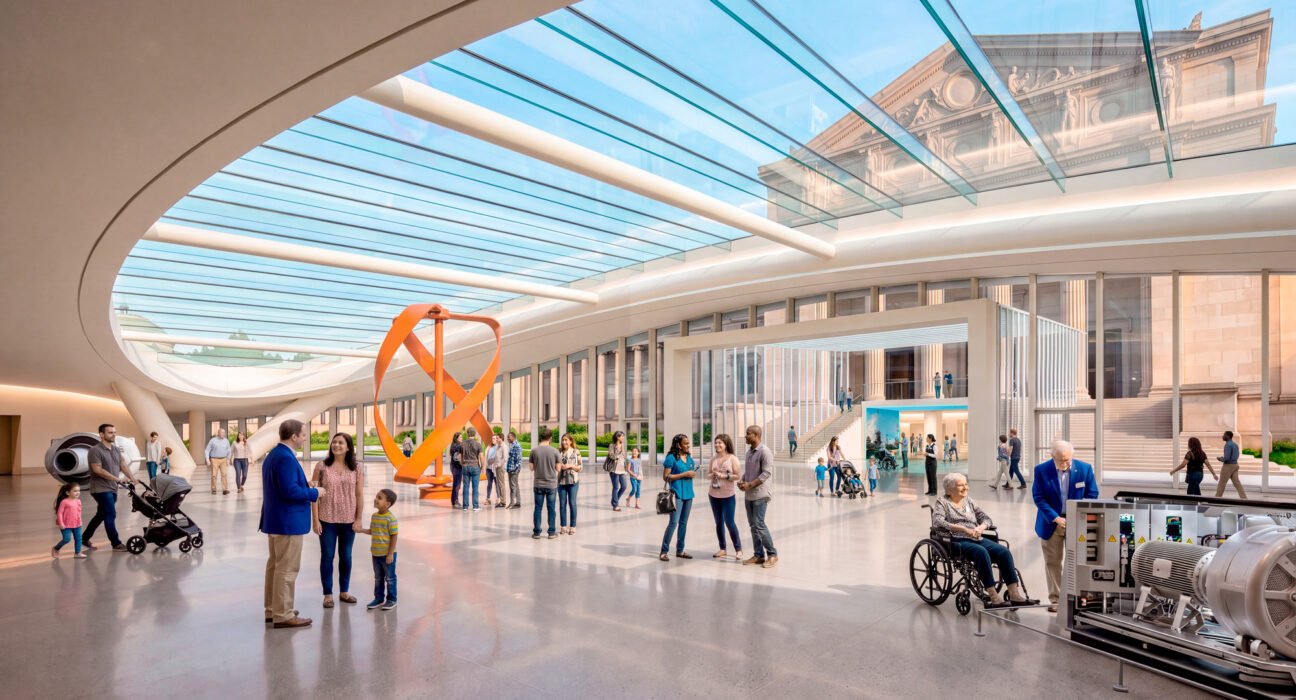
Architecture news rarely captures the intersection of civic grandeur, visitor experience, and timeless design quite like this latest proposal in Chicago. RAMSA’s newly unveiled plans for a welcome hall at the Griffin Museum of Science and Industry point to a refined architectural vision—one that could reshape how guests first encounter one of the city’s most beloved cultural institutions.
For readers interested in luxury architecture, luxury design, and elevated public interiors, this project stands out as more than a museum upgrade. It represents a broader shift toward destination-worthy arrival spaces that blend heritage, elegance, and functionality.
Architecture News: A New Front Door for a Chicago Landmark
The Griffin Museum of Science and Industry has long held a special place in Chicago’s cultural landscape. Housed within a monumental historic structure in Jackson Park, the museum is already known for its commanding presence and civic importance. Now, with RAMSA—Robert A.M. Stern Architects—unveiling plans for a new welcome hall, the institution appears poised to enhance its identity through an arrival experience that feels more gracious, intuitive, and architecturally coherent.
In the world of architecture news, entrance pavilions and welcome halls are increasingly viewed as crucial design elements rather than purely functional additions. They set the emotional tone of a visit, manage circulation, and create a strong visual threshold between city and institution. At a museum of this scale, that threshold matters.
Why the Welcome Hall Matters in Contemporary Museum Design
Modern museum architecture has evolved well beyond gallery walls. Today, the first impression often begins before a visitor ever sees an exhibit. A well-designed welcome hall can improve:
- Visitor flow by organizing entry, ticketing, and orientation more efficiently
- Accessibility through clearer circulation and more user-friendly planning
- Civic identity by reinforcing the museum’s role as a public landmark
- Spatial drama with soaring interiors, natural light, and formal architectural gestures
- Hospitality through comfortable gathering zones and better amenities
That is why this project resonates across multiple categories, from luxury decor to luxury home inspiration. Although it is a public building, the same principles apply to high-end residential design: the arrival sequence matters, symmetry matters, and the feeling of welcome matters.
RAMSA’s Signature Approach: Classical Discipline Meets Modern Use
RAMSA is widely recognized for an architectural language that balances classicism with contemporary expectations. Across residential towers, academic buildings, and cultural institutions, the firm often emphasizes proportion, material richness, and contextual sensitivity. Those traits make it especially suited to a project at the Griffin Museum of Science and Industry, where any intervention must respect an iconic setting while still delivering a modern visitor experience.
From an architecture news perspective, this is significant because it signals continuity rather than disruption. Instead of pursuing a flashy contrast for its own sake, RAMSA’s design ethos typically favors elegance, legibility, and permanence. For a museum welcome hall, that could translate into a space that feels both ceremonial and practical—grand enough for a major institution, yet comfortable for everyday use.
Design Qualities Likely to Define the Project
While the available source material is brief, the project’s implications suggest several likely architectural priorities:
- A more distinguished point of entry that clarifies the museum’s public face
- Improved transition spaces between exterior grounds and interior programming
- Material refinement aligned with the museum’s historic stature
- Expanded gathering capacity for families, school groups, and event guests
- An enhanced sense of procession that elevates the visitor journey
These are not small upgrades. In premium design terms, they amount to reimagining the property’s “first room”—the space that frames everything that follows.
What Luxury Architecture Can Learn From This Museum Project
One reason this item belongs in ongoing architecture news coverage is that museum projects often influence broader design culture. Features once reserved for civic institutions frequently find their way into luxury homes, boutique hospitality, and high-end interiors.
Consider the parallels:
- Statement entry halls are a hallmark of luxury home design
- Layered lighting and generous volume create drama in both museums and residences
- Durable, elegant materials define luxury architecture at every scale
- Clear circulation paths improve both livability and guest experience
- Architectural symmetry continues to signal refinement and permanence
For luxury decor enthusiasts, the welcome hall concept also reinforces an important lesson: beauty is most effective when paired with function. Great design is not only seen; it is felt through ease, comfort, and intuitive use.
Chicago’s Enduring Role in Architecture News
Chicago remains one of America’s most important architecture capitals, making any major institutional update especially noteworthy. The city’s legacy of innovation—from early skyscrapers to civic monuments and modern cultural buildings—creates a high bar for new work. Projects like this one contribute to that ongoing narrative by showing how historic destinations can evolve without losing their identity.
In that sense, this piece of architecture news is also a story about stewardship. Rather than replacing history, the proposed welcome hall appears aimed at complementing and strengthening the museum’s existing character. That approach is increasingly valued in luxury design circles, where authenticity and longevity often outweigh novelty.
Broader Trends Behind the New Welcome Hall
This proposal also reflects several wider trends shaping cultural architecture today:
1. Experience-Driven Design
Institutions are investing in spaces that improve comfort, orientation, and emotional impact from the moment visitors arrive.
2. Heritage-Sensitive Expansion
Architects are being asked to add meaningful new interventions without overwhelming treasured historic structures.
3. Elevated Public Interiors
Public buildings increasingly borrow the warmth, detail, and polish once associated mainly with luxury residential and hospitality design.
4. Flexible Gathering Spaces
Welcome halls now serve multiple roles, from circulation hub to event venue to informal social space.
Each of these trends helps explain why this development deserves attention beyond the museum world alone.
Conclusion: Why This Architecture News Story Matters
In a crowded cycle of architecture news, RAMSA’s plans for a new welcome hall at Chicago’s Griffin Museum of Science and Industry stand out for their likely emphasis on dignity, usability, and timeless civic beauty. If realized successfully, the project could do more than improve museum entry—it could create a more memorable public experience while offering lessons for luxury architecture, luxury interiors, and high-end design at large.
The clearest takeaway is simple: first impressions are architecture. And in this case, that first impression may soon become one of Chicago’s most compelling new design moments.