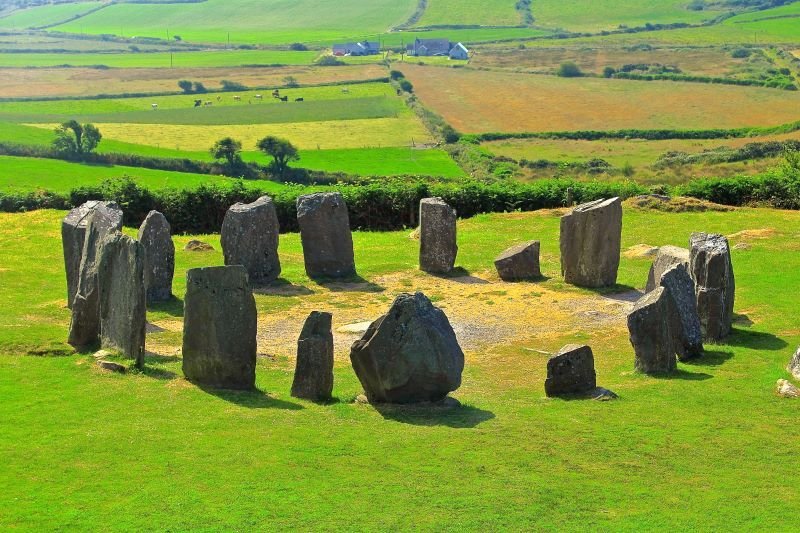
Ireland Travel becomes unforgettable when you leave the motorways behind and follow winding lanes toward some of the island’s oldest monuments. Scattered across fields, peninsulas, and limestone landscapes, Ireland’s ancient stone circles and dolmens offer a rare blend of mystery, history, and scenic beauty that perfectly suits a luxury traveler seeking meaningful experiences beyond the usual itinerary.
These megalithic sites were raised between the Neolithic and Bronze Age, and many still command remarkable views over bays, valleys, and mountains. Some are linked to burial practices, others to ritual gathering, and several appear aligned with the rising sun at key moments of the year, especially the winter and summer solstice. For travelers who value authenticity, heritage, and the thrill of discovery, they reveal a deeper side of the Emerald Isle.
Why Ancient Monuments Belong on an Ireland Travel Itinerary
Luxury Travel in Ireland is no longer only about five-star manor houses, Michelin-level dining, and chauffeur-driven coastal routes. Increasingly, discerning visitors want immersive experiences that connect comfort with culture. That is exactly where Ireland’s stone circles, portal tombs, and megalithic cemeteries shine.
What makes these sites so compelling is the journey as much as the destination. Reaching them may involve a narrow boreen, a farm gate, a short hillside walk, or a detour through spectacular countryside. Yet that sense of access and exclusivity is part of the appeal. Unlike crowded urban attractions, these places often feel intimate and elemental.
- They showcase over 5,000 years of Irish history
- Many sit in exceptionally scenic rural settings
- They pair well with private tours, boutique stays, and slow travel
- They offer memorable sunrise and solstice experiences
Best Stone Circles and Dolmens for Ireland Travel
Drombeg Stone Circle, County Cork
Among the best-known megalithic sites in Ireland, Drombeg Stone Circle is a must for any Ireland Travel route through West Cork. Sometimes called the Druid’s Altar, this Bronze Age circle is thought to have served ceremonial or communal purposes. Nearby remains of stone huts and a cooking area suggest the site was once a social gathering place as well as a ritual landscape.
Its enduring fame also comes from its solstice alignment and its atmospheric rural setting. Visit early or late in the day for softer light and a quieter experience.
Kealkill Stone Circle, County Cork
For travelers who enjoy a little adventure with their archaeology, Kealkill delivers. Located near Bantry, this site rewards effort with dramatic views and a strong sense of isolation. Waterproof footwear is wise, as access may involve crossing wet ground and climbing over a field boundary. Once there, the stone circle and accompanying standing stones feel beautifully removed from modern life.
Ahakista Stone Circle, Sheep’s Head Peninsula
Also in County Cork, the Ahakista or Gorteanish Stone Circle is ideal for visitors exploring the Sheep’s Head Peninsula. A short uphill walk leads to a Bronze Age circle overlooking Dunmanus Bay. The combination of sea views, rugged terrain, and archaeological interest makes it especially appealing for photographers and walkers building nature into their Ireland Travel plans.
Kenmare Stone Circle, County Kerry
If convenience matters, Kenmare Stone Circle is one of the easiest monuments to visit. Just a brief walk from Kenmare town, this unusual egg-shaped circle contains a central boulder burial dolmen. It is a fine choice for travelers staying in upscale Kerry accommodations who want a historic stop without a long rural detour.
Shronebirrane Stone Circle, Beara Peninsula
For pure atmosphere, Shronebirrane is hard to top. Reached via a narrow one-lane road, the site sits in the dramatic Drimminboy Valley with mountain slopes framing the scene. The remoteness is part of its luxury: not in opulence, but in silence, space, and a profound sense of place.
Poulnabrone Dolmen, County Clare
No survey of Ireland Travel highlights would be complete without Poulnabrone Dolmen in the Burren. One of Ireland’s most photographed Neolithic monuments, this portal tomb rises from a stark limestone landscape that feels almost otherworldly. Its popularity is well deserved, but the setting still retains a haunting dignity, especially outside peak hours.
Kilmogue Portal Tomb, County Kilkenny
Often referred to as the Mullinavat Dolmen, Kilmogue Portal Tomb offers a quieter but equally rewarding encounter with prehistoric Ireland. The route can feel delightfully rural, complete with the possibility of livestock slowing traffic. For travelers seeking off-the-beaten-path heritage, it is a standout stop in the southeast.
Carrowmore Megalithic Cemetery, County Sligo
Carrowmore deserves extra time. This expansive complex includes multiple tombs, boulder circles, and spectacular mountain views. Some monuments here are among the oldest in Ireland, making the site one of the country’s most significant prehistoric landscapes. If your Ireland Travel itinerary includes Sligo, set aside at least two hours to appreciate its scale and archaeological importance.
How to Visit These Sites in Comfort and Style
Ancient monuments and Luxury Travel can work together seamlessly with the right planning. The key is to combine heritage exploration with premium logistics and nearby high-end stays.
- Base yourself in elegant country houses or boutique coastal hotels near Cork, Kerry, Clare, or Sligo.
- Hire a private driver-guide if you want local storytelling without navigating narrow roads yourself.
- Visit early morning or near sunset for the best light and fewer people.
- Bring sturdy footwear even on a luxury itinerary, as access paths may be uneven or wet.
- Pair your excursion with artisanal food stops, whiskey tastings, or spa time afterward.
The Solstice Connection and the Magic of Timing
Part of the fascination surrounding Ireland’s megalithic monuments is their relationship with the sun. Several stone circles are believed to align with seasonal events, particularly solstice sunrise. That gives these places a timeless rhythm, linking modern visitors to ancient communities that watched the same horizon thousands of years ago.
If your Ireland Travel plans fall in late December or June, consider arranging a guided solstice-themed visit. It is one of the most memorable ways to experience Ireland’s prehistoric heritage, especially when paired with a refined countryside stay.
Conclusion: Add Ancient Ireland to Your Ireland Travel Wish List
The greatest Ireland Travel experiences often happen far from the obvious route. Stone circles and dolmens invite you to slow down, embrace the landscape, and encounter Irish history in its most elemental form. Whether you choose Drombeg, Poulnabrone, Carrowmore, or a hidden circle at the end of a country lane, these monuments turn a beautiful trip into a deeply resonant one. For travelers who want Luxury Travel with soul, ancient Ireland is impossible to overlook.