
What if a wall could do more than divide space? In Strasbourg, a striking new project by AL PEPE Architects suggests that iconic architecture can also connect communities, frame public life, and transform an everyday urban edge into a destination.
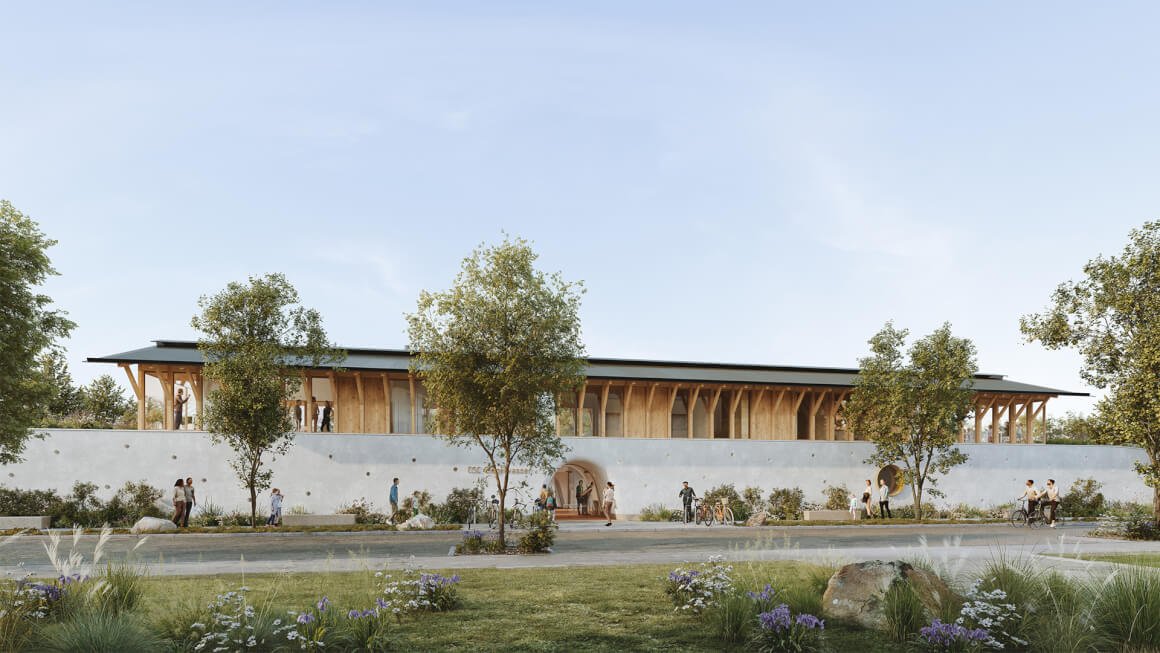
The Ziegelwasser Social and Cultural Center stands out not through monumental excess, but through a thoughtful architectural gesture that rethinks enclosure, openness, and civic identity. Positioned within Strasbourg’s evolving urban fabric, the project demonstrates how contemporary design can elevate social infrastructure into a meaningful place for gathering, culture, and neighborhood exchange.
Iconic Architecture as a Community Gesture
Too often, public buildings are judged only by program or scale. This project takes a different path. The Ziegelwasser Social and Cultural Center shows how iconic architecture can emerge from a single strong idea: the wall not as a barrier, but as an invitation.
Rather than presenting a closed-off frontage, the building uses its architectural envelope to create a sense of approach and curiosity. The wall becomes spatial, tactile, and civic. It helps define the site while also signaling entry, activity, and belonging. In that sense, the architecture performs both symbolic and practical roles—an increasingly important quality in luxury design and high-value civic development alike.
This approach aligns with broader trends in Luxury Architecture, where buildings are expected to do more than look impressive. They must also communicate purpose, create atmosphere, and foster human connection.
AL PEPE Architects and the Power of Spatial Simplicity
One of the most compelling aspects of the Strasbourg project is its restraint. AL PEPE Architects appear to rely on clarity rather than clutter, using form, materiality, and composition to shape the visitor experience. That discipline is often what separates memorable civic spaces from forgettable ones.
In this case, the design language feels contemporary yet grounded. The center’s expression likely draws strength from:
- A clearly defined perimeter that gives the building presence
- Strategic openings that balance privacy and transparency
- Material choices that create texture, warmth, and permanence
- Public-facing circulation that encourages movement and interaction
These elements are hallmarks of iconic architecture that lasts. Rather than chasing novelty, the building appears to create identity through proportion, rhythm, and social intent.
Why the “inviting wall” matters
The wall is not simply an exterior feature; it becomes the conceptual anchor of the project. In urban design terms, edges matter. They shape how people perceive safety, accessibility, and ownership of space. By turning that edge into an architectural experience, the center softens the threshold between institution and neighborhood.
This is especially relevant for social and cultural buildings, which must welcome diverse users without losing clarity or character. Here, iconic architecture supports that mission by making the building legible and approachable from the street.
A New Civic Landmark in Strasbourg
Strasbourg has long been a city where history and modernity coexist. Any new public building inserted into that context must respond carefully to both heritage and contemporary life. The Ziegelwasser Social and Cultural Center appears to do exactly that, contributing a fresh architectural voice without overwhelming its surroundings.
As cities across Europe invest in public amenities, projects like this offer a valuable lesson: social infrastructure deserves design excellence. When a community center is conceived with the same ambition typically reserved for museums or flagship residences, it can reshape local identity and long-term civic value.
That is where iconic architecture becomes more than an aesthetic label. It becomes a tool for placemaking—one that supports:
- Neighborhood cohesion
- Cultural participation
- Architectural distinction
- Lasting public pride
For readers interested in Luxury Design and Luxury Home trends, there is an important crossover here. The same principles that define premium residential environments—material richness, seamless flow, and emotional resonance—are increasingly shaping the best civic architecture as well.
Materials, Atmosphere, and Architectural Identity
Even with limited published detail, the project’s title and framing suggest a strong emphasis on the sensory role of the facade and enclosure. The best iconic architecture often works through atmosphere rather than spectacle. Texture, shadow, depth, and light can turn a simple mass into a building that feels alive throughout the day.
In a social and cultural center, these choices matter deeply. Material expression can influence how inclusive a building feels. A heavy, defensive facade may discourage entry, while a well-articulated wall with measured openings can offer comfort and visual intrigue at once.
This balance between solidity and openness is central to contemporary architectural storytelling. It also reflects a luxury sensibility increasingly visible in public design: sophistication achieved through precision, not excess.
Design lessons for architects and homeowners
While the Ziegelwasser Social and Cultural Center is a civic project, its ideas translate surprisingly well to residential and interior design. Architects, developers, and design enthusiasts can take inspiration from several core principles:
- Use boundaries as design opportunities, not just functional necessities
- Create arrival sequences that build anticipation
- Let one strong architectural concept guide the entire project
- Balance privacy with visual permeability
- Prioritize emotional experience alongside utility
These are also valuable strategies for upscale homes, curated outdoor spaces, and Luxury Decor planning, where architectural coherence defines the final impression.
Why This Project Reflects the Future of Iconic Architecture
The Ziegelwasser Social and Cultural Center points to a more human-centered future for iconic architecture. Instead of relying on dramatic forms alone, it appears to build its identity through civic generosity, formal clarity, and smart urban response. That is a meaningful shift in today’s design landscape.
Architecture with lasting impact does not always need to shout. Sometimes it succeeds by reframing a basic element—a wall, an edge, an entrance—and turning it into a memorable public experience. In Strasbourg, AL PEPE Architects seem to have done exactly that.
For designers, city-makers, and anyone passionate about the built environment, the takeaway is clear: iconic architecture is most powerful when it invites people in. The Ziegelwasser Social and Cultural Center shows that even a simple architectural move, executed with intelligence and care, can become a landmark of connection.