
Few projects reshape a university as powerfully as a building that changes how people learn, gather, and see the future. Penn State’s new engineering hub does exactly that, using iconic architecture to anchor a transformed academic precinct with ambition, clarity, and lasting design value.
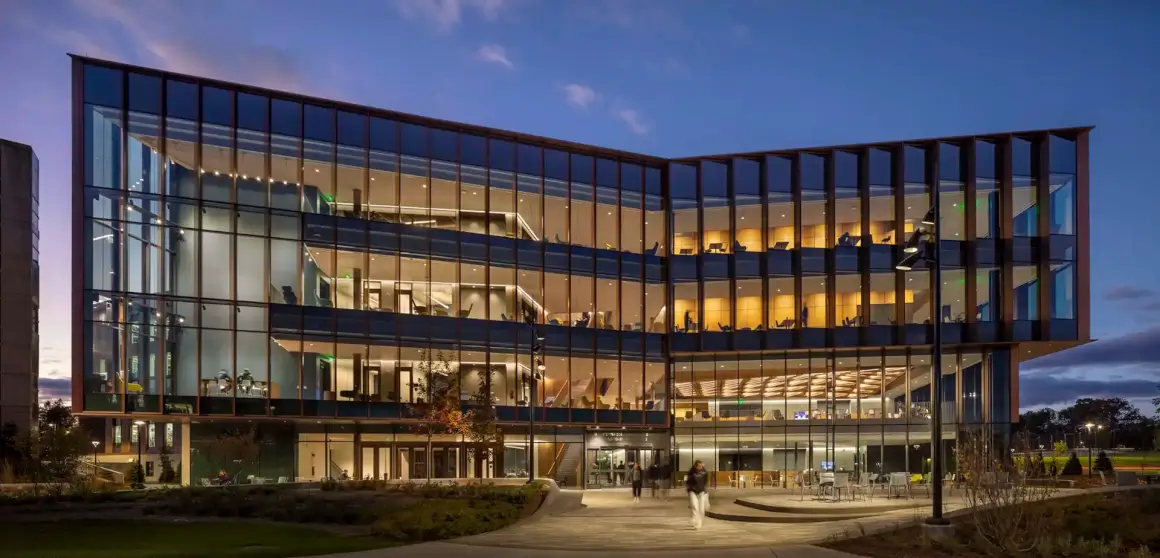
Designed by Payette, the ECoRE Building establishes a new focal point for engineering education at Penn State. More than a single academic facility, it acts as an organizing element within a broader campus vision—connecting research, teaching, collaboration, and public life through architecture that is both high-performing and memorable. For readers interested in Luxury Architecture, Luxury Design, and elevated institutional spaces, this project offers a compelling case study in how thoughtful planning can become a new standard for campus excellence.
How Iconic Architecture Shapes a New Academic Center
The ECoRE Building has been positioned as a cornerstone of a new engineering precinct, giving Penn State a stronger spatial identity for one of its most important disciplines. In campus planning terms, that matters enormously. A well-placed building can do more than fill a site—it can define circulation, establish visual hierarchy, and create a shared destination for students, faculty, and visitors.
That is where iconic architecture proves its value. Rather than relying on spectacle alone, the building appears to use presence, proportion, and performance to create meaning. It signals innovation while reinforcing the institutional character of the university, an approach that aligns with the best contemporary educational architecture.
Key ways the project strengthens the precinct include:
- Creating a recognizable gateway for engineering-related programs
- Supporting interdisciplinary exchange through strategic adjacency and shared space
- Improving campus connectivity by organizing movement across the site
- Projecting a forward-looking identity for Penn State’s academic mission
In this sense, the project is not just a building but a placemaking device—one that uses iconic architecture to express institutional confidence and long-term investment.
Payette’s Design Approach Balances Performance and Presence
Payette is widely recognized for sophisticated academic, medical, and research environments, and that expertise is especially relevant here. Buildings for engineering must solve multiple challenges at once: they need to be flexible, highly functional, technologically equipped, and architecturally distinguished. The ECoRE Building appears to answer that brief with a design language that merges utility and elegance.
At the heart of successful iconic architecture is disciplined resolution. It is not enough for a structure to look impressive; it must also work beautifully for the people who use it every day. In engineering education, this often means integrating classrooms, labs, collaboration zones, and informal gathering areas into a coherent whole.
What Makes the Design Stand Out
- Strong massing and silhouette: A confident architectural form helps the building read as a landmark within the precinct.
- Transparency and openness: Contemporary academic buildings often use glass and shared atriums to showcase learning and encourage interaction.
- Flexible interior planning: Adaptable spaces allow institutions to evolve with changing pedagogies and research needs.
- High-performance building strategies: Sustainability and energy efficiency are increasingly central to premium campus design.
These elements contribute to the kind of iconic architecture that feels purposeful rather than performative—a critical distinction in today’s design landscape.
Why the ECoRE Building Matters Beyond the Campus
Although the project is rooted in higher education, its significance extends into broader conversations about luxury environments, future-focused design, and civic identity. The best institutional buildings now borrow from the same principles that define exceptional residential and hospitality spaces: natural light, material richness, wellness, seamless circulation, and memorable experience.
That crossover is especially relevant for audiences following Luxury Decor and Luxury Home trends. While a university engineering building differs from a private residence, both increasingly prioritize:
- Human-centered space planning
- Refined material palettes
- Indoor-outdoor relationships
- Sustainable performance
- Timeless visual identity
Seen this way, iconic architecture is not limited to museums or skyscrapers. It can emerge anywhere design ambition meets daily use, including academic campuses that aim to inspire the next generation of innovators.
The Role of Campus Buildings in Brand and Legacy
Universities compete not only through academic reputation but also through environment. Prospective students, donors, faculty, and research partners all respond to place. A compelling building can become shorthand for an institution’s values, especially when it embodies openness, excellence, and innovation.
The ECoRE Building contributes to Penn State’s brand by presenting engineering as visible, collaborative, and future-ready. That visibility is central to modern iconic architecture. Buildings now communicate as much through experiential quality as through form, creating a narrative that can be felt on arrival and remembered long after a visit.
Long-Term Benefits of a Landmark Academic Building
Projects like this typically deliver lasting value in several ways:
- They elevate the prestige of surrounding facilities
- They encourage investment in adjacent campus development
- They improve recruitment and retention
- They foster community through shared gathering spaces
- They strengthen institutional legacy for decades
For design observers, this is where iconic architecture becomes strategic architecture—serving educational, social, and reputational goals at once.
A Model for Future Luxury-Inspired Educational Design
The most exciting aspect of the ECoRE Building may be how clearly it reflects a broader shift in architecture. Today’s leading educational projects are no longer treated as purely utilitarian containers. They are designed as immersive, high-quality environments that can rival premium workplaces and hospitality destinations in both experience and finish.
That does not mean excess. Instead, it means precision: better daylight, smarter circulation, stronger sustainability, and more meaningful communal space. This is the new language of iconic architecture—one rooted in performance, beauty, and adaptability.
For architects, developers, and design enthusiasts, Penn State’s new engineering precinct offers a useful blueprint. It shows how one building can organize a district, sharpen institutional identity, and elevate everyday experience without losing academic rigor.
As campuses continue to evolve, projects like Payette’s ECoRE Building will likely become reference points for the future of higher education design. The clearest takeaway is simple: iconic architecture matters most when it does more than impress—when it builds community, supports innovation, and gives a place its defining character.