

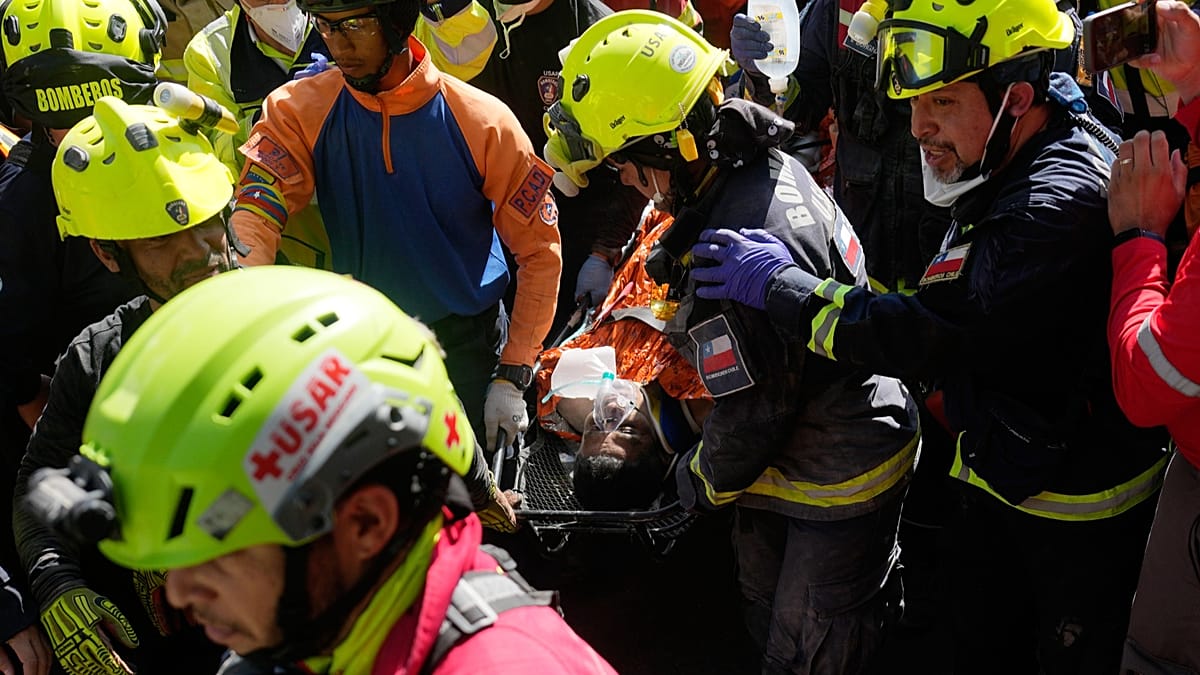
In the aftermath of Venezuela’s twin quakes, one extraordinary basement survival story has captured global attention. Beyond the human drama, the rescue offers a stark lesson for anyone interested in luxury architecture, luxury design, and luxury interiors: true value in the built environment begins with structural resilience.
Eight days after two powerful earthquakes struck northern Venezuela on 24 June, rescuers pulled 43-year-old security guard Hernán Alberto Gil Flores alive from the collapsed basement of the Galerías Playa Grande shopping centre in La Guaira, the country’s hardest-hit region. The disaster killed more than 2,200 people, injured over 11,000, and damaged or destroyed tens of thousands of buildings. Yet within that devastation, a small security cabin reportedly remained intact enough to create a survivable air pocket, turning a catastrophic structural failure into a rare story of endurance.
Venezuela’s Twin Quakes and a Remarkable Basement Survival
The earthquake sequence measured 7.2 and 7.5 in magnitude and triggered widespread collapse across northern Venezuela. In La Guaira, rescuers worked for more than 100 hours in unstable conditions, contending with aftershocks, heavy rain, and shifting debris to reach Gil Flores.
According to reports, international urban search and rescue teams from Chile, Costa Rica, the United States, Portugal, Mexico, El Salvador, and Venezuela coordinated the operation. Using a telescopic camera and a narrow supply shaft, crews maintained contact and delivered water and liquid nutrients during the final days. This basement survival became symbolic not only because of the odds, but because it demonstrated how specific enclosed spaces can sometimes protect life even when the larger structure fails.
Why This Basement Survival Matters for Luxury Architecture
For luxury architecture professionals, this event is a powerful reminder that aesthetics alone are never enough. Signature facades, premium finishes, and expansive open-plan layouts may define high-end real estate, but safety engineering is what ultimately protects occupants when the unexpected happens.
In seismic zones, structural strategy should be treated as part of the design language, not an invisible afterthought. The Venezuela basement survival underscores several critical principles:
- Compartment integrity matters: Smaller reinforced spaces can improve survivability during partial collapse.
- Load paths are essential: Buildings must transfer seismic forces predictably through foundations, frames, and shear systems.
- Material performance saves lives: Reinforced concrete, structural steel, and modern composites must be detailed for ductility, not just strength.
- Basement design requires special scrutiny: Underground levels face unique pressure, collapse, and access challenges during earthquakes.
In luxury developments, where clients expect permanence as well as beauty, these considerations should be central from concept through completion.
Design Lessons From a Surviving Enclosure
One of the most striking details in the rescue is that Gil Flores was reportedly inside a small security cabin when the tremors hit. While the surrounding concrete structure collapsed, that smaller enclosure appears to have preserved a protective void.
This does not mean small rooms are inherently safe. But it does highlight how redundancy, compartmentalization, and localized reinforcement can influence outcomes. In high-end residential and hospitality projects, designers can translate that lesson into smarter planning.
Practical resilience features for premium projects
- Reinforced safe rooms integrated discreetly into the floor plan
- Seismically braced service cores for stairs, lifts, and utilities
- Impact-resistant partitions in key refuge zones
- Emergency lighting and backup ventilation systems
- Protected storage for water, medical supplies, and communications gear
These measures do not need to compromise elegance. In luxury interiors, safety infrastructure can be concealed within millwork, wall systems, and architectural detailing.
Luxury Interiors Need More Than Surface Beauty
The conversation around luxury interiors often focuses on stone selection, custom joinery, collectible lighting, and artisanal finishes. Yet Venezuela’s basement survival reminds us that an interior is only as secure as the system beneath it.
For designers working in earthquake-prone regions, resilience should influence material and furnishing decisions, including:
- Anchoring heavy cabinetry and sculptural elements
- Specifying shatter-resistant glazing where appropriate
- Reducing overhead hazards from suspended fixtures
- Choosing flexible connections for mechanical and plumbing systems
- Planning circulation routes that remain navigable in emergencies
Luxury today increasingly means peace of mind. Clients are asking for homes and commercial spaces that can withstand climate risks, infrastructure stress, and natural disasters without sacrificing refinement.
The Global Shift Toward Resilient Luxury Design
This basement survival in Venezuela arrives at a time when resilient design is becoming a defining issue for global real estate. From coastal flooding to seismic activity, high-value properties face growing scrutiny over how well they can protect occupants and preserve asset value.
Developers, architects, and interior designers are responding by combining engineering intelligence with elevated design standards. That shift includes:
- Performance-led planning: Designing for specific environmental risks from the earliest stages.
- Integrated collaboration: Bringing structural engineers, architects, and interiors teams together from day one.
- Invisible resilience: Embedding protection into beautiful spaces without visual clutter.
- Long-term value thinking: Treating durability and life safety as luxury features in their own right.
In that sense, the lessons of this rescue extend far beyond disaster response. They speak directly to the future of premium design.
Human Courage, Technical Skill, and the Spaces We Build
The rescue itself was a remarkable feat of international cooperation and technical precision. Teams worked around the clock, maintained communication, stabilized access, and supported the survivor physically and psychologically until extraction was possible. Their success shows what trained responders can achieve under extreme pressure.
But it also raises a deeper architectural question: how can buildings give people a better chance before rescuers even arrive? That is where luxury architecture has an opportunity to lead. By investing in advanced structural systems, emergency-ready planning, and intelligently designed interiors, premium projects can set a higher standard for both beauty and resilience.
Ultimately, this basement survival is more than a miracle story. It is a reminder that the most meaningful luxury is not excess, but protection. In a world of increasing risk, the finest buildings will be those that pair exceptional design with the quiet strength to safeguard life.