

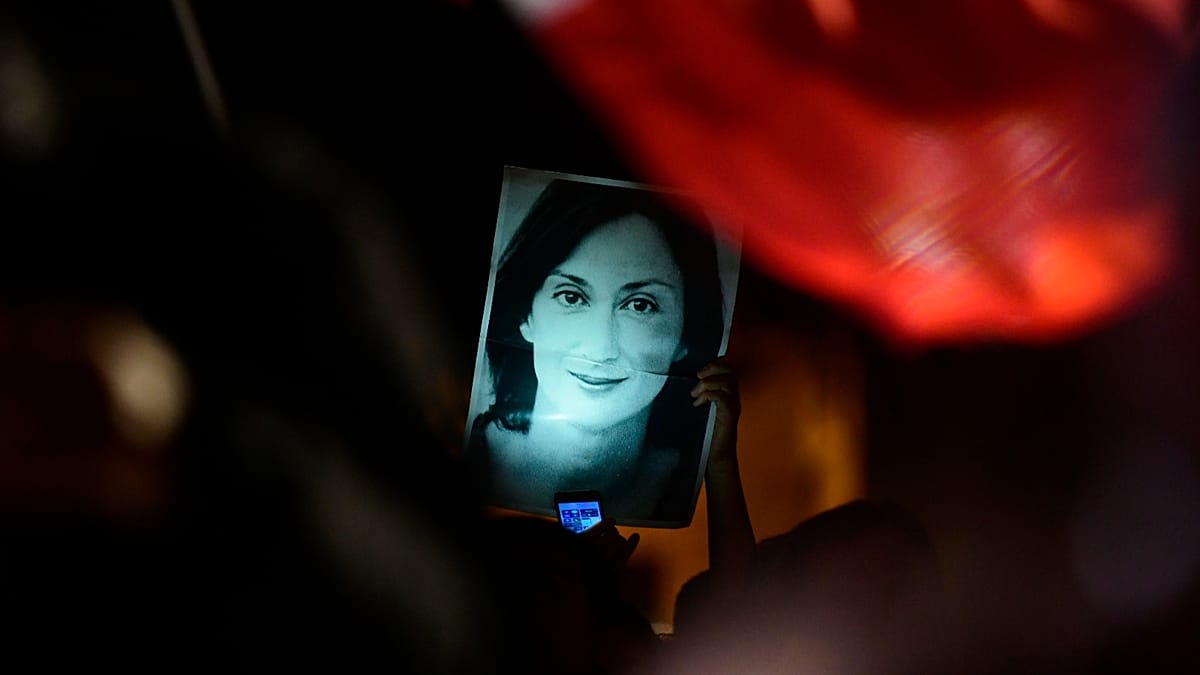
The Daphne Caruana Galizia trial has begun nearly nine years after the Maltese journalist was killed, reopening one of Europe’s most consequential cases involving corruption, power and press freedom. While the proceedings are rooted in criminal law, their significance reaches far beyond the courtroom, touching the civic foundations that shape how societies build trust, governance and public life.
For audiences interested in luxury architecture, luxury design and luxury interiors, this story may seem far removed at first glance. Yet the values that define exceptional spaces—transparency, legacy, stewardship and responsibility—also define healthy institutions. The Daphne Caruana Galizia trial is a reminder that the environments nations create, whether political, cultural or physical, are inseparable from the people who inhabit them.
Daphne Caruana Galizia trial opens after years of scrutiny
Maltese businessman Yorgen Fenech has gone on trial accused of orchestrating the assassination of Daphne Caruana Galizia, the investigative journalist killed in October 2017 by a car bomb near her home. Caruana Galizia, 53, had become one of Malta’s best-known public figures through reporting that exposed alleged corruption at the highest levels of the country.
According to the case outlined by prosecutors and widely reported in international media, investigators allege Fenech ordered the killing as the journalist was close to publishing damaging information connected to his family circle. Fenech has denied wrongdoing. His trial now marks a pivotal phase in a case that has already led to multiple convictions involving those who carried out the attack and those who supplied the explosives.
The Daphne Caruana Galizia trial arrives after years of legal disputes, political fallout and intense attention from press freedom groups, European institutions and civil society advocates. For many observers, this is not only a murder trial but a test of whether accountability can reach the most powerful figures in a small but globally connected state.
Why the case matters far beyond Malta
The killing of Caruana Galizia prompted outrage across Europe because it symbolized a broader threat: when investigative journalism is attacked, public oversight weakens. Her reporting had highlighted alleged links between business and political elites, raising uncomfortable questions about influence, financial opacity and institutional protection.
The consequences were significant:
- Malta faced global criticism over rule-of-law concerns.
- Mass public anger contributed to a political crisis.
- Then-prime minister Joseph Muscat resigned in 2020.
- A public inquiry later concluded the state bore responsibility for creating an atmosphere of impunity.
That 2021 inquiry was especially important. A panel of judges found that the state had failed in its duty to protect the journalist and that the wider climate in Malta had become dangerously permissive. In effect, the report argued that systems matter. Violence does not emerge in a vacuum; it is enabled by environments where accountability is weak and public intimidation becomes normalized.
The state, public culture and the architecture of impunity
There is a reason this story resonates outside politics and media. Every society creates structures—legal, cultural and spatial—that communicate what is valued and what is tolerated. In the same way that luxury architecture expresses permanence, order and intention, public institutions signal whether they are built on integrity or favoritism.
The Daphne Caruana Galizia trial draws attention to what might be called the architecture of impunity: invisible systems that protect privilege while exposing critics to risk. These systems are not made of stone, glass or bronze, but they are designed all the same. They are sustained through networks, access, silence and selective enforcement.
For readers in the luxury world, this offers a compelling parallel. Great design is not just surface beauty; it is what lies beneath—craft, structure, material honesty and purpose. Likewise, democratic resilience depends not on appearances but on sound foundations.
What the inquiry revealed
The public inquiry’s findings suggested a deeply troubling ecosystem. Judges concluded that Caruana Galizia had been subjected to personal attacks and verbal hostility from political figures, and that this created a favorable climate for her assassination.
Key findings included:
- The state failed to provide adequate protection.
- Public discourse had become corrosive and hostile.
- There was evidence that perpetrators may have believed they would be shielded by powerful actors.
These findings continue to shape the meaning of the Daphne Caruana Galizia trial today. The case is no longer viewed solely as an individual criminal act, but as a reflection of institutional breakdown.
Convictions so far and what happens next
Several people have already been convicted in connection with the murder. Those found guilty include the men who carried out the bombing as well as individuals linked to supplying the explosives. In June 2025, Robert Agius and Jamie Vella were convicted of providing the bomb used in the attack and were sentenced to life imprisonment.
The three men identified as carrying out the killing—George Degiorgio, Alfred Degiorgio and Vince Muscat—are also serving prison sentences for their roles.
That leaves the Daphne Caruana Galizia trial of Fenech as one of the most closely watched remaining proceedings. It is especially significant because it addresses the central question of who allegedly commissioned the assassination. Last year, a court rejected an effort by Fenech to nullify statements he made to police after his 2019 arrest.
Press freedom organization Reporters Without Borders has said the trial revives hope that justice may finally be delivered. Whether that hope is fulfilled will depend not only on verdicts, but on whether the process is seen as credible, thorough and free from political interference.
A lasting lesson in legacy and accountability
Luxury, at its highest level, is often defined by legacy—the idea that what is built today should endure with meaning. The same principle applies to civic life. Nations, like homes, hotels, museums and landmark buildings, are judged over time by the strength of their foundations.
The Daphne Caruana Galizia trial underscores a stark truth: when truth-tellers are left unprotected, institutional elegance is exposed as mere façade. Accountability is the framework that gives legitimacy to power, just as structure gives integrity to design.
As the proceedings continue, the world will watch Malta not only for a legal outcome, but for evidence that justice can reach beyond symbolism. The clearest takeaway from the Daphne Caruana Galizia trial is that trust—whether in public life or in the spaces we admire—must be built carefully, defended consistently and never treated as ornamental.