

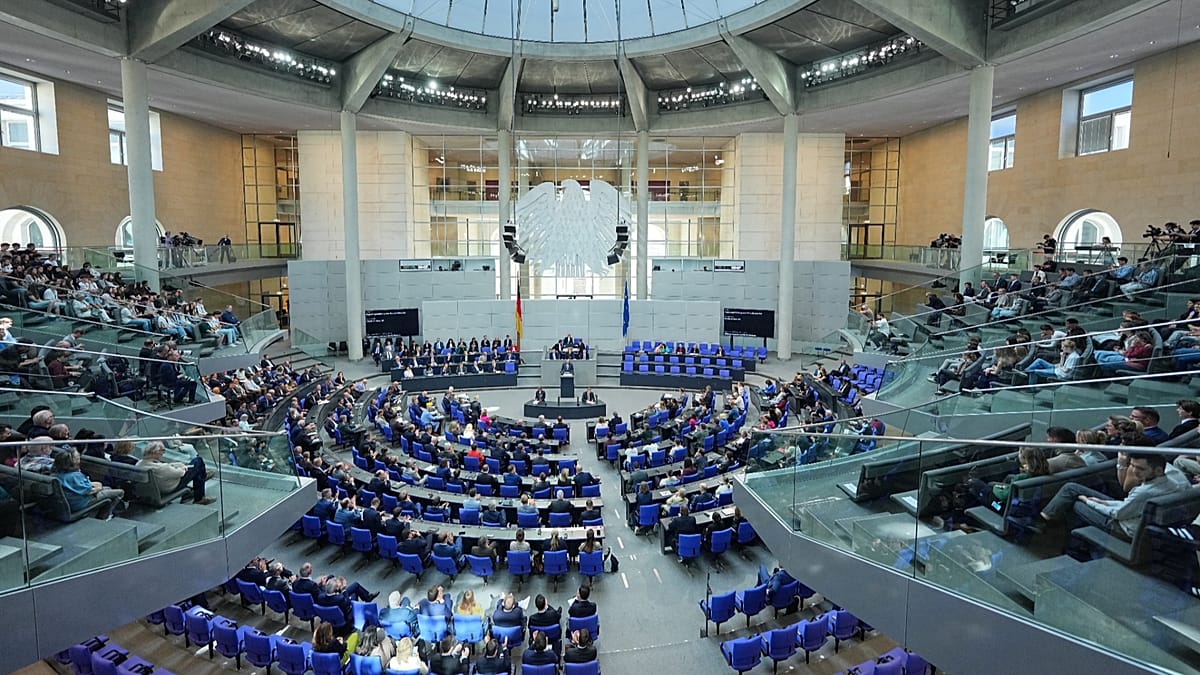
Germany’s latest political shake-up is not just a story about taxes and pensions—it could have meaningful implications for luxury architecture, luxury design, and high-end residential investment. The new Germany reform package unveiled by Chancellor Friedrich Merz and the ruling coalition signals a broader effort to restore business confidence, reduce regulatory friction, and create a more predictable environment for long-term capital.
For developers, property investors, and design-led housing brands, the real significance lies beneath the headlines. While the reforms focus on labour, taxation, pensions, and housing policy, they also point to a changing climate for premium real estate markets, especially where certainty, investor trust, and urban development are central.
Why the Germany reform package matters to luxury property
The coalition’s 34-point plan is designed to revive a sluggish economy. That matters directly to the upper end of the property market, where sentiment often moves ahead of hard data. In luxury sectors, confidence drives land acquisition, construction planning, renovation activity, and cross-border investment.
Several measures within the Germany reform package stand out for those watching architecture and interiors:
- Income tax relief for low- and middle-income households
- A revised tax structure for high earners
- Labour market flexibility through expanded fixed-term contracts
- Tighter rules on sick leave documentation
- A ban on the nationalisation of housing companies
- Red-tape reduction through time-limited regulations
- Long-term pension reform tied to life expectancy
On the surface, these are macroeconomic tools. In practice, they may influence how confidently investors approach luxury residential projects, mixed-use developments, and branded interior concepts in Germany’s major cities.
Housing policy and investor confidence
No more housing company nationalisation
One of the most relevant announcements for the luxury property world is the coalition’s decision to ban the nationalisation of housing companies. For real estate capital, this is a strong signal. It reduces fears of political intervention in the housing market and may improve Germany’s appeal to institutional investors, family offices, and developers focused on premium urban assets.
Although luxury housing often occupies a different segment from mainstream residential stock, all tiers of the market are affected by political risk. When governments appear unpredictable, high-net-worth investors tend to delay commitments. By drawing a clearer line on property rights, the Germany reform package may help restore confidence in development pipelines, acquisition strategies, and long-horizon design investments.
A more stable backdrop for development
Luxury architecture depends on planning certainty. Large-scale residential schemes, historic conversions, and bespoke interior-led developments often require years of financing, approvals, sourcing, and construction. Any move that lowers uncertainty can support:
- High-end apartment and penthouse developments
- Luxury rental projects in prime urban locations
- Adaptive reuse of heritage buildings
- Design-forward hospitality-residential hybrids
- Premium renovation and fit-out activity
In this sense, the Germany reform package may indirectly support a healthier investment climate for sophisticated design and architecture projects.
Tax changes and their effect on affluent buyers
The coalition kept the top 42% income tax rate in place but shifted its application to income above the current €70,000 threshold. It also introduced a more tiered approach for wealthier taxpayers, with rates of 45% from €250,000 and 47% above €280,000.
For the luxury market, the tax picture is mixed. On one hand, tax relief for ordinary households could improve overall consumer sentiment and support domestic economic activity. On the other, higher burdens for top earners may affect discretionary spending patterns among affluent residents and entrepreneurs.
Still, luxury real estate decisions are rarely driven by tax rates alone. Buyers at the top end also consider:
- Asset security
- Political stability
- Urban quality of life
- Design excellence
- Long-term appreciation potential
If the Germany reform package succeeds in boosting growth and reducing uncertainty, those broader advantages may outweigh concerns about marginal tax increases for some buyers.
Labour reforms, productivity, and construction delivery
The coalition also wants to expand fixed-term employment options, allow longer Sunday opening hours, and tighten sick leave rules by enabling employers to request a doctor’s certificate from the first day of absence.
These policies are aimed at productivity and flexibility. For luxury architecture and interiors, labour efficiency matters more than many people realise. Premium projects rely on complex teams that include architects, engineers, specialist contractors, craftspeople, millworkers, stone suppliers, lighting consultants, and custom furniture makers.
If labour reforms improve reliability and reduce disruption, the downstream benefits could include:
- More predictable construction schedules
- Improved project cost control
- Faster completion of bespoke interiors
- Greater confidence in launching new developments
That said, the social and political reaction to tougher sick leave rules will be worth watching. Labour tensions can also create friction, especially in industries already facing skilled-worker shortages.
Pension reform and long-term housing demand
The pension overhaul may appear distant from luxury interiors, yet it has long-range implications for residential design. The coalition plans to gradually raise the retirement age in line with life expectancy while trying to stabilise pension levels and avoid sharp contribution increases.
As populations age, housing preferences evolve. In the premium market, this can drive demand for:
- Barrier-free luxury residences
- Wellness-focused interiors
- Multigenerational home layouts
- High-spec urban apartments near services and culture
- Ageing-in-place architectural solutions
If Germany’s reform agenda extends working lives and preserves household stability, developers may increasingly tailor luxury design to older, asset-rich buyers seeking elegant but functional living environments.
What luxury architecture and design professionals should watch next
The Germany reform package is not a design policy, but it creates signals that matter to the built environment. For architects, developers, and interior brands, the key question is whether the reforms translate into real economic momentum.
Areas to monitor include major-city investment activity in Berlin, Munich, Hamburg, and Frankfurt; regulatory follow-through on red-tape reduction; investor response to the housing nationalisation ban; and changes in demand among affluent domestic and international buyers.
If business confidence improves, Germany could become more attractive for ambitious residential and mixed-use projects that emphasize craftsmanship, sustainability, and elevated interior experiences.
Conclusion: a political reform story with design-market consequences
The Germany reform package is fundamentally about economic revival, but its ripple effects could reach deep into luxury real estate, architecture, and interior design. By reducing uncertainty around housing ownership, promising deregulation, and trying to improve business flexibility, the government is sending a message that stability and investment matter again.
For the luxury property world, the takeaway is clear: when policy strengthens confidence, high-end design and development often benefit. If the Germany reform package delivers on its economic goals, it may help set the stage for a more active, secure, and design-driven future in Germany’s premium built environment.