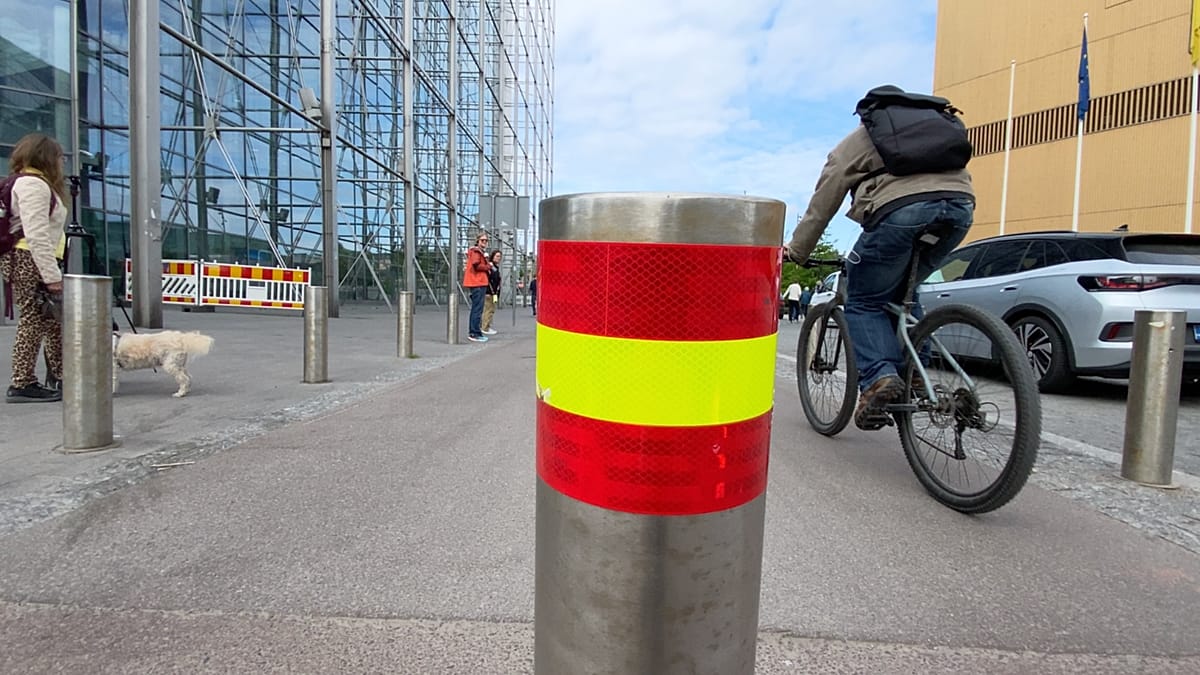
What if the most forward-thinking urban luxury was not a skyline, a signature tower, or a designer lobby, but a street where nobody dies? Helsinki road safety has become a global reference point, proving that elegant city design and human wellbeing can work together at the highest level.
For readers in luxury architecture, luxury design, and luxury interiors, Helsinki offers a powerful lesson: true sophistication is not only about aesthetics, materials, or exclusivity. It is also about how a city feels to move through—calm, intuitive, protected, and beautifully planned. Over decades, the Finnish capital has transformed its streets into safer, more liveable public spaces, recording 12 consecutive months without a single road death between 2024 and 2025, then continuing that streak for months more. That achievement did not happen by chance. It was designed.
Helsinki Road Safety Shows the Power of Design-Led Urban Planning
The success of Helsinki road safety is rooted in a long-term planning philosophy rather than a one-off policy change. For roughly 40 years, the city has worked toward reducing and eventually eliminating traffic fatalities. The result is an urban environment where street design, infrastructure investment, enforcement, and public culture support the same outcome.
This approach aligns closely with premium urban design principles. The best luxury environments are frictionless, intentional, and human-centered. Helsinki applied that same mindset to mobility. Instead of treating roads purely as conduits for cars, the city reimagined them as shared civic spaces where pedestrians, cyclists, transit users, and drivers all need protection.
Key measures included:
- Lower speed limits across city streets
- Narrower roadways to calm traffic naturally
- Improved walking and cycling facilities
- Automatic speed camera systems
- Strong public transport to reduce car dependency
- Legislation and enforcement targeting dangerous driving
In luxury design terms, this is a masterclass in systems thinking. The beauty of the outcome lies in how seamlessly multiple elements work together.
Why Safer Streets Matter to Luxury Architecture and Design
At first glance, road safety may seem distant from luxury architecture. In reality, it is deeply connected. High-end urban design increasingly values wellness, experiential quality, and spatial harmony. Streets are no longer secondary to buildings; they are extensions of the architectural experience.
Helsinki road safety demonstrates that premium urbanism is about more than iconic structures. It includes the public realm between them. A refined district loses much of its appeal if the streets are noisy, hostile, or dangerous. By contrast, a calm, walkable environment elevates residential value, retail desirability, and overall city prestige.
From mobility infrastructure to urban luxury
Helsinki has invested heavily in infrastructure that supports safer movement, including tunnels in busy downtown areas and bridges reserved for pedestrians and cyclists. These are not just traffic solutions; they are design statements. They shape how the city is perceived and experienced.
For developers, architects, and interior designers, the takeaway is clear: the user journey begins long before someone enters a building. The route from street to lobby, from station to residence, from bike path to boutique, is part of the luxury narrative.
Human-centered streets increase long-term value
Cities that prioritize people tend to create stronger real estate ecosystems. Safer, quieter streets can support:
- Higher-quality residential living
- More attractive mixed-use developments
- Better retail footfall
- Enhanced hospitality experiences
- Stronger public trust in urban planning
That is one reason Helsinki road safety resonates beyond transport policy. It is a case study in value creation through design.
The Design Moves Behind Helsinki’s Safer Streets
Several practical interventions stand out in the Helsinki model, especially for professionals interested in urban form and spatial strategy.
1. Lower speed limits as a design principle
Helsinki adopted 30 km/h as the maximum speed on many city streets around two decades ago. Lower speeds reduce the severity of collisions, but they also change the atmosphere of a place. Streets become calmer, more legible, and more compatible with luxury residential and cultural districts.
2. Narrower roads that naturally slow drivers
Rather than relying only on signage, the city narrowed roadways to influence driver behavior. This is a classic urban design tactic: shape movement through form. It is subtle, elegant, and effective.
3. Premium pedestrian and cycling infrastructure
Helsinki invested tens of millions of euros in cycling and pedestrian infrastructure, including dedicated bridges and improved connections between districts. Such interventions increase safety while making active mobility feel desirable rather than compromised.
4. Strong public transport reduces conflict
Excellent public transport reduces the number of car trips, which in turn lowers the risk of collisions. From a design perspective, integrated transit also supports cleaner, more breathable city centers with stronger placemaking potential.
5. Enforcement and communication reinforce culture
Helsinki road safety is not built on infrastructure alone. The city uses automatic speed cameras, traffic controls, and public awareness campaigns to reinforce a zero-tolerance attitude toward speeding and driving under the influence. This creates a civic culture where safety becomes a shared standard.
What Other Cities Can Learn From Helsinki Road Safety
Not every capital can copy Helsinki exactly. Cities differ in scale, density, politics, and street layout. But the principles behind Helsinki road safety are highly transferable.
Other cities can start with a focused roadmap:
- Set a long-term zero-fatality goal
- Reduce urban speed limits
- Redesign streets for people, not just vehicles
- Invest in cycling, walking, and transit infrastructure
- Use enforcement consistently and visibly
- Build public support through communication and trust
Perhaps the most important lesson is that design excellence and public safety should never be treated as separate agendas. The most admired cities of the future will likely be those that merge beauty, function, and care at every scale.
A New Definition of Urban Luxury
As luxury architecture evolves, wellness is becoming as important as visual identity. Buyers, travelers, and residents increasingly value neighbourhoods that feel serene, connected, and secure. In that context, Helsinki road safety offers a compelling model of next-generation urban luxury.
This is not luxury as excess. It is luxury as intelligence: better street proportions, safer crossings, quieter traffic, cleaner mobility, and a city experience designed around human life. Helsinki shows that when a city commits to that standard over time, the results can be extraordinary.
For architects, designers, and city leaders, the message is simple. Great design is not only what we build, but how we protect the people who move through it. Helsinki road safety proves that the most elegant city is one that saves lives by design.