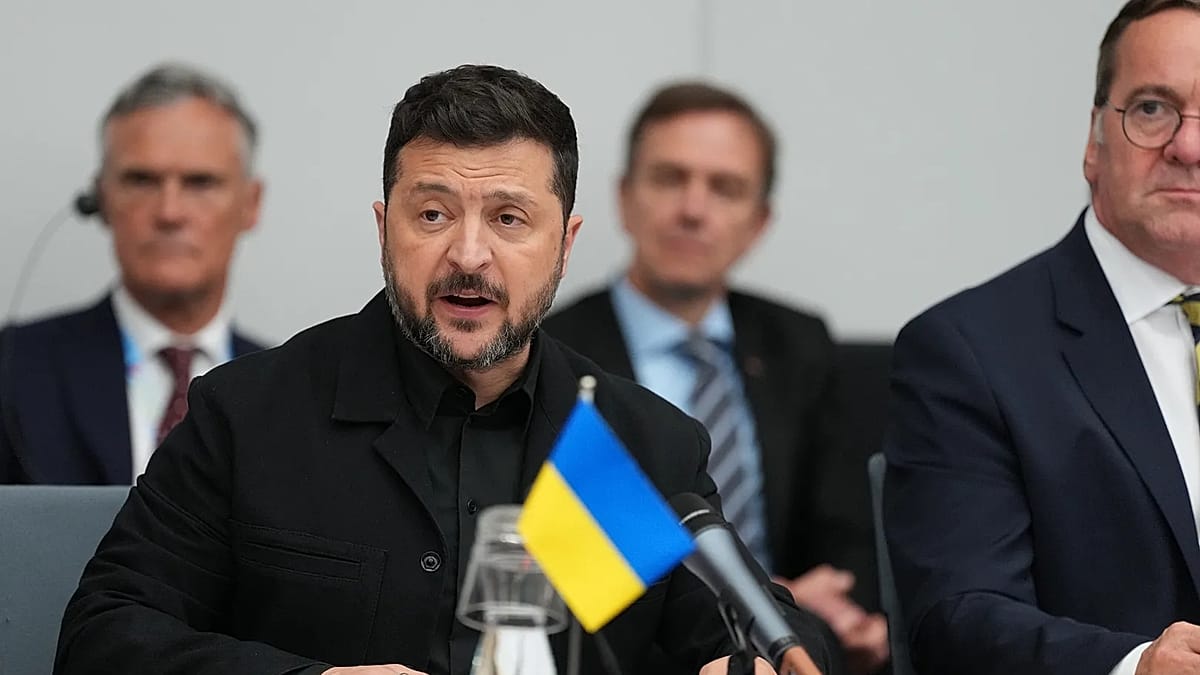
Luxury architecture does not exist in a vacuum. From geopolitical tensions to defence summits and shifting alliances, global events increasingly influence how high-end homes, hotels and private spaces are conceived, built and furnished. The latest round of calls between Donald Trump, Volodymyr Zelenskyy and Vladimir Putin, set against the backdrop of the upcoming NATO summit in Turkey, is another reminder that luxury architecture is closely tied to international stability, materials markets and investor confidence.
While the headlines focus on diplomacy and war, the ripple effects are felt far beyond government chambers. In the world of luxury design and luxury interiors, uncertainty can alter everything from construction timelines and sourcing strategies to the aesthetic language of contemporary prestige living.
Luxury Architecture in a Time of Geopolitical Uncertainty
The recent conversations involving the US, Ukraine and Russia come at a critical moment for Europe and global markets. With NATO members preparing to discuss defence spending, industrial capacity and support for Kyiv, sectors linked to real estate and design are paying close attention.
Luxury architecture is particularly sensitive to macro conditions because premium developments depend on:
- Cross-border investment flows
- Reliable access to specialist materials
- Stable energy and transport costs
- Predictable timelines for construction and delivery
- Confidence among ultra-high-net-worth buyers
When conflict escalates or diplomatic uncertainty intensifies, developers and private clients often reassess priorities. Some delay flagship projects, while others pivot toward resilient, self-sufficient properties designed to withstand disruption.
Why political stability matters to premium development
At the top end of the market, buyers are not simply purchasing square footage. They are investing in security, legacy and global mobility. Political instability can affect prime property destinations, alter demand for second homes and shift attention toward regions seen as safer long-term bets.
That means luxury architecture increasingly reflects a new set of values: discretion, autonomy, durability and strategic location.
From Diplomacy to Design: The Hidden Market Effects
The phone calls between Trump, Zelenskyy and Putin centred on the war in Ukraine and prospects for ending hostilities. Even when no immediate breakthrough emerges, such diplomacy can still move markets by shaping expectations around sanctions, reconstruction, defence budgets and regional confidence.
For luxury design professionals, these developments matter in practical ways. Europe remains a major centre for artisan manufacturing, stone sourcing, bespoke cabinetry, metalwork and collectible furnishings. Any instability across the continent can influence pricing and lead times.
Common pressure points include:
- Material volatility: Natural stone, timber, glass and metals may face cost fluctuations.
- Energy prices: Luxury construction is energy-intensive, especially for large residences and hospitality projects.
- Insurance and logistics: Transport routes and project risk assessments can become more complex.
- Investor caution: High-value developments may pause until markets stabilise.
As a result, luxury interiors are becoming more intentional. Designers are specifying fewer disposable trend pieces and more enduring, investment-grade materials that justify longer ownership cycles.
How Luxury Interiors Are Adapting to a Less Predictable World
If the last few years have taught the industry anything, it is that elegance now needs to coexist with resilience. Today’s luxury interiors are not just beautiful; they are expected to provide privacy, comfort, energy efficiency and operational independence.
The rise of secure and self-sustaining spaces
In premium residential design, clients are increasingly interested in features once considered niche. These may include:
- Advanced air filtration and climate systems
- Backup power integration
- Secure perimeters and discreet surveillance
- Acoustic insulation for privacy and calm
- Wellness rooms, safe rooms or protected lower levels
These elements are being incorporated without compromising visual sophistication. In fact, some of the most compelling luxury interiors of 2026 are those that hide high-performance systems behind refined craftsmanship, soft textures and architectural restraint.
Aesthetic shifts: quiet luxury meets strategic design
Periods of uncertainty often favour understated elegance over overt excess. This helps explain the ongoing appeal of quiet luxury across luxury design. Rather than dramatic display, affluent clients are gravitating toward timeless palettes, tactile surfaces, sculptural lighting and custom pieces that feel stable and permanent.
Luxury architecture is responding with homes that emphasise sanctuary-like qualities: thicker walls, layered natural materials, intimate courtyards, secure glazing and seamless indoor-outdoor transitions that create both serenity and control.
Europe, NATO and the Future of High-End Building
The upcoming NATO summit is expected to focus heavily on defence investment, industrial readiness and Europe’s role in its own security. Although this may seem far removed from luxury architecture, the connection is real. Increased defence spending can reshape public budgets, labour availability, energy priorities and industrial production across the continent.
For the built environment, that could mean:
- Greater competition for specialised manufacturing capacity
- Shifts in infrastructure investment across key regions
- New demand for secure compounds, diplomatic properties and executive hospitality
- Renewed interest in future-proof buildings with robust engineering
Luxury design has always mirrored the concerns of its era. In 2026, one of those concerns is preparedness. Whether for private estates, branded residences or elite urban apartments, clients want spaces that feel insulated from volatility without appearing defensive.
What This Means for Designers, Developers and Buyers
The biggest takeaway is clear: luxury architecture is becoming more strategic. Global politics, including the latest US, Ukrainian and Russian diplomatic exchanges, can influence sentiment well beyond foreign policy circles.
Designers and developers should watch several signals closely:
- Regional stability in prime European markets
- Supply chain reliability for premium finishes
- Energy and operating costs for large properties
- Buyer demand for security, wellness and resilience
For buyers, this moment may encourage a more thoughtful approach to acquisition and renovation. The most desirable properties are no longer defined only by location and spectacle, but also by adaptability, privacy and enduring quality.
In that sense, luxury interiors and luxury design are evolving from symbols of status into tools of reassurance.
Conclusion
The renewed diplomatic activity involving Trump, Zelenskyy and Putin highlights how quickly global events can affect industries far outside politics. For luxury architecture, the lesson is unmistakable: prestige design must now respond to a world shaped by uncertainty, security concerns and shifting alliances. The projects that will define the next chapter of luxury architecture are those that combine beauty with resilience, craftsmanship with strategy, and comfort with long-term confidence.