
Architecture news rarely captures both spiritual purpose and material innovation as powerfully as the AlMusalla Prize winner now heading to Uzbekistan. From its first installation in Jeddah to its new life at the inaugural Bukhara Biennial 2025, this remarkable project shows how luxury architecture can be defined not only by beauty, but by meaning, adaptability, and deep cultural intelligence.
Originally announced by the Diriyah Biennale Foundation in April 2024, the AlMusalla Prize invited architects to rethink the musalla, a flexible place for prayer and contemplation open to people of all faiths. The winning proposal, created by EAST Architecture Studio with artist Rayyane Tabet and engineering firm AKT II, stands out as a refined example of contemporary design rooted in tradition. Its relocation to Uzbekistan places it firmly within global architecture news while also aligning with growing interest in sustainable luxury design, artisanal craftsmanship, and transportable cultural spaces.
Architecture News from Uzbekistan: Why This Project Matters
The arrival of the AlMusalla Prize-winning structure in Uzbekistan is more than a venue change. It marks an important moment in architecture news, especially for readers following luxury architecture and culturally driven design across Central Asia and the Middle East.
Installed first at the Western Hajj Terminal of King Abdulaziz International Airport in Jeddah during the Islamic Arts Biennale, the musalla functioned for four months as a welcoming place for prayer and reflection. Its brief was highly specific yet deeply universal: create a sacred environment that serves Muslim worshippers while remaining open and accessible to non-Muslim visitors.
Now, by moving to the inaugural Bukhara Biennial 2025, the structure gains a second chapter. That transition underscores a major design theme shaping current architecture news: buildings and installations no longer need to be static to be significant. In luxury design circles, flexibility, reuse, and narrative value are becoming just as desirable as permanence.
A Modular Musalla Designed for Beauty, Meaning, and Reuse
At the core of this story is a highly considered architectural response to spirituality and mobility. The project was conceived as a modular structure that can be dismantled and reassembled, allowing it to travel without losing its spatial identity. That makes it especially relevant to conversations around sustainable architecture, circular design, and temporary pavilions with lasting cultural impact.
For luxury architecture audiences, the appeal lies in the project’s balance of tactile richness and conceptual restraint. Rather than relying on opulence in the conventional sense, the musalla achieves elegance through:
- Clear modular logic
- Natural material expression
- Regional craft references
- Inclusive spatial planning
- A strong sense of ritual and calm
This approach reflects a broader shift in architecture news, where value is increasingly measured by authenticity, environmental awareness, and emotional resonance.
Material Innovation Rooted in Local Resources
One of the project’s most compelling features is its use of materials derived from local date palm waste, including fronds and fibers. These materials were transformed into a sophisticated architectural language inspired by regional weaving traditions. The result is a space that feels both ancient and contemporary, handcrafted yet rigorously designed.
In the context of luxury home decor and luxury design, this material strategy is especially notable. It demonstrates how humble, local resources can be elevated through expert detailing and cultural storytelling. This is the kind of innovation that increasingly defines high-end interiors and collectible design: sustainable sourcing paired with artisanal refinement.
As architecture news continues to spotlight low-impact construction and bio-based materials, the AlMusalla project offers a persuasive case study in how ecological thinking can also produce visual and spatial richness.
What the Design Team Brought to the Project
The collaboration between EAST Architecture Studio, artist Rayyane Tabet, and AKT II helped shape a multidisciplinary work that moves beyond architecture alone. Each contributor added a different layer to the final experience:
- EAST Architecture Studio developed the architectural concept and spatial framework.
- Rayyane Tabet brought an artistic perspective that strengthened the project’s symbolic and cultural depth.
- AKT II provided engineering expertise to support the structure’s modularity, assembly, and relocation.
This kind of cross-disciplinary authorship is increasingly common in premium cultural commissions and remains a defining theme in global architecture news. It reflects the growing expectation that memorable design should perform on multiple levels: technical, aesthetic, social, and experiential.
Why the Bukhara Biennial Is a Powerful New Setting
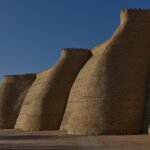
Bukhara is an especially resonant destination for the project. Known for its architectural heritage, layered urban identity, and historic role as a cultural crossroads, the city offers a meaningful backdrop for a contemporary musalla centered on faith, craft, and exchange.
Its placement in the inaugural Bukhara Biennial 2025 connects the installation to a larger conversation about the future of culture-led urbanism in Uzbekistan. For those following architecture news in emerging design capitals, this signals rising international attention on the region.
The move also reinforces a luxury design principle that extends far beyond private residences: context matters. Whether in a luxury home, gallery, or public pavilion, design becomes more compelling when it enters into dialogue with place, memory, and local tradition.
Lessons for Luxury Architecture and Home Design
Although the musalla is a public cultural structure, its ideas translate surprisingly well into luxury home and decor trends. Designers and homeowners can draw inspiration from several aspects of the project:
- Use natural, tactile materials with visible craftsmanship
- Favor modularity and adaptability in spatial planning
- Incorporate woven textures and regional artisanal references
- Create quiet zones for reflection and sensory calm
- Choose sustainable materials that carry a story
These themes are increasingly visible across luxury interiors, from sculptural room dividers to hand-finished wall treatments and biophilic design elements. In that sense, this project does not sit apart from residential trends; it helps define them.
The Bigger Takeaway in Architecture News
The AlMusalla Prize-winning project represents a compelling direction for contemporary design: one where sacred space, sustainability, modular construction, and cultural memory are seamlessly intertwined. Its journey from Jeddah to Uzbekistan gives this story unusual depth, showing how architecture can remain relevant across different sites and audiences without losing its essence.
For anyone tracking architecture news, this is a project worth watching closely. It proves that the future of luxury architecture may be less about excess and more about thoughtful materials, portable meaning, and spaces designed to welcome, reflect, and endure. In a design world increasingly shaped by climate awareness and cultural sensitivity, that may be the most luxurious idea of all.