
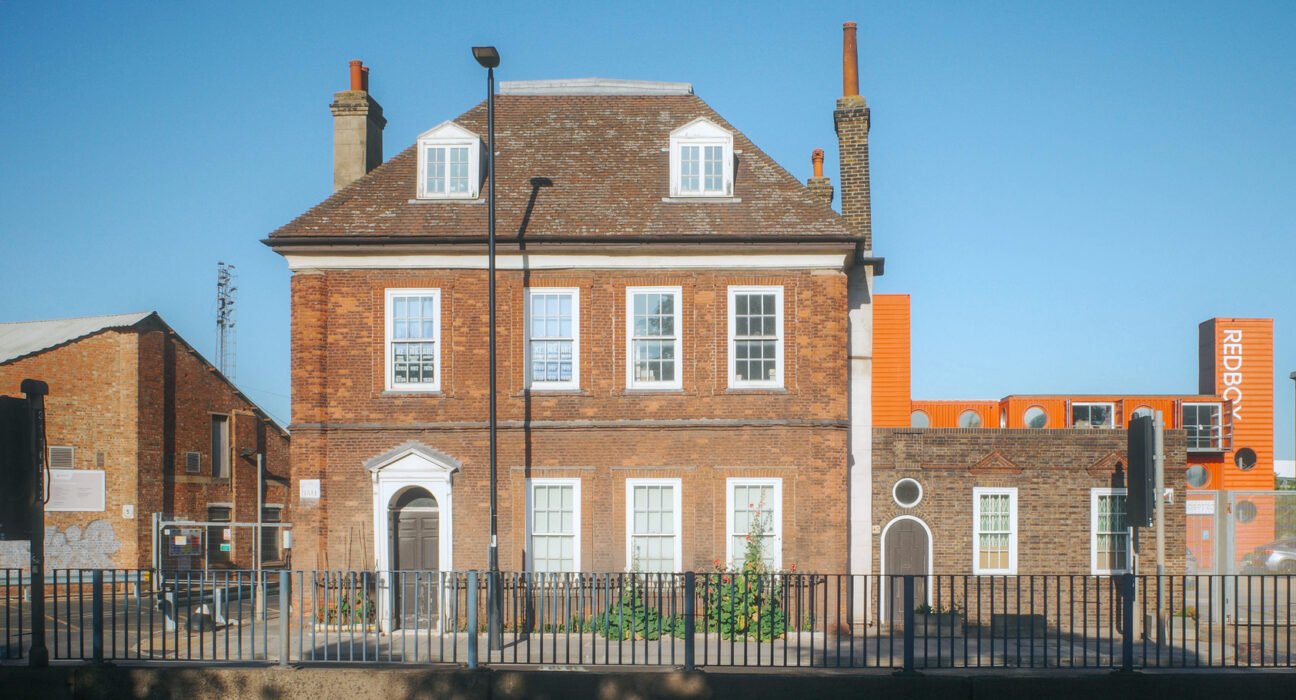
Architecture news rarely captures the tension between heritage and innovation as clearly as this latest London project. Assemble’s planned transformation of the Grade II*-listed Bromley Hall into a creative and light industrial workspace signals a sophisticated new chapter for one of the city’s most historically significant buildings.
Set within East London, Bromley Hall carries a deep architectural legacy, and its proposed renewal reflects a broader movement in adaptive reuse: preserving character while opening historic sites to contemporary production, design, and culture. For readers interested in luxury architecture, luxury design, and elevated urban regeneration, this project offers an important case study in how old structures can support modern creative economies without losing their soul.
Architecture News: Why Bromley Hall Matters
In the world of architecture news, listed-building interventions always draw attention, but Bromley Hall stands apart because of its rarity and status. As a Grade II*-listed structure, it is recognized as a particularly important building of more than special interest. Any proposed changes must therefore balance conservation, usability, and design sensitivity at a very high level.
Bromley Hall’s significance is not only architectural but urban. Historic halls such as this one often sit at the intersection of memory, craftsmanship, and community identity. Rather than treating the site as a static monument, the redevelopment aims to reactivate it through creative and light industrial use, a strategy that can generate long-term relevance while protecting built heritage.
This is exactly the kind of story dominating current architecture news: how cities can turn underused heritage assets into productive, future-facing spaces.
Assemble’s Approach to Adaptive Reuse
Known for thoughtful, community-minded work, Assemble has built a reputation for projects that blend experimental design with social and cultural value. Their involvement in Bromley Hall suggests that the intervention will likely go beyond a simple restoration. Instead, it points to a layered approach where preservation, material honesty, and practical use work together.
Adaptive reuse has become one of the most important themes in contemporary architecture news. Rather than demolishing aging buildings, architects and developers are increasingly choosing to retrofit them for new functions. This approach offers several advantages:
- It preserves embodied carbon by retaining existing structures
- It maintains historic character and craftsmanship
- It supports local identity and placemaking
- It creates unique interiors that new-build projects often struggle to replicate
For a project positioned within the luxury architecture and luxury design conversation, those qualities matter. Authenticity, patina, and spatial richness are increasingly prized in high-end environments, especially when paired with refined interventions and contemporary utility.
The Rise of Creative and Light Industrial Workspaces
One of the most compelling aspects of this architecture news story is the intended program. Creative and light industrial workspaces are becoming essential in major cities where artists, makers, fabricators, and independent design businesses face shrinking access to affordable, well-designed premises.
Unlike conventional office conversions, this type of workspace must support a broader range of activity. That often includes:
- Studios for designers and artists
- Workshops for small-scale fabrication
- Flexible maker spaces
- Shared production environments
- Hybrid spaces for display, collaboration, and craft
By adapting Bromley Hall for these uses, the project aligns with a larger shift in London architecture toward mixed-purpose environments that serve both economic and cultural life. This is significant because heritage buildings can offer generous volumes, durable construction, and tactile materials well suited to creative production.
In this context, the project is not just preservation. It is an investment in design culture, craftsmanship, and urban resilience.
What This Means for Luxury Architecture and Design
Although Bromley Hall is not a private residence, its relevance to luxury architecture and luxury home decor audiences is clear. Many of the same values shaping premium residential design also drive high-quality adaptive reuse: respect for material history, custom detailing, artisanal finishes, and the intelligent layering of old and new.
Heritage as a Luxury Asset
In high-end design, historic structure is increasingly viewed as an asset rather than a constraint. Exposed timber, aged masonry, original proportions, and handcrafted building elements create a depth that cannot be easily reproduced. When architects preserve these qualities while integrating modern infrastructure, the result often feels more exclusive and sophisticated than standard contemporary construction.
Industrial Aesthetics with Refined Execution
The light industrial component also connects with ongoing luxury decor trends. Raw yet elegant materials such as metal, stone, reclaimed wood, and limewashed surfaces continue to influence everything from boutique hospitality to luxury home interiors. Projects like Bromley Hall show how industrial character can be elevated through careful detailing, daylight strategy, and spatial restraint.
That crossover is one reason stories like this perform strongly in architecture news: they inspire not only architects and developers but also interior designers, collectors, and homeowners looking for authentic design language.
Challenges of Transforming a Listed Building
Every heritage adaptation comes with complexity, and that is especially true for a Grade II*-listed site. Bringing a historic hall into contemporary use typically requires negotiation between conservation authorities, design teams, structural consultants, and future operators.
Common challenges include:
- Upgrading building services without compromising historic fabric
- Improving accessibility while respecting original layouts
- Meeting fire, acoustic, and thermal standards sensitively
- Accommodating new uses within protected architectural elements
These constraints can be demanding, but they also tend to produce better architecture. Limitations often force more inventive solutions, and that creative rigor is a defining feature of the best architecture news stories emerging from London today.
Why This London Project Reflects a Bigger Trend
Bromley Hall’s transformation reflects several currents shaping contemporary urban development:
- A shift away from demolition-first thinking
- Growing appreciation for adaptive reuse and retrofit
- Rising demand for creative workspace in major cities
- Stronger overlap between heritage conservation and modern design culture
For London, the project may become an example of how historic buildings can be repositioned to support future industries. For the design world, it reinforces a powerful idea: beauty and utility do not have to compete. Heritage architecture can remain protected while becoming more active, more public, and more economically relevant.
As a piece of architecture news, this story resonates because it speaks to both preservation and possibility. It shows how thoughtful design can unlock new life in old structures without erasing their identity.
Conclusion
The Bromley Hall proposal stands out in architecture news because it brings together heritage conservation, adaptive reuse, and creative industry in one meaningful London intervention. If executed with the care Assemble is known for, the project could become a benchmark for transforming listed buildings into productive, design-led spaces.
The clearest takeaway is this: the future of great architecture may depend less on building from scratch and more on reimagining what already exists. Bromley Hall is a reminder that historic spaces, when treated intelligently, can become some of the most compelling environments for contemporary life and work.