Architecture news rarely arrives with such urgency. A powerful 7.4-magnitude earthquake has struck Colombia, leaving a trail of damage across historic landmarks, civic buildings, hospitals, and homes—an event that underscores how vulnerable even the most culturally rich urban landscapes remain in seismic zones.
Published reports indicate that the earthquake hit on 10 August 2026, with its epicenter located deep beneath the surface near San José del Palmar in Chocó. Colombia has declared a national state of emergency as rescue and assessment operations continue. Beyond the tragic human toll, the disaster is already emerging as a major story in architecture news because it has impacted both treasured heritage structures and essential modern infrastructure across cities including Cali, Pereira, Manizales, Armenia, and Quibdó.
Architecture News From Colombia: Why This Earthquake Matters
Colombia sits at the intersection of the Nazca, South American, and Caribbean tectonic plates, making seismic activity a recurring reality. According to geological assessments, this is the country’s strongest earthquake since 1979 and among the most significant on Colombia’s Pacific coast in modern history.
For the design and preservation community, this is more than a disaster update. It is a critical moment in architecture news because the earthquake has exposed structural weaknesses in a region known for its layered architectural identity, where colonial districts, republican-era buildings, modernist works, religious monuments, and vernacular housing coexist.
Initial official figures reported:
- 1,575 damaged housing units
- 37 destroyed homes
- 61 collapsed buildings
- 18 affected healthcare facilities
- 52 affected educational institutions
- 18 damaged roads
- 6 affected airports
These numbers may change as assessments continue, but they already show the broad architectural and urban impact of the quake.
Historic Architecture Suffers Major Losses
One of the most significant cultural losses so far is in Manizales, where the Catedral Basílica de Nuestra Señora del Rosario sustained partial destruction. The Neo-Gothic cathedral, an iconic landmark in Plaza de Bolívar and one of Colombia’s most recognizable religious buildings, reportedly lost one of its side towers during the earthquake.
Designed by Julien Polti and built between 1928 and 1939, the cathedral is not only a place of worship but also a major piece of Colombia’s architectural heritage. Its damage instantly elevated the event within global architecture news, as the collapse highlights the challenge of preserving monumental masonry and historic vertical structures in earthquake-prone regions.
Colombia’s heritage architecture often relies on traditional construction systems such as:
- Tapia
- Adobe
- Bahareque
- Timber framing
These ancestral techniques are deeply tied to local identity, climate responsiveness, and regional craft traditions. However, they can be especially vulnerable when seismic reinforcement is outdated, incompatible, or absent. For luxury architecture and luxury home restoration professionals, the lesson is clear: heritage value and structural performance must be addressed together.
Modern Buildings Also Reveal Seismic Vulnerabilities
This wave of architecture news is not limited to historic landmarks. Modern buildings have also suffered serious structural failure. In Cali, the Hospital Universitario del Valle reportedly experienced a partial collapse that caused the loss of three floors. Additional healthcare facilities in the region also sustained damage, raising serious questions about resilience in critical public architecture.
Educational buildings were also affected. In Pereira, the exterior walls of the Law School at Universidad Libre collapsed, while in Armenia, damage was reported at Universidad del Quindío. These incidents show that the earthquake’s effects cut across eras, typologies, and material systems.
For architects, developers, and luxury design observers, this reinforces a vital principle: prestige or scale alone do not guarantee performance. Structural engineering, retrofit strategy, and materials compatibility remain central to resilient design, especially in high-risk geographies.
Why Colombia’s Architectural Landscape Is Especially Fragile
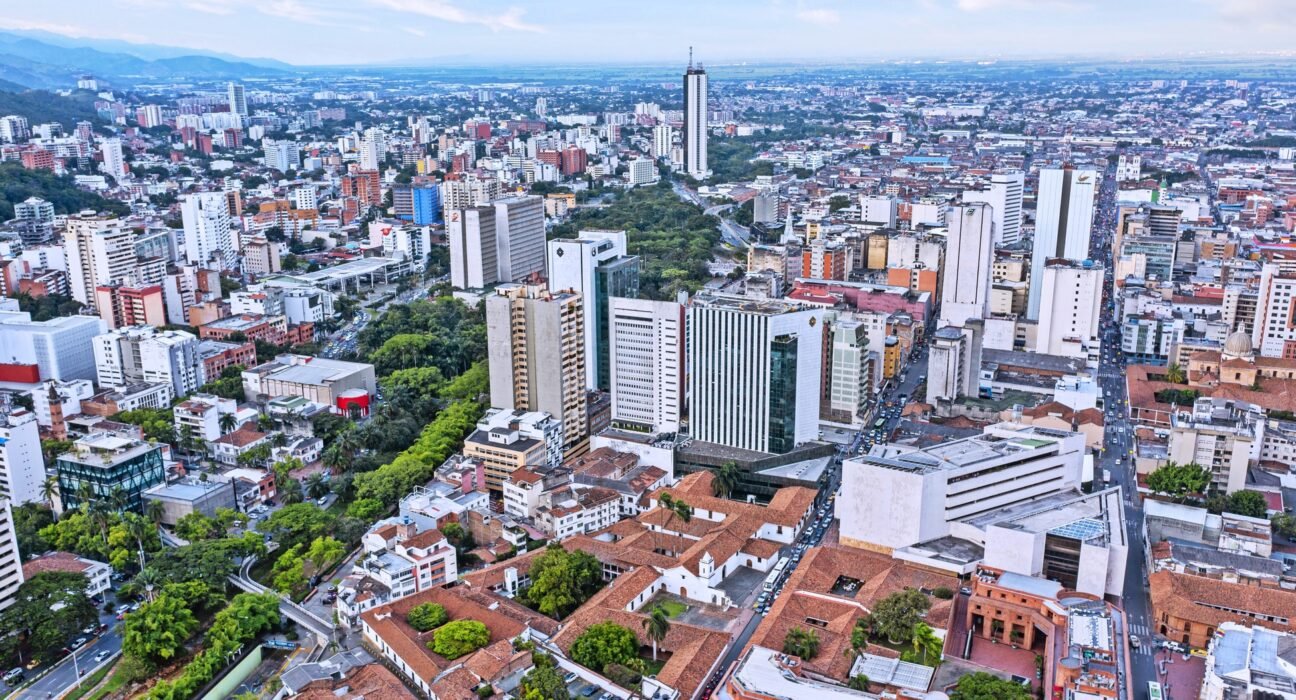
Valle del Cauca and the Coffee Region hold a distinctive place in Colombian architecture. Their built environment includes colonial street grids, civic institutions, transportation corridors, churches, universities, and traditional homes. Cali, in particular, is recognized as a key center for Colombian modern architecture.
That diversity is part of the country’s appeal, but it also complicates recovery. Each building type requires a different response:
- Heritage landmarks need conservation-sensitive reinforcement.
- Hospitals and schools require immediate safety assessment and functional restoration.
- Traditional houses may need community-scale retrofitting programs.
- Modern concrete structures demand forensic engineering review to understand failure patterns.
This complexity is why the story deserves sustained attention in architecture news. Reconstruction cannot be one-size-fits-all.
What This Means for Luxury Architecture and Design
At first glance, earthquake recovery may seem distant from luxury architecture, luxury decor, or luxury home conversations. In reality, the connection is direct. High-end residential design increasingly emphasizes craftsmanship, authenticity, and regionally rooted materials—the very qualities often found in heritage buildings and artisanal construction traditions.
The Colombia earthquake offers several takeaways for the luxury sector:
- Preservation adds value: Historic character remains one of the most desirable assets in luxury real estate.
- Resilience is a premium feature: Buyers and owners increasingly prioritize seismic safety, durability, and intelligent retrofitting.
- Material honesty matters: Natural materials such as timber, masonry, and earth-based systems require expert detailing to perform well.
- Design must be place-specific: Climate, geology, and cultural context should shape both architecture and interiors.
In other words, the best luxury design is not just beautiful—it is informed, technically robust, and deeply connected to place.
A Global Reminder in Today’s Architecture News Cycle
This earthquake comes amid a period of intense global reconstruction, following recent seismic events in Venezuela, Japan, and the United States. Around the world, architects and preservationists are also confronting the destruction of built heritage from war, explosions, and environmental stress.
From UNESCO-led restoration efforts in Mosul and Beirut to long-term regeneration in earthquake-affected cities such as Gyumri, the broader message in architecture news is unmistakable: rebuilding is not only about replacing structures. It is about protecting memory, identity, and civic life.
Conclusion
The latest architecture news from Colombia is a sobering reminder that architecture is never separate from human vulnerability. As damage assessments continue, the country faces the enormous task of saving lives, stabilizing infrastructure, and preserving the historic buildings that embody its cultural identity.
For architects, designers, developers, and homeowners alike, the takeaway is clear: resilience must be built into every layer of the built environment. In the months ahead, Colombia’s recovery will likely become one of the most important stories in architecture news, not only for what was lost, but for how restoration and rebuilding can be done better.