Architecture news rarely carries the emotional weight of a project like 70 Mulberry Street. In Manhattan’s Chinatown, Grimshaw has officially begun rebuilding the historic former school-turned-community center, reviving a civic landmark that has long anchored cultural life, nonprofit services, and neighborhood identity.
Originally constructed in the late 19th century as Public School 23, the building later evolved into a shared home for several important Chinatown organizations. After a devastating fire in January 2020 destroyed the upper three floors and displaced tenants, the site became a symbol of both loss and resilience. Now, under the leadership of the New York City Department of Design and Construction, the reconstruction aims not simply to replace what was lost, but to create a more accessible, flexible, and future-ready community destination.
Architecture News: A Historic Chinatown Landmark Gets a New Life
This major reconstruction will span roughly 85,720 square feet, making it one of the most meaningful civic restoration efforts now underway in Lower Manhattan. The project will return about 51,000 square feet to the five former tenant organizations that once operated from the building, while also adding approximately 16,500 square feet of new community-focused space.
The rebuilding effort serves a dual purpose:
- Preserve the architectural identity of the original structure
- Expand the building’s role as a modern community and cultural hub
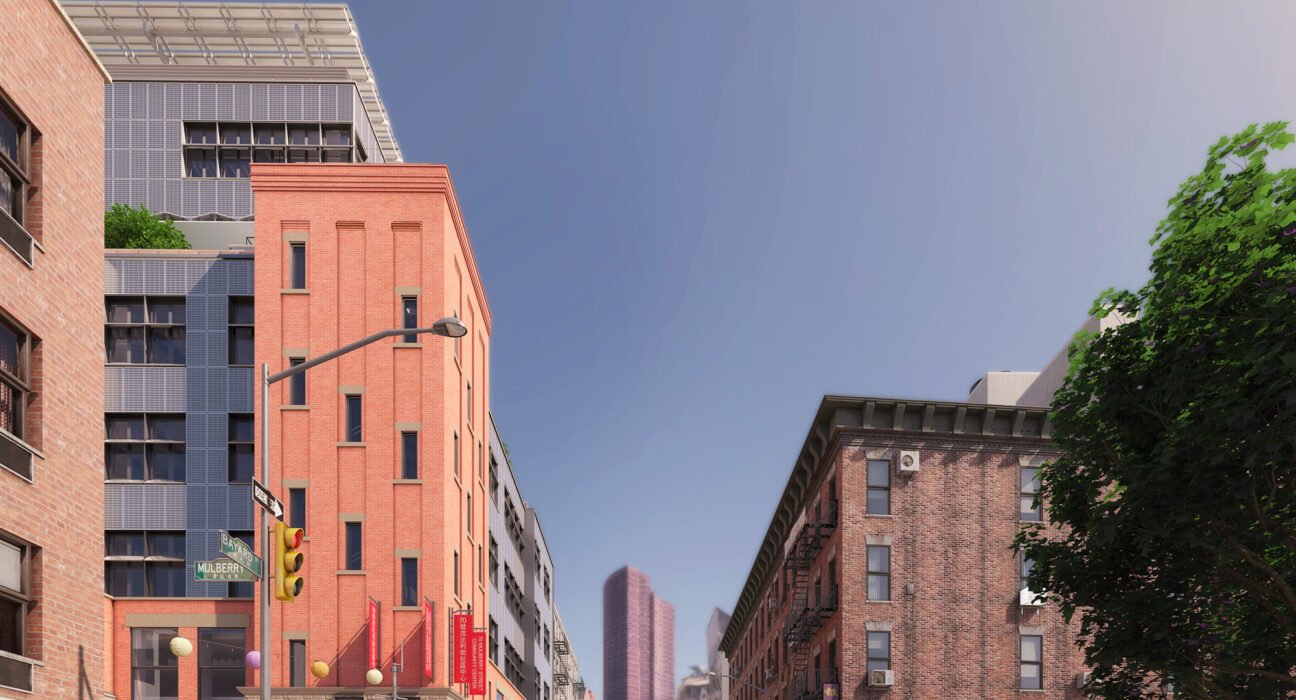
That balance is central to why this story stands out in current architecture news. Rather than treating preservation and innovation as opposing ideas, the project combines both. Historic street-facing facades along Mulberry Street will be retained, helping the building maintain its familiar urban presence while the interior is reimagined for contemporary needs.
Who Will Return to 70 Mulberry Street?
The restored building will once again house five organizations displaced after the fire:
- Chinese-American Planning Council
- Chen Dance Center
- Museum of Chinese in America
- United East Athletics Association
- Chinatown Manpower Project
These groups represent a broad spectrum of community life, from arts and heritage to workforce development and youth programming. Their return ensures that the project is more than an architectural exercise; it is a reinvestment in social infrastructure.
How Grimshaw’s Design Expands Community Access
Grimshaw’s design introduces a range of new spaces intended to support both tenant organizations and the wider Chinatown neighborhood. Among the most notable additions is a double-height multipurpose room designed for recreation, gatherings, and community events. This kind of flexible civic space is increasingly important in urban design, especially in dense neighborhoods where public venues are limited.
Additional facilities will include:
- Meeting rooms for programming and collaboration
- Administrative offices for resident organizations
- Flexible reservable spaces for shared community use
- Improved circulation and accessibility throughout the building
For readers following architecture news, this reflects a growing trend in adaptive reuse and civic rebuilding: designing buildings that can support multiple users, changing schedules, and evolving neighborhood demands over time.
Accessibility and Sustainability at the Forefront
The reconstruction is also notable for its accessibility and environmental upgrades. Three new elevators will improve access across the building, making the facility more inclusive for visitors, staff, and community members of all ages and mobility levels.
Environmental performance has also shaped the redesign. Planned features include operable windows for natural ventilation, landscaped terraces, and new street trees intended to help reduce the urban heat island effect. These elements may appear modest compared with dramatic high-rise sustainability systems, but in a community building, they can have an outsized daily impact on comfort, energy use, and neighborhood livability.
This is the kind of practical, people-centered progress increasingly defining the best architecture news stories: architecture that supports wellness, climate responsiveness, and public life all at once.
Preservation, Culture, and Public Art in One Project
What makes 70 Mulberry Street especially compelling is the way it combines historic preservation with cultural renewal. The retained facades will preserve the building’s visual connection to Chinatown’s streetscape, while the updated interiors will help sustain the organizations that give the address its deeper meaning.
The project also includes a permanent public artwork by Jennifer Wen Ma, commissioned through the New York City Department of Cultural Affairs’ Percent for Art program. Integrating public art into a reconstruction of this scale reinforces the building’s civic role and adds another layer of cultural value.
In luxury architecture and design circles, there is growing appreciation for projects that define sophistication not through excess, but through meaning, craftsmanship, and long-term civic contribution. Although 70 Mulberry Street is not a private luxury residence, it embodies many of the same values that matter in high-end design today:
- Respect for heritage
- Thoughtful material preservation
- Flexible, high-function interiors
- Wellness-oriented upgrades
- Strong connection to art and place
That makes this development relevant not only as local civic infrastructure, but also as a benchmark in contemporary design thinking.
Why This Project Matters Beyond Chinatown
In the wider landscape of architecture news, the rebuilding of 70 Mulberry Street speaks to several major themes shaping cities today: post-disaster recovery, adaptive reuse, community consultation, and equitable access to well-designed spaces. The project was informed by engagement with former tenants and neighborhood representatives, showing how public architecture can respond directly to the people it serves.
It also highlights the importance of designing for continuity. When a beloved community building is lost, the damage extends beyond bricks and mortar. It affects memory, services, identity, and belonging. Reconstructing such a place means restoring a network of relationships as much as a physical structure.
For New York City, this project is a reminder that some of the most important design work happens not in iconic towers, but in civic buildings woven into everyday life. For the architecture world, it is a case study in how rebuilding can honor the past while making room for a stronger future.
As this architecture news story continues to develop, 70 Mulberry Street stands out as a powerful example of architecture’s social value. Grimshaw’s reconstruction promises to return a historic Chinatown landmark to the community with greater accessibility, more shared space, and renewed cultural purpose. The clear takeaway is this: the best architecture news is not just about buildings going up, but about communities being rebuilt with care.