
Architecture news rarely feels as urgent—or as human—as the work of Xu Tiantian. In an era when luxury design is often equated with spectacle, her projects in rural China make a more enduring argument: true luxury lies in identity, memory, craftsmanship, and the intelligent revival of place.
The Beijing-based architect, founder of DnA Design and Architecture, has become internationally recognized for a series of carefully targeted interventions in Songyang County, Zhejiang Province. Across hundreds of villages, Xu has developed what she calls an “architectural acupuncture” strategy: modest yet precise public projects that reactivate local economies, celebrate heritage, and reconnect communities with their own landscapes. For readers following luxury architecture, luxury home decor, and luxury design, her work offers a powerful shift in perspective—away from excess and toward meaning.
Architecture News Spotlight: Xu Tiantian and the Idea of Architectural Acupuncture
What makes this architecture news story so compelling is that Xu’s buildings are not conceived as isolated objects. Instead, each project begins with a diagnosis of local needs. A village may require a cultural anchor, a production space, a civic gathering point, or a way to preserve endangered building fabric. The architectural response is always site-specific, culturally grounded, and strategically small enough to trigger wider change.
This method has transformed Songyang into a benchmark for rural revitalization architecture. Rather than imposing a signature style, Xu tailors every intervention to the village’s history, social structure, available materials, and economic potential. The result is a body of work that feels contemporary without being placeless.
A luxury lesson in restraint
In high-end design circles, luxury is increasingly defined by authenticity and rarity. Xu’s work embodies both. Her projects use:
- Local materials and regional construction techniques
- Adaptive reuse of abandoned village structures
- Programs that support everyday life rather than image-making
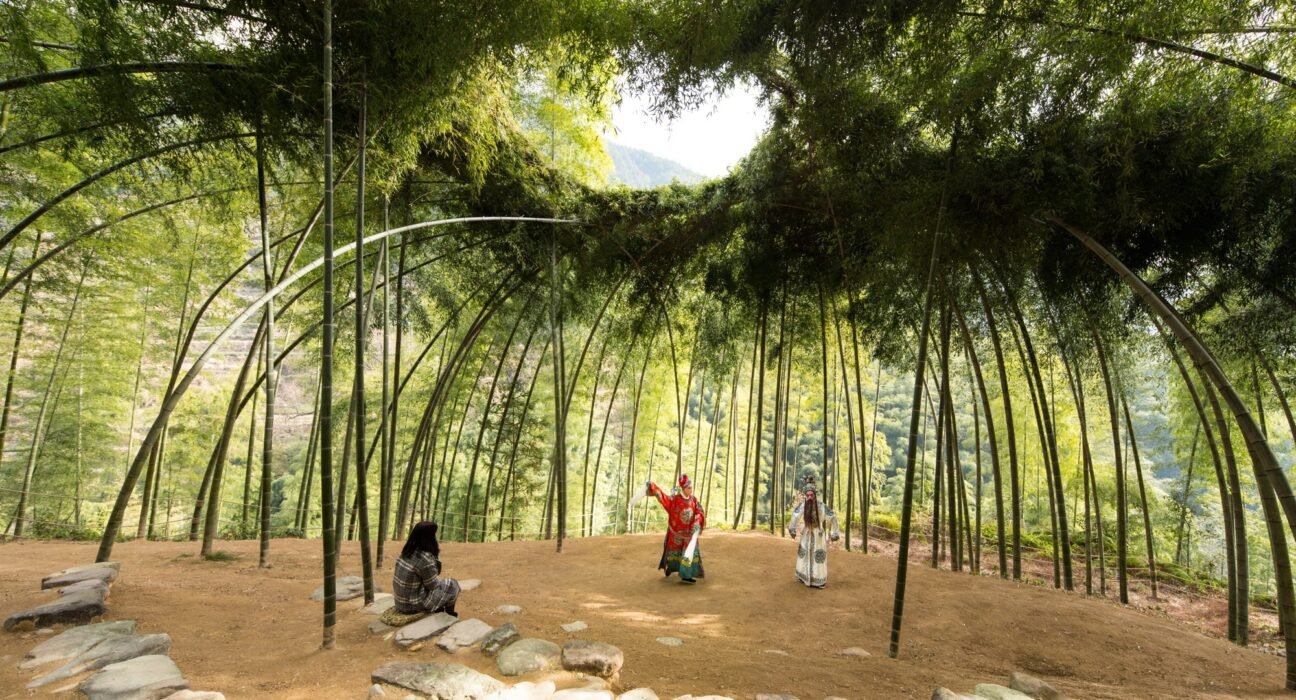
- Architectural forms that frame landscape, ritual, and production
That approach resonates strongly with today’s luxury home and luxury decor audiences, who are drawn to interiors and spaces with story, texture, and a sense of permanence.
Connecting the Past and the Future Through Design
One of Xu Tiantian’s most memorable ideas is that architecture should connect the past and the future. That philosophy is central to why this architecture news feature matters beyond the professional design world. Her buildings do not mimic history, nor do they reject it. They translate heritage into contemporary use.
Xu has spoken about growing up in an old wooden house in Fujian Province, where layered courtyards, refined details, and shared living shaped her sense of space. That early experience helps explain the emotional intelligence in her projects today. Whether she is working on a memorial hall, village center, bridge, museum, or factory, she treats architecture as a social and cultural medium—not simply an aesthetic exercise.
Why villages matter in contemporary architecture
For years, global attention focused overwhelmingly on megacities and urban expansion. Xu’s work redirected that conversation toward the countryside. In many Chinese villages, depopulation, neglected buildings, and fading traditions had created a fragile condition. Her projects proved that design can become infrastructure for recovery.
Key impacts include:
- Restoring local identity: Each village is encouraged to rediscover what makes it distinct.
- Stimulating rural economies: New cultural venues and productive spaces attract visitors, investors, and returning residents.
- Supporting community life: Architecture becomes a platform for gathering, performance, commerce, and memory.
- Preserving vernacular intelligence: Existing materials, forms, and construction knowledge are respected rather than erased.
Projects That Turn Architecture News Into Tangible Change
Several of Xu’s Songyang projects illustrate how modest architecture can generate outsized influence. This is where architecture news becomes more than a headline—it becomes measurable transformation.
Brown Sugar Factory
Among her best-known works, the Brown Sugar Factory elevates a local industry into an architectural event. Steam, movement, and production are not hidden; they become part of the experience. The building is modern in structure yet deeply rooted in village life, serving both as a working facility and as a social space. Its appeal lies in precision, atmosphere, and cultural relevance—qualities often associated with luxury design at its best.
Pingtian Village Centre
Instead of allowing abandoned houses to disappear, Xu reimagined them as a new civic resource. The project demonstrates the value of adaptive reuse in luxury architecture discourse: preserving patina, memory, and material character while delivering new public purpose.
Hakka Indenture Museum and other village interventions
Other works, including the Hakka Indenture Museum, use excavated local stone and restrained architectural language to create contemplative environments tied to regional history. In these projects, materiality is never decorative for its own sake. It is narrative, tactile, and place-specific—exactly the kind of quality that luxury interiors and bespoke home design increasingly prize.
What Luxury Architecture Can Learn From Xu Tiantian
This architecture news story speaks directly to evolving definitions of luxury. In premium homes and high-end hospitality alike, clients are seeking spaces that feel rooted, ethical, and emotionally intelligent. Xu’s work suggests several lessons:
- Luxury is context: The most memorable spaces belong to their setting.
- Luxury is craftsmanship: Material honesty and skilled detailing outlast trends.
- Luxury is cultural depth: A space with heritage feels richer than one built only for display.
- Luxury is social value: Good design improves life, not just appearance.
For those interested in luxury home decor, this translates into interiors that celebrate natural materials, local craft traditions, layered histories, and thoughtful spatial flow. For luxury architects and developers, it means designing properties that respect land, community, and cultural continuity.
Why This Architecture News Story Matters Now
At a time when many places risk becoming visually interchangeable, Xu Tiantian’s work offers a rare counterpoint. Her projects are contemporary but never generic. They prove that architecture can be elegant without extravagance, and transformative without monumental scale.
Perhaps most importantly, they show that design can ask bigger questions: Who is a place for? What should be preserved? How can architecture revive dignity, pride, and possibility? Those questions are as relevant to a remote village as they are to a luxury residence.
In the end, the real takeaway from this architecture news feature is simple: the future of great design may not lie in louder buildings, but in wiser ones. Xu Tiantian reminds us that architecture becomes truly luxurious when it connects people to history, landscape, and a more meaningful future.