
Architecture news rarely offers such an intimate look at where design actually happens. In Marc Goodwin’s latest photographic survey of Belgian studios, the workplace itself becomes the story: a portrait of creativity shaped by adaptive reuse, atmosphere, and the rituals of daily studio life.
Extending his long-running Atlas of Architectural Atmospheres, Goodwin turns his camera toward Antwerp, Brussels, and Ghent, documenting a wide range of practices, from established names like B-architecten, POLO, and Binst Architects to smaller, highly distinctive studios such as Studio Okami, Stand Van Zaken, and Bruno Spaas Architectuur. For readers interested in luxury architecture, luxury design, and refined spatial culture, the series reveals an important truth: inspiring workspaces are not always lavish, but they are always intentional.
Architecture News From Belgium: Why These Offices Matter
This chapter in architecture news stands out because it goes beyond polished project photography. Instead of focusing on finished buildings alone, the series examines the environments where ideas are tested, debated, and refined. Goodwin also asked each office the same question: what makes a good office space and office culture?
The answers show striking consistency across different scales and styles. Belgian architecture offices value:
- Natural light and spatial calm
- Flexibility for collaboration and focused work
- A sense of community through shared meals and conversation
- Buildings with memory, texture, and layered histories
- Spaces that feel human rather than corporate
That perspective resonates well beyond professional architecture circles. In the luxury home and luxury home decor world, the same principles increasingly shape how clients think about comfort, craftsmanship, and atmosphere.
The Power of Adaptive Reuse in Belgian Studio Design
One of the most compelling themes in this architecture news story is adaptive reuse. Many of the featured studios occupy buildings with rich past lives, proving that exceptional design culture often thrives in places marked by history.
B-architecten works from Cinema Lux in Antwerp, a 1913 building originally designed as one of the city’s first purpose-built cinemas. i.s.m.architecten occupies a former diamond cutting workshop dating to 1895. Binst Architects has made a former rubber storage facility its home, while Bruno Spaas Architectuur works within a former stamp-making shop and workshop.
Elsewhere, the stories are equally evocative. POLO.platform Brussels inhabits a former logistics and cultural events space, and OYO is based in a lock keeper’s building on an island in Ghent. These settings add material character, unusual proportions, and a sense of continuity that new-build office space often lacks.
For luxury design enthusiasts, this is a powerful reminder that elegance does not depend solely on expensive finishes. Heritage, patina, and intelligent transformation can create richer interiors than uniform perfection ever could.
What Belgian Architects Say Makes a Great Office
If there is a defining thread running through this architecture news feature, it is that workplace quality is measured as much by culture as by design.
Comfort Without Complacency
Studio Okami describes its Antwerp studio as a “home office away from home,” blending comfort with concentration. That balance is increasingly relevant in both workplace interiors and luxury home decor, where soft, livable spaces must still support function and focus.
Openness and Exchange
POLO.platform emphasizes an open culture where disciplines mix naturally, whether through quick project discussions or shared lunches. OYO similarly describes a workplace that evolves with its people and encourages spontaneous interaction. These ideas reflect a broader movement in contemporary office design: spaces should not just contain teams, they should actively support innovation.
Calm, Light, and Social Warmth
BRUT Architecture and Urban Design highlights spaciousness, natural light, city views, greenery, and daily shared meals as essential ingredients in office life. Their description suggests that luxury in a workspace is less about opulence and more about generosity: room to think, room to gather, and room to retreat.
Mess, Materials, and Experimentation
Not every inspiring office is pristine. i.s.m.architecten embraces creative disorder, while FELT architecture & design values spatial abundance over polished luxury, using generous volumes for models, mock-ups, and testing. In design terms, this reflects an important principle: beauty often emerges from spaces that allow process, not just presentation.
Studios to Watch Across Antwerp, Brussels, and Ghent
This edition of architecture news also highlights the diversity of Belgium’s design scene. A few notable takeaways from the featured cities include:
Antwerp
- B-architecten brings a large-team creative energy to a historic cinema building.
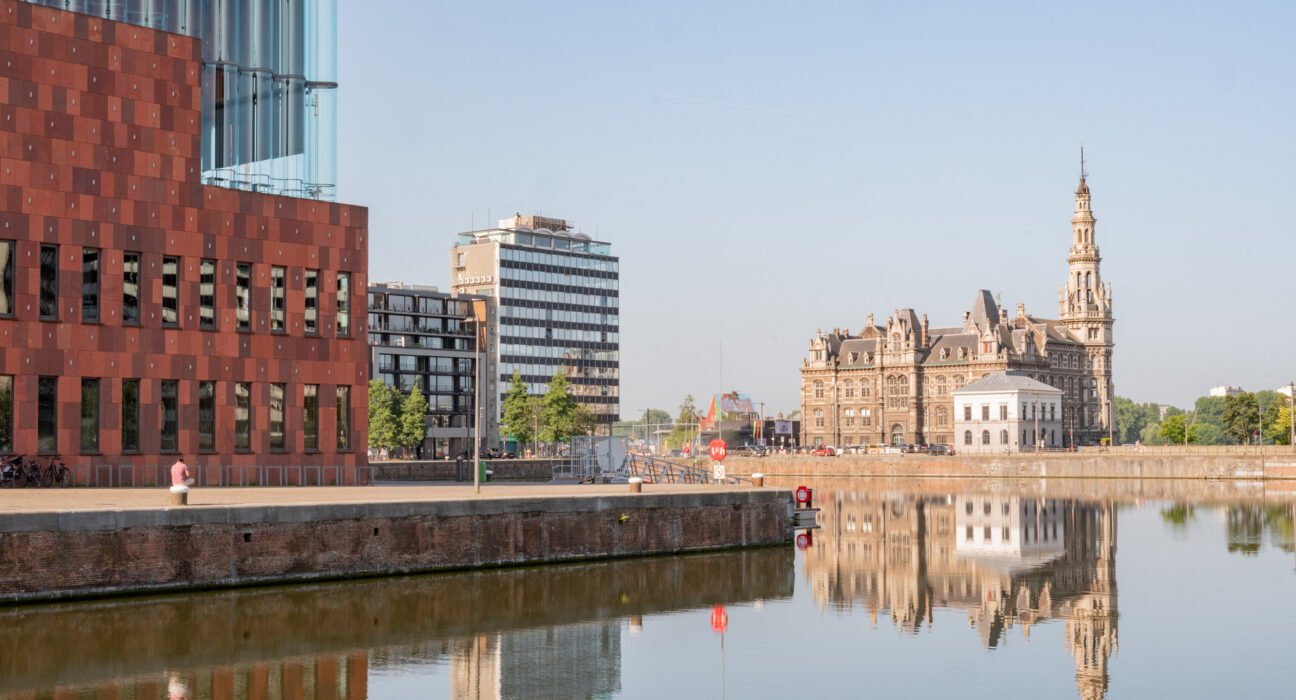
- POLO.platform Antwerp works from a former shipping office designed by Raymond Goovaerts.
- Binst Architects pairs innovation with tactile, light-filled workplace design.
- Studio Okami, Contekst, and Bruno Spaas Architectuur show how smaller studios cultivate deeply personal atmospheres.
Brussels
- OUEST describes its workplace as an atelier more than an office, underscoring the collective nature of architectural practice.
- BRUT demonstrates how raw interiors can feel warm through plants, meals, and thoughtful planning.
- POLO.platform Brussels illustrates the creative potential of repurposed industrial and event spaces.
Ghent
- Stand Van Zaken captures the idea of generosity in a compact studio setting.
- OYO offers a people-shaped model of office evolution.
- Robbrecht en Daem Architecten and FELT architecture & design reinforce Ghent’s reputation for spatial experimentation and design rigor.
What This Means for Luxury Architecture and Interior Culture
For followers of luxury architecture, this story broadens the definition of what premium design looks like. Rather than relying on spectacle, these Belgian studios demonstrate values that are becoming increasingly influential across high-end residential and commercial interiors:
- Atmosphere matters as much as appearance — the emotional quality of space is central to good design.
- Heritage adds depth — former workshops, cinemas, depots, and offices bring narrative richness.
- Community shapes value — shared rituals can elevate a space more than expensive materials alone.
- Flexibility is a luxury — rooms that support multiple modes of work and interaction feel more refined and future-ready.
That makes this more than a studio roundup. It is a lesson in how architecture offices themselves can model better ways of living and designing.
Conclusion: A Fresh Perspective in Architecture News
The best architecture news does more than announce projects; it reveals the ideas and environments behind them. Marc Goodwin’s survey of Belgium’s architecture offices shows that inspiring design culture grows from light, memory, collaboration, and spatial character. Whether in a former cinema, workshop, depot, or waterfront structure, these studios prove that great architecture begins with places that nurture imagination every day.
For anyone tracking luxury design trends, the takeaway is clear: the most compelling spaces are not simply expensive or immaculate. They are layered, lived-in, and deeply attuned to how people create, gather, and feel.