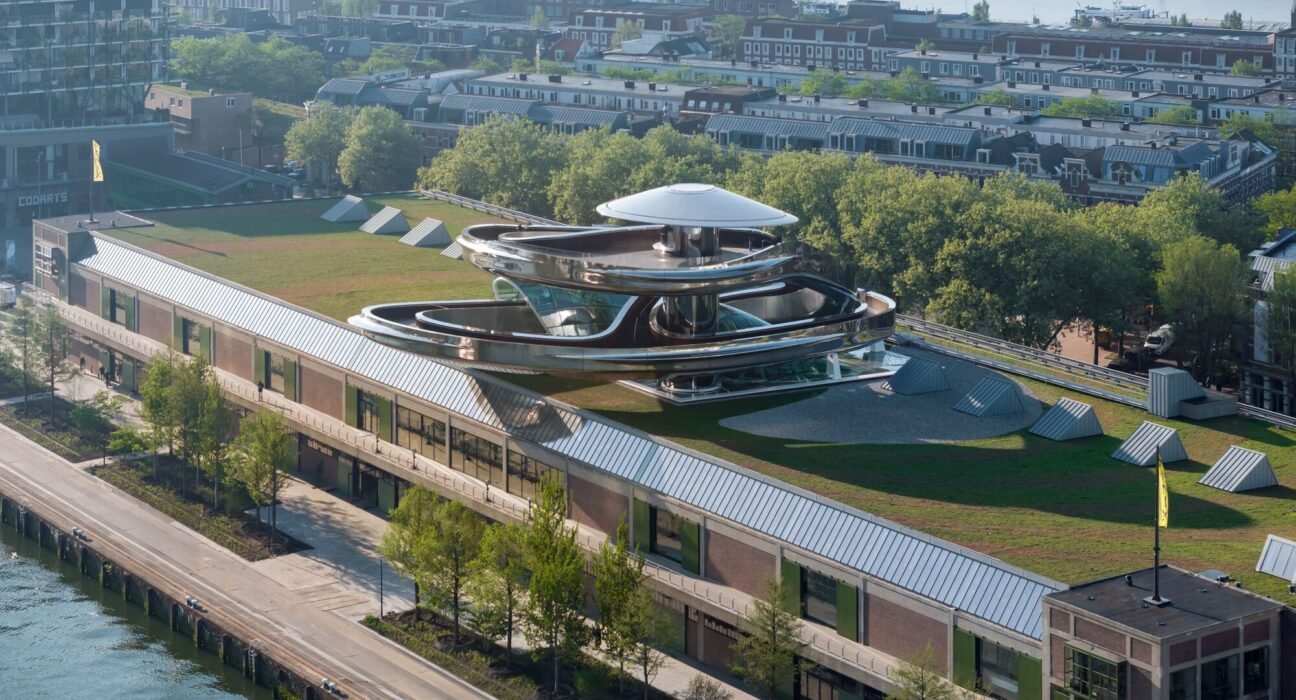
Architecture news rarely arrives with the emotional weight of a project like Fenix Art Museum. Rising from a landmark warehouse in Rotterdam, this ambitious cultural destination transforms a historic harbor site into a powerful space for art, memory, and migration.
Designed by MAD Architects, Fenix is more than a museum refurbishment. It is a major statement about how contemporary design can reinterpret industrial heritage while creating a new luxury cultural experience. Located in Rotterdam’s City Harbor, the museum occupies a monumental former transshipment warehouse tied to millions of migrant departures and arrivals, giving the architecture unusual symbolic depth.
Architecture News: Fenix Art Museum Reimagines Rotterdam’s Waterfront
In one of the most compelling pieces of architecture news this year, Fenix introduces a new chapter for adaptive reuse in Europe. The project sits on a peninsula in Rotterdam’s historic port district, where the building’s original identity as part of one of the world’s largest warehouses remains central to its reinvention.
MAD Architects has transformed the warehouse into a museum dedicated to migration through art, photography, food, architecture, and history. Rather than erasing the site’s industrial character, the design frames it as part of the visitor experience. That approach aligns perfectly with today’s luxury architecture trends, where authenticity, narrative, and place-making matter as much as visual spectacle.
The museum was developed for the Droom en Daad Foundation, an organization focused on reshaping Rotterdam’s cultural future. The result is a destination that feels both civic and elevated, rooted in local history yet globally relevant.
A Landmark Museum Refurbishment by MAD Architects
This architecture news story is especially notable because Fenix marks MAD Architects’ first public cultural building in Europe. It is also the first museum in Europe designed by a Chinese architecture firm, making the project significant beyond Rotterdam alone.
The completed museum spans approximately 8,000 square meters within the restored warehouse structure, while the broader warehouse itself is described as a monumental 16,000-square-meter building. That scale gives the architects room to choreograph a layered experience, balancing heritage preservation with contemporary intervention.
Why the project stands out
- Adaptive reuse with meaning: the architecture responds directly to the site’s migration history.
- Global design significance: it expands MAD Architects’ cultural footprint in Europe.
- Urban regeneration: the museum strengthens Rotterdam’s evolving waterfront identity.
- Cultural luxury: it offers an immersive, high-design museum experience without losing public accessibility.
For readers interested in luxury design and luxury home decor trends, projects like Fenix matter because museums often forecast the materials, spatial ideas, and emotional storytelling that later influence residential interiors and premium lifestyle spaces.
How Fenix Connects Art, Architecture, and Migration
What makes this piece of architecture news so resonant is its program. Fenix is not simply a gallery container. It is conceived as a museum that explores migration through multiple forms of expression and encounter. Visitors engage with historic and contemporary objects, visual art, photography, food culture, and layered narratives tied to movement across borders.
That mission is amplified by the location. Overlooking docks where countless journeys began and ended, the museum turns architecture into a vessel for collective memory. In luxury architecture terms, this is a prime example of experiential design: every spatial decision gains power from context.
The emotional intelligence of the project sets it apart from more conventional museum refurbishments. Instead of pursuing neutrality, the design embraces the building’s past and the social history embedded in Rotterdam’s port landscape.
Design Details and Project Team
According to the project information, Fenix was completed in 2025 in Rotterdam, The Netherlands. The museum and refurbishment project was led by MAD Architects, with restoration consultation by Bureau Polderman and support from a broad team of engineers, consultants, and contractors.
Key project facts include:
- Project: Fenix Art Museum
- Location: Rotterdam, The Netherlands
- Architect: MAD Architects
- Category: Museum, Refurbishment
- Area: 8,000 m²
- Completion: 2025
- Commissioner: Droom en Daad Foundation
The visual documentation by photographers including Iwan Baan further underscores the museum’s architectural ambition. As with many major cultural projects, the photography reveals the interplay between industrial scale, waterfront light, and carefully curated contemporary interventions.
What Fenix Means for Luxury Architecture and Design
For audiences following architecture news through the lens of luxury architecture, Fenix is a reminder that luxury is no longer defined only by opulence. Increasingly, it is expressed through rarity, narrative, craftsmanship, cultural value, and transformative spatial experiences.
Fenix speaks to several broader design movements:
- Heritage-led luxury: preserving original fabric adds character impossible to replicate in new construction.
- Destination design: architecture becomes a reason to visit, not just a backdrop.
- Meaningful minimalism: restrained interventions can create stronger emotional impact than excess.
- Cultural placemaking: institutions anchor neighborhood identity and long-term value.
These ideas ripple into luxury home, luxury decor, and luxury home decor as well. Homeowners and designers increasingly seek spaces that tell stories, incorporate historic textures, and blend clean contemporary lines with authentic materiality. In that sense, museum design often shapes the future of high-end residential aesthetics.
Rotterdam’s Cultural Future Comes Into Focus
Rotterdam has long been a city of rebuilding, experimentation, and bold urban identity. This architecture news moment reinforces its position as a hub for forward-thinking design. By placing a museum about migration inside a former harbor warehouse, the city gains not only a new institution but a new civic landmark with international reach.
The involvement of the Droom en Daad Foundation adds another layer of importance. The project reflects a broader effort to foster arts institutions that mirror Rotterdam’s diversity, creativity, and historical complexity. That makes Fenix feel both monumental and timely.
In a global design landscape often dominated by novelty, Fenix succeeds because it balances innovation with memory. It proves that the most unforgettable architecture can emerge from listening closely to a building’s past.
Conclusion
This standout piece of architecture news shows how a museum can do far more than display art. With Fenix Art Museum, MAD Architects has created a refined, culturally powerful destination that elevates Rotterdam’s waterfront while honoring the human stories embedded in its harbor. For anyone tracking luxury architecture, adaptive reuse, and the future of meaningful design, Fenix is a project worth watching closely.