Architecture news rarely shifts the conversation as decisively as this. With Architects of Liberation: Modernism in Western Africa, The Museum of Modern Art in New York is placing independence-era West African design at the center of a global architectural narrative—where it has long deserved to be.
Open from July 5, 2026, through January 2, 2027, the exhibition explores African modern architecture from the late 1950s to the early 1980s across Benin, Cameroon, Côte d’Ivoire, Ghana, Nigeria, Senegal, and Togo. For readers interested in luxury architecture, luxury decor, and high-design cultural spaces, this exhibition offers more than historical insight: it reveals how architecture became a symbol of identity, ambition, climate intelligence, and nation-building.
Architecture News From MoMA: Why This Exhibition Matters
This major museum presentation examines a pivotal era shaped by decolonization, optimism, and cultural reinvention. In the years surrounding 1960—the so-called “Year of Africa,” when 17 African nations gained independence—architecture emerged as a powerful tool for expressing sovereignty and modernity.
Rather than presenting modernism as a purely European export, the exhibition shows how architects across western Africa adapted its forms to local climates, political aspirations, and social needs. That makes this architecture news especially important: it reframes modernism as a shared but deeply localized design language.
Curated by Martino Stierli and Ikem Stanley Okoye, with Mallory Cohen, the show is organized around thematic anchor projects tied to:
- Cityscapes and urban identity
- Education and institutional building
- Housing and civic life
- Trade, infrastructure, and public representation
The result is a richer understanding of how post-independence architecture helped define new national images.
A New Lens on Independence-Era West African Modernism
At its core, Architects of Liberation argues that independence-era West African modernism was not imitation—it was invention. Buildings from this period responded to practical and symbolic demands at once. They needed to perform in tropical climates, accommodate rapidly modernizing cities, and visually communicate a break from colonial rule.
This is where the exhibition resonates strongly with contemporary luxury design audiences. Many of today’s most admired spaces prioritize regional materials, passive cooling, sculptural form, and cultural specificity. Architects in West Africa were pursuing those ideas decades ago, often at a civic scale.
What visitors will see
The exhibition includes around 450 objects gathered through years of research, with material from more than 50 lenders across 17 countries. On display are:
- Original architectural drawings
- Archival photographs
- Newly commissioned models
- Historic documents
- New films and photographic commissions
Much of this material has never been publicly exhibited before, and many featured architects have not previously received major institutional attention.
Standout Projects Redefining the Modernist Canon
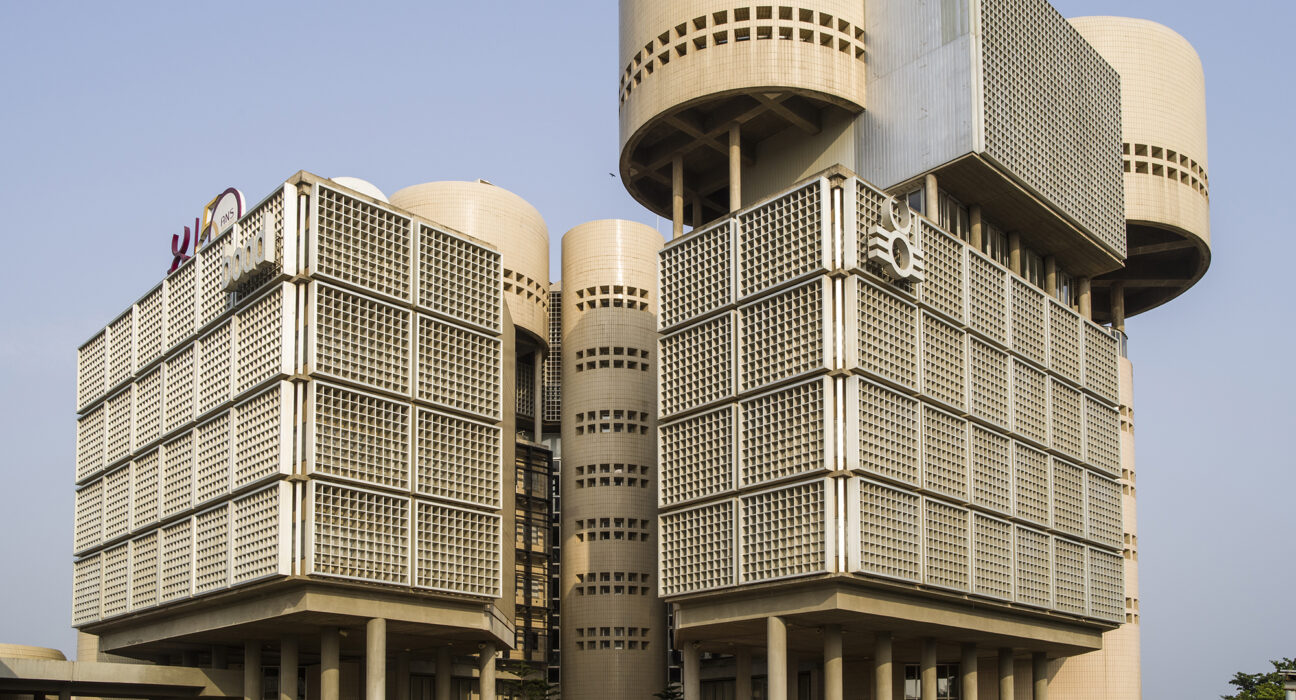
One reason this architecture news has drawn global attention is the strength of the featured buildings. These are not marginal works—they are bold, ambitious projects that deserve a place in any serious discussion of 20th-century architecture.
The Pyramide, Abidjan
Designed by Rinaldo Olivieri and completed in 1973, La Pyramide remains one of the most iconic high-rises in Côte d’Ivoire. Its dramatic stepped form reshaped Abidjan’s skyline and stands as a landmark of African modernism with lasting visual power.
Africa Pavilion, Accra Trade Fair
This circular pavilion in Ghana, designed by Vic Adegbite, Jacek Chyrosz, and Stanisław Rymaszewski under the Ghana National Construction Corporation, became a symbol of unity and forward-looking public architecture.
CICES, Dakar
The Centre International du Commerce Extérieur du Sénégal is presented as an emblematic trade-fair campus whose design reflects the dynamic cultural thinking of the era. Its composition demonstrates how modernist planning could be both monumental and nuanced.
University of Ife, Nigeria
With a masterplan by Arieh Sharon, this educational complex represents the scale of ambition that defined the period. Universities, libraries, and civic institutions were central to post-independence nation-building through design.
Gare de Bessengue, Cameroon
Designed by Jacques Nsangue Akwa and Emilien Douala Bell, the station points to the importance of infrastructure in shaping modern public life across the region.
The Architects Behind the Movement
Another key strength of the exhibition is its attention to the first generation of trained African architects, many of whom remain underrecognized in mainstream design history. Featured practitioners include John Owusu Addo, Demas Nwoko, Cheikh Ngom, Jean Léon, and Vic Adegbite, among others.
The show also acknowledges collaboration across borders, including contributions from architects from Italy, France, and Yugoslavia. But its central achievement is clear: it foregrounds African agency in the making of modern architecture.
For anyone following architecture news, that corrective matters. It broadens the canon and challenges long-held assumptions about where innovation happened and who shaped it.
Why It Resonates With Luxury Architecture and Design Audiences
Although the exhibition is historical, its design lessons feel intensely current. Many luxury homes and high-end interiors now embrace principles that independence-era West African modernism handled with clarity and confidence:
- Climate-responsive design strategies
- Bold geometric forms
- Integration of civic meaning and aesthetics
- Material authenticity
- A strong relationship between architecture and place
For professionals and enthusiasts in luxury architecture, luxury home decor, and luxury design, this exhibition is a reminder that elegance and intelligence in design often emerge from context—not excess. The most memorable buildings do more than impress visually; they express identity, purpose, and cultural depth.
Planning Your Visit
Architects of Liberation: Modernism in Western Africa is on view at MoMA in the Robert B. Menschel Galleries on the museum’s third floor through January 2, 2027. It is accompanied by a substantial catalogue featuring 175 color illustrations and a newly commissioned photographic portfolio, adding scholarly depth for visitors who want to continue exploring the subject beyond the galleries.
For travelers, collectors, architects, and design-minded readers, this is one of the season’s most essential museum shows.
Conclusion
In a year crowded with global design programming, this is the architecture news worth paying attention to. MoMA’s Architects of Liberation does more than celebrate independence-era West African modernism—it restores a vital chapter of architectural history to its rightful prominence. The takeaway is clear: some of the most compelling lessons for contemporary luxury architecture and design are found not at the margins, but in the visionary civic landscapes of post-independence West Africa.