
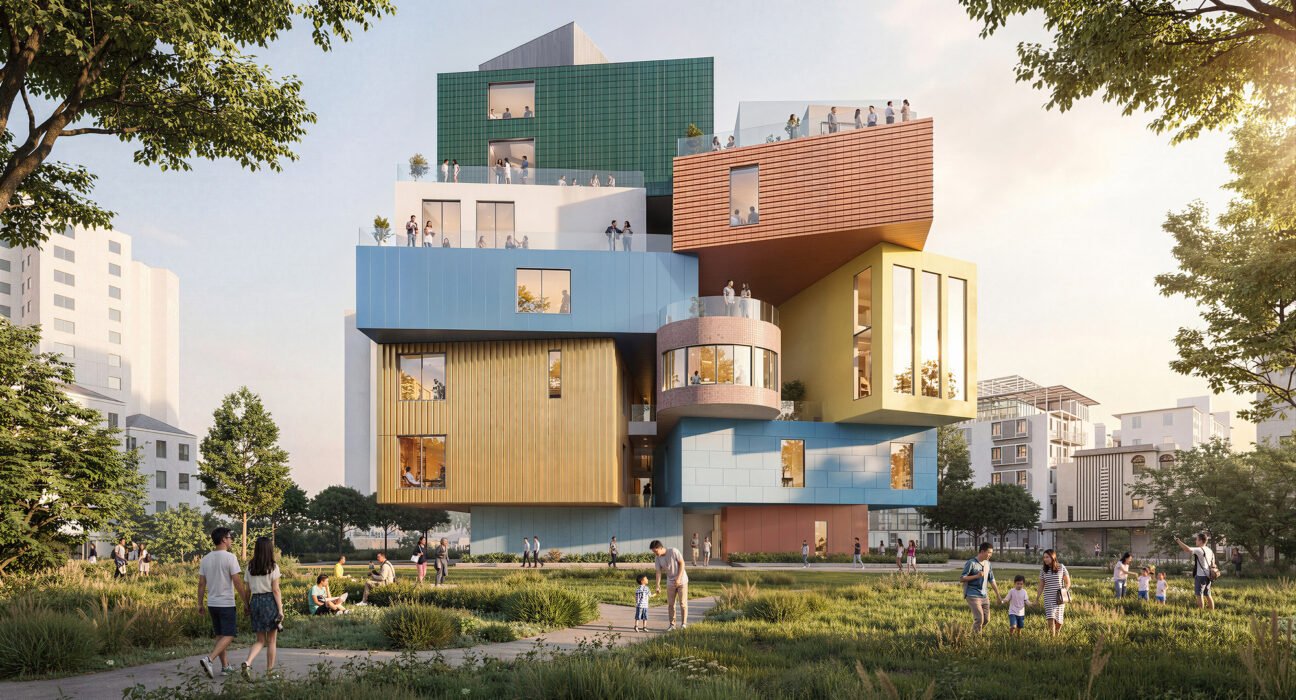
In the latest Architecture news shaping Asia’s design conversation, MVRDV has unveiled Bihailou Art Village in Shenzhen, a mixed-use destination that turns density into something far more human. Rather than another anonymous tower, the project proposes a layered cultural hub where theater, retail, dining, museum spaces, and rooftop public routes come together as a contemporary “vertical village.”
Currently under construction in Shenzhen’s Shatoujiao neighborhood near the Hong Kong border, Bihailou Art Village reflects a growing shift in luxury architecture and urban design: compact developments no longer need to feel monolithic. Instead, they can deliver diversity, identity, and public life within a dense footprint. That ambition places this project firmly among the most compelling new stories in global design.
Architecture News: Why Bihailou Art Village Matters
Bihailou Art Village builds on MVRDV’s long-running Vertical Village concept, first developed with The Why Factory as an alternative to the repetitive high-rise model seen across many fast-growing cities. The idea is simple but powerful: stack independent spaces vertically while preserving qualities people typically associate with village life, including individuality, daylight, views, and a sense of discovery.
For Shenzhen, that translates into a mixed-use cultural and commercial center composed not as one large block, but as a series of distinct volumes. Each section has its own character, scale, and material expression, helping the building relate more closely to the surrounding neighborhood fabric. In practical terms, this means the project can feel monumental from a distance while remaining intimate at the pedestrian level.
That balance is especially relevant in luxury design, where experience matters as much as form. Bihailou Art Village is not simply about visual impact; it is about creating a richly layered environment that invites repeat visits and supports different rhythms of use throughout the day.
A Vertical Village Instead of a Conventional Tower
The project’s greatest strength lies in how it breaks down density into accessible, legible parts. Instead of forcing every function into a sealed building mass, MVRDV distributes programs into fragmented volumes, each with a clear role and identity.
Key design features
- Independent volumes: Separate masses house different functions, reducing the feeling of a single overpowering structure.
- Distinct architectural language: Geometry, color, and material choices reference nearby buildings and the site’s history.
- Public circulation: Stairs, escalators, ramps, and elevated walkways remain accessible even when individual venues operate on different schedules.
- Rooftop terraces: Visitors can move upward through the complex to enjoy views of the bay, city, and surrounding mountains.
This strategy reflects a broader trend in luxury architecture: designing for permeability and interaction, not just iconic silhouettes. The building becomes a small urban ecosystem, encouraging exploration rather than passive observation.
Cultural, Commercial, and Public Programs in One Destination
Another reason this project stands out in Architecture news is the sophistication of its program mix. Bihailou Art Village combines cultural use with commerce in a way that feels curated rather than crowded.
The multifunctional performance theater is one of the project’s anchors. Designed as a double-height space with retractable seating, it can transform from a performance venue into an exhibition hall. A floor-to-ceiling glazed facade facing the plaza helps connect indoor events with public life outside, blurring the line between building and city.
Smaller volumes will accommodate restaurants and retail, while the Fish Lantern Museum will celebrate the cultural heritage of Shatoujiao. Crucially, each component has its own entrance, allowing venues to operate independently. That flexibility supports a more dynamic daily schedule and creates the kind of layered user experience often associated with successful urban villages rather than isolated commercial centers.
Why this mix works
- It supports all-day activation through multiple uses.
- It gives each tenant or institution operational independence.
- It strengthens the public realm by connecting interior spaces to outdoor circulation.
- It ties contemporary architecture to local memory and cultural identity.
What Luxury Architecture Can Learn From Shenzhen
Within the context of luxury home, luxury decor, and luxury design audiences, Bihailou Art Village offers an important lesson: premium architecture is increasingly defined by spatial quality, adaptability, and public generosity. Luxury is no longer only about exclusivity or expensive finishes. It is also about how a place feels, how it performs, and how successfully it creates memorable experiences.
MVRDV’s approach demonstrates several principles that translate across scales, from major cultural developments to high-end residential design:
- Fragmentation can create warmth: Breaking a large program into smaller volumes often feels more welcoming and bespoke.
- Circulation is a design asset: Paths, terraces, stairs, and visual connections can become the most luxurious elements of all.
- Flexibility adds long-term value: Spaces that can evolve with changing needs are more resilient and desirable.
- Local references matter: Architecture that reflects neighborhood identity tends to age better than generic global forms.
For readers tracking design-led development in Asia, Shenzhen remains a crucial laboratory. The city continues to attract ambitious cultural and civic projects, and Bihailou Art Village adds a thoughtful, human-scaled counterpoint to the region’s more oversized icons.
A New Direction in Architecture News
Seen in the wider landscape of contemporary urbanism, Bihailou Art Village signals a meaningful evolution. High-density cities do not have to choose between efficiency and personality. Through stacked yet independent spaces, public routes, and carefully differentiated volumes, MVRDV proposes a model that is both compact and communal.
That is why this story deserves attention beyond the usual project announcement cycle. It touches on the future of mixed-use architecture, the reinvention of cultural destinations, and the growing demand for buildings that serve both commercial performance and civic life.
In short, this is the kind of Architecture news that points to where design is heading next. Bihailou Art Village suggests that the future of urban luxury may look less like a sealed tower and more like a vertical neighborhood—connected, flexible, and deeply rooted in place.