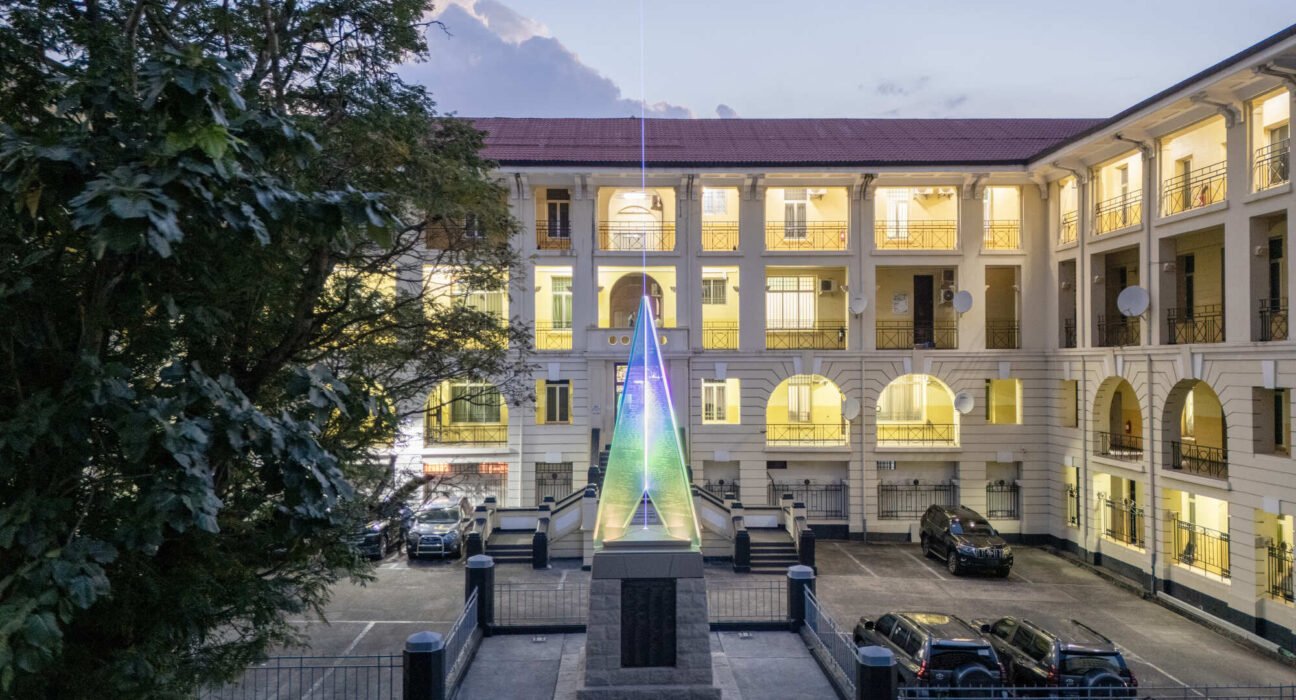
In significant architecture news from West Africa, Oshinówò Studio has completed a powerful new memorial in Freetown, Sierra Leone, bringing long-overdue recognition to more than 900 members of the Sierra Leone Carrier Corps who died during the First and Second World Wars. Unveiled by the Commonwealth War Graves Commission on November 7, the intervention transforms remembrance into a luminous architectural experience, merging heritage restoration, contemporary design, and public memory in one striking landmark.
For readers interested in luxury architecture, luxury design, and culturally meaningful memorial spaces, this project stands out not because of opulence in the conventional sense, but because of the refinement of its materials, symbolism, and execution. It demonstrates how architecture can elevate history through precision, craft, and emotional resonance.
Architecture News: A Memorial That Corrects Historical Erasure
The new Freetown memorial expands on the original national monument designed by Sir Edwin Lutyens and unveiled in 1931. While the historic memorial commemorated servicemen who died in the world wars and had no known grave, members of the Sierra Leone Carrier Corps were previously remembered only in number, not by individual name.
That omission is what makes this intervention so important. Oshinówò Studio’s design ensures that, for the first time, the fallen members of the Carrier Corps are commemorated personally. In memorial architecture, naming matters. It shifts remembrance from abstraction to identity, allowing descendants, communities, and the wider public to engage with the past in a more intimate and human way.
This is the kind of architecture news that goes beyond aesthetics. It addresses historical imbalance through design, creating a public monument that is both visually compelling and socially restorative.
A Contemporary Glass Intervention on a Historic Monument
Rather than replacing or overpowering the existing memorial, the Lagos-based studio designed a contemporary addition that is permanently integrated into the Lutyens structure. The intervention takes the form of a prism made of structural glass, extending the original monument upward while respecting its tapering geometry.
The memorial includes four structural glass fins rising 8.4 meters high and incorporating roughly 4,000 kilograms of glass. Each fin is etched with the names of the fallen, turning the material itself into a vessel of remembrance. The result is elegant and technologically sophisticated, yet restrained enough to remain in dialogue with the historic stone monument beneath it.
Key design features
- Four etched structural glass fins reaching 8.4 meters
- Approximately 4,000 kilograms of glass integrated into the installation
- Illuminated glass edges that intensify the memorial’s nighttime presence
- A laser beacon that projects a pillar of light into the sky on key commemorative dates
- Visibility across an estimated five-kilometer radius in Freetown
In luxury design terms, this is a masterclass in material expression. Glass is used not for spectacle alone, but for symbolism: transparency, fragility, endurance, and light all become part of the memorial narrative.
Material Symbolism and the Language of Memory
One of the most compelling aspects of this architecture news story is the conceptual depth of the design. According to architect Tosin Oshinówò, the new structure effectively extends the Lutyens monument, following its geometry while rising above it. This act carries strong symbolic meaning: the Sierra Leone Carrier Corps, whose labor once supported others, are now metaphorically “carried” by the monument itself.
The design also introduces a poetic duality. During the day, the glass appears refined and almost immaterial, allowing the names to emerge through light and reflection. At night, illuminated edges and the vertical laser beacon give the memorial a more spiritual presence, turning remembrance into a civic event visible across the city skyline.
The project includes an epitaph in both Krio and English by poets Nii Ayikwei Parkes and Julianknxx: “from today you will be carried, you are borne, now and ever.” This literary dimension adds another layer to the site, blending architecture, language, and memory into one unified experience.
Craft, Collaboration, and Restoration
This memorial was not the work of a single discipline. Developed over 16 months with the Commonwealth War Graves Commission, the project brought together engineers, glass specialists, laser consultants, and construction partners from Nigeria, the Netherlands, Spain, Sierra Leone, and the United Kingdom.
At the same time, the original memorial received careful restoration. CWGC stonemasons and bronze experts repaired the base, renewed the stonework, and uplifted the bronze panels. That combination of restoration and innovation is particularly notable in architecture news today, where adaptive interventions often succeed when they treat heritage as a living framework rather than a static artifact.
The project shows how high-level craftsmanship can produce a memorial that feels both technically advanced and deeply respectful of context.
Beyond Freetown: A Broader Commemorative Strategy
The Freetown memorial is only one part of a wider initiative. Oshinówò Studio also designed four marker memorials in provinces where carriers were originally raised. These satellite sites echo the architectural language of the main monument while responding to local memory and place.
Importantly, the wider program emerged from a co-design process that helped determine which places, people, and events should be memorialized. That participatory approach marks a meaningful evolution in commemorative design and broadens the role of architecture beyond object-making.
The wider initiative includes
- Four provincial marker memorials
- A register of names for public record and remembrance
- Museum partnerships
- Educational programs for schools
For those following architecture news with an interest in cultural infrastructure, this expanded framework is just as important as the built object itself. It turns the memorial into a platform for learning, reflection, and intergenerational engagement.
Why This Project Matters in Contemporary Architecture
In a global design landscape often dominated by residential luxury, iconic towers, and branded interiors, this memorial reminds us that luxury architecture can also be defined by meaning, craft, and permanence. Its sophistication lies in precision detailing, conceptual clarity, and cultural responsibility.
This project also reinforces the growing prominence of African architects in shaping major public narratives through design. As architecture news continues to spotlight work across the continent—from educational institutions in Accra to exhibitions on modernism in West Africa—the Freetown memorial stands as one of the most moving recent examples of architecture serving both beauty and justice.
For designers, historians, and readers drawn to refined spaces with emotional depth, the Sierra Leone Carrier Corps Memorial offers a powerful lesson: architecture is at its best when it gives form to memory and dignity to those history once overlooked.
Conclusion
This architecture news story is about far more than a new monument. Oshinówò Studio’s intervention in Freetown demonstrates how contemporary architecture can restore identity, reinterpret heritage, and create a lasting civic symbol through light, glass, and careful collaboration. By naming the Sierra Leone Carrier Corps individually for the first time, the memorial transforms remembrance into something visible, personal, and profoundly humane.
The takeaway is clear: the most powerful architecture does not simply occupy space—it changes how we understand history within it.