
Architecture news this week captures a striking contrast: while many regions face shrinking cultural budgets and mounting preservation challenges, major new projects continue to redefine what design can do for cities and communities. From the long-awaited opening of Snøhetta’s Shanghai Grand Opera House to fresh momentum behind Chicago’s 1901 Project, the latest developments show how luxury architecture and civic ambition are still shaping the global conversation.
For readers following luxury architecture, luxury design, and the future of culturally significant spaces, this week’s stories reveal a sector balancing spectacle, public value, heritage stewardship, and innovation. Here is a closer look at the most important updates.
Architecture News Highlights a Landmark Opening in Shanghai
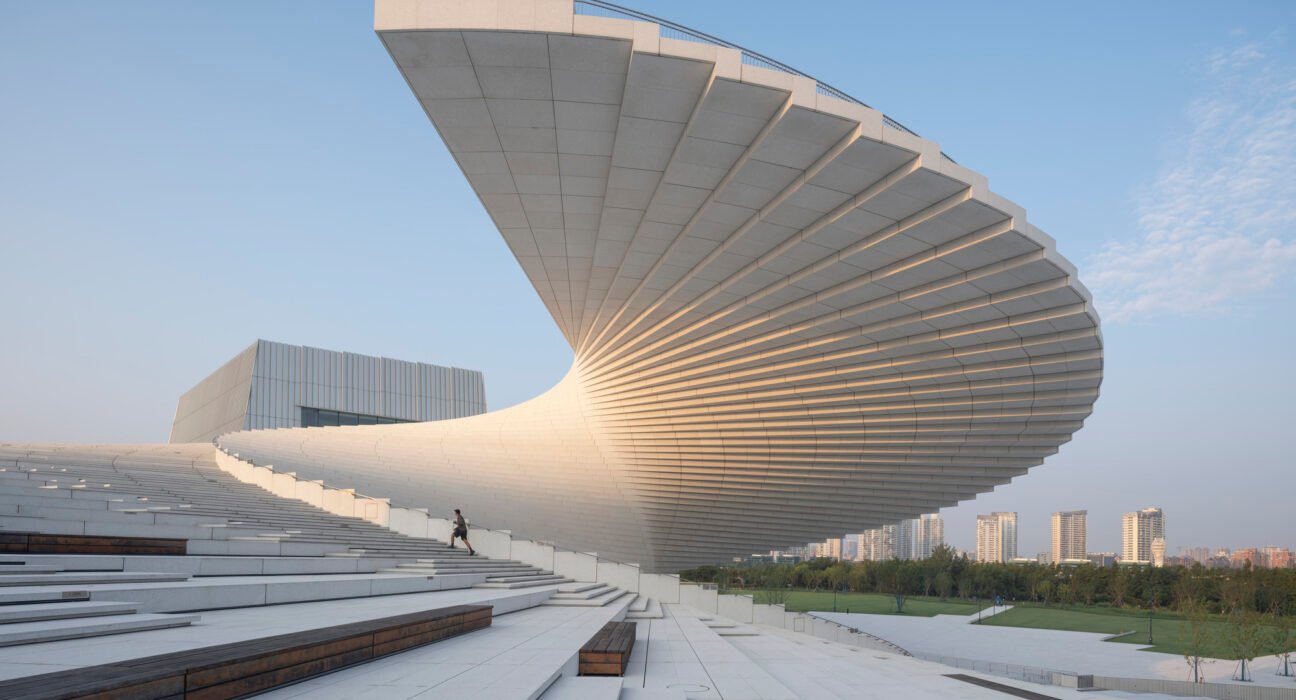
The headline moment in architecture news is the public opening of the Shanghai Grand Opera House, designed by Snøhetta after roughly a decade of development. Positioned along the Huangpu River, the new cultural venue arrives as an architectural statement and as a symbolic investment in the arts at a time when many countries are cutting cultural spending.
The project stands out for more than scale. It reflects a broader trend in luxury architecture where performance venues are expected to do several things at once:
- Create a memorable urban identity
- Support cultural production at an international level
- Offer a premium visitor experience
- Function as a public destination beyond performance hours
In that sense, the Shanghai Grand Opera House is not simply a new building. It is a signal that major cities still see cultural infrastructure as essential to prestige, tourism, and long-term urban development. For followers of luxury design, it also reinforces how flagship public buildings increasingly borrow the refinement, materiality, and experiential thinking once associated mainly with high-end hospitality and private residential design.
Heritage Pressures Remain Central in Architecture News
Not all the week’s updates were celebratory. Another key thread in architecture news involved the growing vulnerability of heritage sites. A fatal incident at Taliesin West in Arizona renewed difficult questions about the maintenance and resilience of iconic modern landmarks.
The issue extends far beyond a single site. Recent heritage analysis points to three recurring threats worldwide:
- Government austerity and underfunding
- Escalating climate impacts
- Shortages of specialized conservation skills
These concerns matter deeply to the luxury home, luxury decor, and luxury home decor sectors because preservation often influences how historic properties are restored, adapted, and valued. As architectural conservation grows more complex, demand is rising for expert craftsmanship, resilient materials, and design strategies that respect original character while improving safety and performance.
In practical terms, the heritage conversation is shifting. Preservation is no longer only about saving the past; it is also about ensuring that historic places remain usable, relevant, and economically sustainable in the future.
Global Biennials Expand the Design Conversation
This week’s architecture news also underscored the importance of international exhibitions and biennials as platforms for ideas. The Bienal Iberoamericana de Arquitectura y Urbanismo announced details for its next edition in Brasília, centered on the theme “Caring for Life.” Meanwhile, anticipation continues to build for the next Venice Architecture Biennale, curated by Wang Shu and Lu Wenyu.
These events matter because they often set the agenda for design discourse years before ideas reach built form. Themes like coexistence, urban shrinkage, care, and adaptation are increasingly influencing both public architecture and luxury residential trends.
Why biennials matter for luxury design
Even when the exhibitions focus on urbanism or social issues, their influence is felt across the design world. They often shape:
- Material experimentation
- Sustainability standards
- Attitudes toward craftsmanship
- The integration of art, architecture, and interiors
For professionals and enthusiasts alike, following these gatherings offers an early view of the ideas likely to define tomorrow’s luxury architecture.
RIBA Awards Spotlight Social Impact and Design Innovation
Awards were another major theme in architecture news. This year, RIBA recognized two very different but equally significant projects: Lion Green Road in the United Kingdom and the Green Field Factory in Bangladesh.
What connects them is a growing emphasis on architecture that serves people, place, and environment at once. Recognition is increasingly going to projects that combine strong formal design with measurable social value. That shift is notable for the luxury market too, where status alone is no longer enough. Today’s most admired architecture often pairs visual sophistication with environmental intelligence and community benefit.
This broader definition of excellence is changing expectations across sectors, from cultural institutions to high-end residential developments.
Chicago’s 1901 Project Brings New Energy to Urban Redevelopment
Among the most closely watched items in architecture news is the latest update on Chicago’s 1901 Project. New renderings from RIOS reveal a purpose-built music hall planned as a centerpiece of the first development phase near the United Center on the city’s West Side.
The venue is expected to seat 6,000 guests in a flexible, multi-level configuration and will be part of a wider mixed-use transformation that includes:
- An elevated park spanning more than 10 acres
- Improved pedestrian and cycling routes
- Hospitality and retail components
- Reworked parking and access strategies
The music hall itself is designed around immersion, with architecture, acoustics, and guest amenities intended to make performances feel physically and emotionally immediate. For luxury design observers, that focus on total experience is especially relevant. The most compelling new venues are no longer just containers for events; they are carefully choreographed environments where circulation, intimacy, comfort, and atmosphere are integral to the concept.
Nature-Integrated Design Advances in the Netherlands
Elsewhere in architecture news, Powerhouse Company and its collaborators were selected to design a gateway pavilion at Buurtschap Crailo near the Goois Nature Reserve. The proposal combines retail, hospitality, landscape access, and parking infrastructure through a network of paths, elevated walkways, and terraces.
Its strongest feature may be the way it turns infrastructure into experience. A green roof serving as both garden and viewpoint reflects a design philosophy increasingly visible across luxury architecture: buildings should enhance their setting, not merely occupy it.
This approach resonates strongly in luxury home and luxury decor circles, where biophilic design, scenic integration, and outdoor living continue to influence premium projects worldwide.
Conclusion: What This Week’s Architecture News Really Tells Us
The clearest takeaway from this week’s architecture news is that architecture is being asked to do more than ever. Major cultural buildings like the Shanghai Grand Opera House must deliver civic identity and world-class experience. Urban projects like Chicago’s 1901 Project must blend entertainment, landscape, and regeneration. At the same time, heritage sites face urgent questions of maintenance, funding, and climate resilience.
For anyone interested in luxury architecture, luxury home decor, or the future of premium design, the message is clear: the most influential projects are those that unite beauty, purpose, and long-term value. In today’s architecture news, true luxury is not only about appearance. It is about vision, performance, and lasting cultural relevance.