Architecture news rarely delivers a cultural debut this ambitious. With the opening of Snøhetta’s Shanghai Grand Opera House, Shanghai gains a landmark that blends performance, public space, and riverfront spectacle into one sweeping architectural gesture.
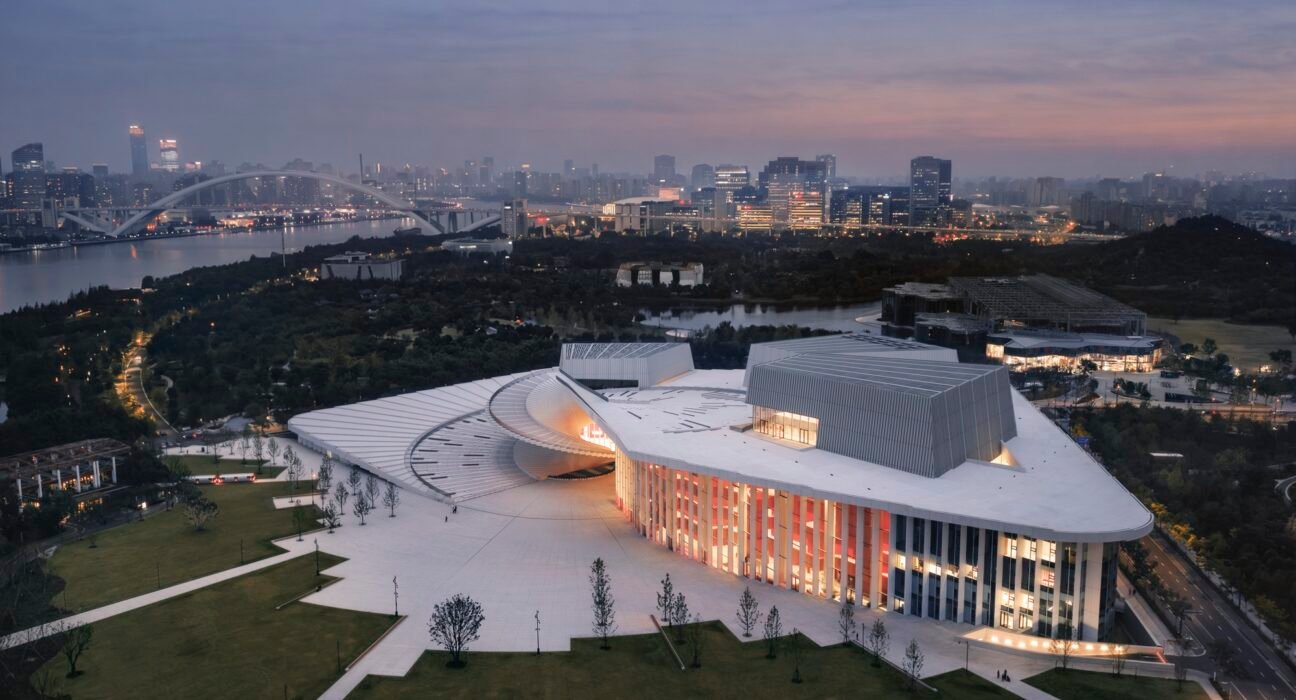
Set in the Expo Houtan district along the Huangpu River, the newly opened opera house completes a decade-long journey that began with an international design competition in 2016. Designed by Snøhetta in collaboration with East China Architectural Design & Research Institute (ECADI), Theatre Projects, and Nagata Acoustics, the 146,786-square-meter complex is more than a venue for music and theater. It is a civic destination, an urban lookout, and a major addition to the city’s evolving waterfront.
For readers following luxury architecture and global cultural development, this is the kind of architecture news that signals how high-profile buildings are being reimagined: not as isolated monuments, but as immersive public experiences.
Architecture News: A New Cultural Icon for Shanghai
The Shanghai Grand Opera House officially opened on October 17, 2026, marking a milestone for one of China’s most prominent cultural projects. Positioned on the riverfront, the building has been designed to serve both international performances and everyday public life, reinforcing Shanghai’s status as a world city for arts, design, and innovation.
The scale of the program is striking. The opera house accommodates 4,200 spectators across three distinct venues, each tailored to a different type of performance:
- Harmony Hall: a 2,000-seat main auditorium for opera and major productions
- Soar Theatre: a 1,200-seat venue for more intimate performances
- Open Stage: a 1,000-seat flexible space for experimental and adaptable staging
Supporting these auditoriums are rehearsal rooms, production spaces, educational facilities, exhibition areas, and hospitality offerings. This layered mix of uses reflects a broader trend in architecture news: the rise of cultural buildings that remain active throughout the day, even when no formal performance is scheduled.
A Sweeping Roof That Turns the Building Into a Public Journey
The opera house’s most defining feature is its dramatic roof, which unifies the building’s many functions beneath a single sculptural form. Rather than acting as a static cap, the roof becomes part of the visitor experience. A spiraling staircase carries the public upward from the ground plane to a panoramic rooftop observation deck.
This elevated route transforms the building into a promenade with views over the Huangpu River and Shanghai skyline. It also extends the public realm vertically, a move that gives the project strong appeal within both urban design and luxury design circles.
Key public-facing features include:
- Independent circulation routes accessible beyond performance hours
- A rooftop gathering space with expansive city and river views
- Restaurants and exhibition spaces that broaden visitor use
- Educational amenities that connect culture with community engagement
This approach is a major reason the project stands out in current architecture news. It invites visitors to occupy the building as a destination in its own right, not just as a ticketed venue.
Interior Design Balances Acoustics, Drama, and Light
Inside, each performance hall has its own architectural identity. Harmony Hall, the main auditorium, is shaped by the acoustic demands of operatic performance and wrapped in deep red tones that heighten its theatrical atmosphere. Its sculptural interior surfaces reflect a close collaboration between architects and acoustic specialists, underscoring the technical sophistication behind the visual drama.
Elsewhere, the building’s public spaces are brighter and more transparent. Expansive glazed areas draw in daylight, softening the transition between the city outside and the cultural spaces within. The contrast between the predominantly white exterior and the richer, darker interiors creates a clear spatial narrative: public circulation feels open and luminous, while the performance rooms become immersive and intimate.
For luxury decor and luxury home decor audiences, this material contrast offers an instructive design lesson. High-impact spaces do not depend only on opulence; they rely on atmosphere, sequence, and the relationship between light, texture, and function. It is precisely this kind of spatial storytelling that continues to shape top-tier architecture news coverage.
Sustainable Strategies and Waterfront Integration
Beyond its visual identity, the Shanghai Grand Opera House also incorporates environmental considerations into its design. Passive strategies, daylighting, and landscape integration help address performance and energy demand, aligning the building with contemporary expectations for sustainable civic architecture.
The surrounding landscape is organized in a radial layout derived from the building’s geometry, linking the opera house with the nearby park and waterfront. This creates a more seamless relationship between architecture and site, allowing the project to function as part of a larger urban ecosystem rather than a stand-alone object.
That integration is especially relevant in today’s architecture news, where luxury architecture is increasingly judged not only by form, but by how successfully it connects with public life, climate goals, and citymaking.
Why This Opening Matters in Global Architecture News
The launch of the opera house coincides with its inaugural season, Born to Sing, running through February 20, 2027, and with the opening concert of the 25th China Shanghai International Arts Festival. That timing positions the building as both a local landmark and an international stage from day one.
It also reinforces Snøhetta’s expanding influence across major cultural commissions worldwide. The studio is currently advancing other large-scale projects, including:
- The Busan Opera House in South Korea, set to open in 2027
- The new Ontario Science Centre in Toronto, designed with Hariri Pontarini Architects
- The Beijing Art Museum in Tongzhou District, expected to open in 2029
Seen in that context, the Shanghai Grand Opera House is not an isolated success but part of a broader portfolio exploring how architecture can merge culture, accessibility, and iconic form. For anyone tracking international architecture news, it is a benchmark project in how contemporary cultural venues can serve cities beyond the stage.
Conclusion
The opening of Snøhetta’s Shanghai Grand Opera House is the kind of architecture news that resonates far beyond one city. With its sweeping roof, rooftop promenade, acoustically tuned halls, and generous public spaces, the project captures a new model for cultural architecture: bold in form, open in function, and deeply connected to its urban setting.
As Shanghai continues to redefine its waterfront, this opera house stands as a powerful example of how luxury architecture and civic ambition can meet in one unforgettable building. In the world of architecture news, that makes it one of the most significant openings of the year.