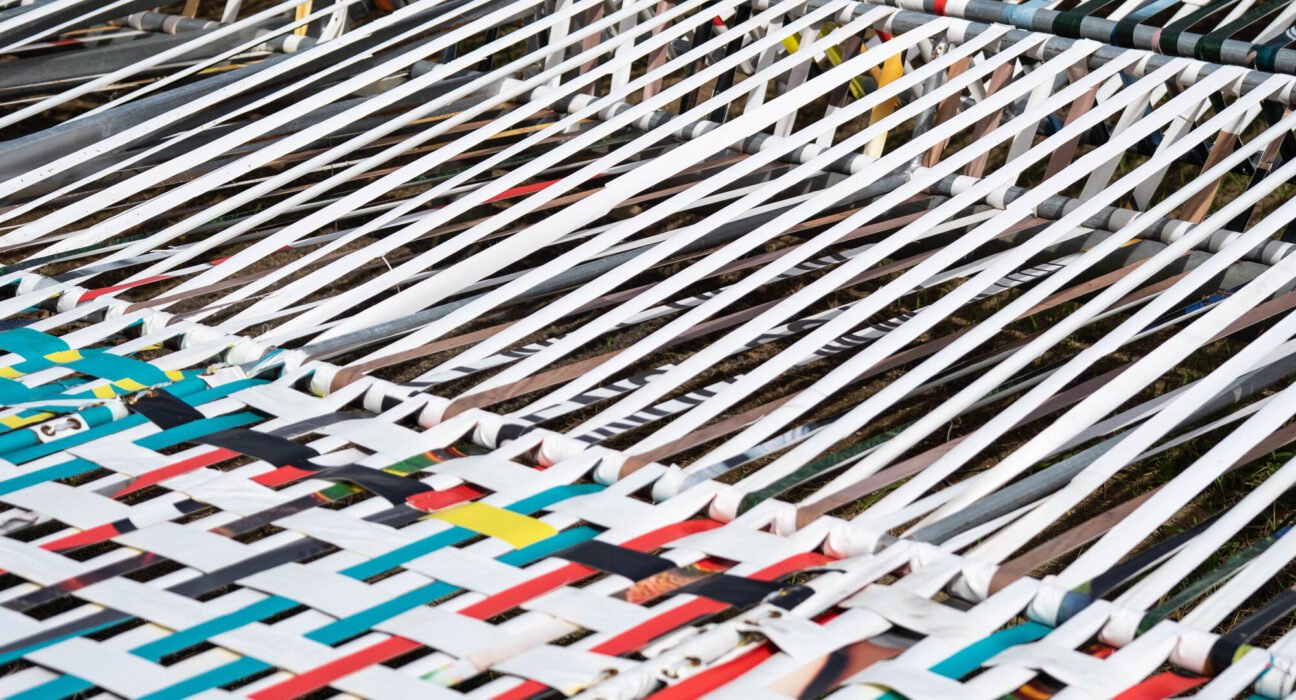
Architecture news often focuses on permanent buildings, but some of the most powerful spatial ideas arrive through temporary installations. TAELON7’s Limbo Engawa, now presented at Art Omi in New York after its earlier life in Accra, shows how design can move across continents while carrying culture, atmosphere, and architectural meaning with it.
For audiences interested in luxury architecture, luxury decor, and elevated spatial storytelling, this project stands out as more than an art object. It is an installation that explores thresholds, gathering, and the relationship between structure and landscape—ideas that are increasingly shaping high-end residential and cultural design alike.
Architecture News: Why Limbo Engawa Matters
In today’s architecture news, portable and site-responsive works are becoming essential to the wider design conversation. Limbo Engawa is notable because it does not simply change location; it transforms through relocation. Its move from Accra to Art Omi introduces the work to a new physical and cultural setting, allowing visitors to experience how context changes the meaning of architecture.
The title itself suggests layered references. “Engawa” traditionally evokes an in-between space, often understood as a threshold linking interior and exterior. In contemporary design language, that concept resonates strongly with luxury home planning, where terraces, galleries, shaded transitions, and framed landscape views are highly prized. “Limbo,” meanwhile, implies suspension, transition, and ambiguity. Together, the terms point to an installation concerned with being between places, climates, and identities.
That makes this project especially relevant in architecture news because it reflects several major trends:
- The growing importance of immersive installations in architectural discourse
- An emphasis on cross-cultural design exchange
- Interest in transitional spaces that blur indoors and outdoors
- A renewed focus on material atmosphere and sensory experience
From Accra to New York: A Cross-Continental Design Journey
The journey from Accra to upstate New York is central to the story. In architecture news, relocation often reveals whether a project is deeply rooted in one place or flexible enough to gain new relevance elsewhere. Limbo Engawa appears to embrace that tension. Rather than remaining fixed to a single narrative, it invites reinterpretation.
Accra offers one cultural and climatic framework; Art Omi presents another. This shift matters because installations are never experienced in isolation. Light quality, surrounding vegetation, seasonal change, and visitor movement all shape perception. At Art Omi, a destination known for art and landscape, the installation enters a dialogue with open space, curated nature, and an audience primed for contemplative encounters.
For readers following architecture news, this kind of migration underscores a broader truth: architecture is not only about enclosure. It is also about sequence, memory, and the choreography of arrival. A successful installation can communicate those qualities as effectively as a house, pavilion, or museum.
Design Themes Luxury Audiences Will Appreciate
Although the work belongs firmly in the cultural sphere, it also has clear relevance for luxury architecture and luxury home decor. Many of the spatial values suggested by Limbo Engawa align with what discerning homeowners and designers seek in premium environments.
The appeal of threshold spaces
One of the most influential ideas in contemporary luxury design is the threshold: spaces that are neither fully inside nor fully outside. Think covered courtyards, sculptural verandas, shaded loggias, and meditative garden edges. These zones offer privacy, calm, and visual depth, and they create a sense of ritual in everyday movement.
In that sense, architecture news around projects like Limbo Engawa can inspire residential design strategies such as:
- Creating layered transitions from entry to living spaces
- Using framing elements to heighten views and perspective
- Designing semi-open rooms for reflection and entertaining
- Blending natural materials with minimal structural gestures
Materiality and atmosphere
Luxury design is no longer defined only by opulence. Increasingly, it is about restraint, texture, and emotional effect. Installations like this one remind designers that atmosphere can be achieved through proportion, shadow, and tactility as much as through expensive finishes. That lesson is highly relevant in architecture news covering the evolution of sophisticated interiors and outdoor living spaces.
Whether expressed in a collectible design setting or a bespoke luxury home, the same principles apply:
- Use natural light as a design material
- Prioritize sensory richness over visual excess
- Let structure and void work together
- Design for contemplation as well as function
What This Installation Says About Contemporary Architecture
The significance of Limbo Engawa extends beyond its physical form. In the wider landscape of architecture news, it reflects a discipline that is increasingly interdisciplinary. Architects, artists, and designers are collaborating in ways that challenge conventional categories. The result is work that can be experiential, conceptual, and spatial all at once.
This matters because audiences today engage with design differently. They want spaces that tell stories, prompt reflection, and respond to place. Temporary installations often test ideas that later influence permanent projects in hospitality, residential architecture, and luxury decor. In that way, an artwork in a sculpture park can have a ripple effect across the design industry.
TAELON7’s project also speaks to the importance of mobility in contemporary culture. A work that travels from West Africa to the United States carries with it questions about translation, adaptation, and audience. These questions are exactly why projects like this earn attention in architecture news: they expand the definition of what architecture can do.
Why It Resonates in Luxury Architecture and Design
For professionals and enthusiasts in luxury architecture, luxury design, and luxury home decor, Limbo Engawa offers a useful lens on current taste. The most compelling high-end spaces today are often those that feel serene, layered, and deeply connected to environment. They favor mood over display and experience over spectacle.
This installation resonates because it appears to embody those qualities:
- A strong relationship between built form and landscape
- An emphasis on transition and pause
- A refined, conceptual design language
- A sense of cultural depth and spatial sophistication
Those are precisely the values shaping elite residences, collectible interiors, and destination cultural spaces worldwide. As a result, this story has relevance well beyond the art world and deserves attention in ongoing architecture news coverage.
Conclusion
In a design era increasingly defined by movement, atmosphere, and cross-cultural exchange, TAELON7’s Limbo Engawa stands out as a memorable example of spatial storytelling. Its move from Accra to Art Omi in New York highlights how installations can evolve through context while continuing to inspire conversations in architecture news, luxury architecture, and refined residential design.
The clear takeaway is that great architecture does not always need permanence to leave a lasting impression. Sometimes, the most influential spaces are the ones that exist in between—between art and architecture, indoors and outdoors, one city and another.