In standout architecture news this season, TAELON7’s Limbo Engawa proves that temporary design can be every bit as powerful as permanent construction. Moving from Accra, Ghana, to Art Omi in New York’s Hudson Valley, the installation shows how modular architecture can carry a shared identity while adapting gracefully to entirely different landscapes.
Created by TAELON7, the practice led by architect Juergen Benson-Strohmayer, Limbo Engawa is a two-part, site-specific installation jointly commissioned by Limbo Museum and Art Omi. First unveiled in March 2026 in Accra and later reconfigured for its September 2026 opening in Ghent, New York, the project explores a compelling question at the center of contemporary architecture news: how can architecture create spaces for gathering, pause, and exchange across varied cultural and environmental settings?
Architecture News Spotlight: What Is Limbo Engawa?
Limbo Engawa takes its name from the Japanese term engawa, which refers to a threshold space between inside and outside, private and communal life. That idea becomes the conceptual backbone of the installation. Rather than functioning as a traditional building, the project acts as an in-between zone—part pavilion, part landscape device, part social platform.
Its materials are simple but meaningful: steel framing paired with salvaged billboard tarpaulin. This combination gives the installation a lightweight, adaptable quality while reinforcing a larger conversation around reuse, mobility, and resource-conscious design. In luxury design and luxury architecture circles, that balance between refined spatial experience and material pragmatism is increasingly important.
A modular system with a consistent language
What makes this project especially notable in architecture news is that it is not a static object replicated from one site to another. Instead, it is a modular architectural system. The visual language remains consistent, but the form shifts according to each location’s climate, vegetation, movement patterns, and spatial character.
- Reusable steel components allow for dismantling and reassembly
- Salvaged tarpaulin introduces texture, shade, and an element of material memory
- Open configurations encourage gathering, resting, and visual connection to the site
- The installation functions as both architecture and public-space infrastructure
From Accra to the Hudson Valley: How Context Reshaped the Installation
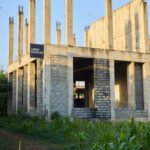
The journey from Ghana to New York is central to the story. In Accra, Limbo Engawa was installed inside and around the unfinished concrete shell of Limbo Museum. There, the project responded to a partially built structure and its cultivated surroundings, creating pockets for rest and informal congregation. Oversized daybeds, inspired by woven beds often seen in unfinished buildings, gave the installation a distinctly local reading.
That first version was deeply tied to the atmosphere of incompletion. Rather than concealing the unfinished condition of the museum, the installation embraced it. It framed the relationship between raw concrete, open ground, and human occupation, turning an in-progress site into a place of social use and architectural reflection.
At Art Omi, the threshold becomes landscape
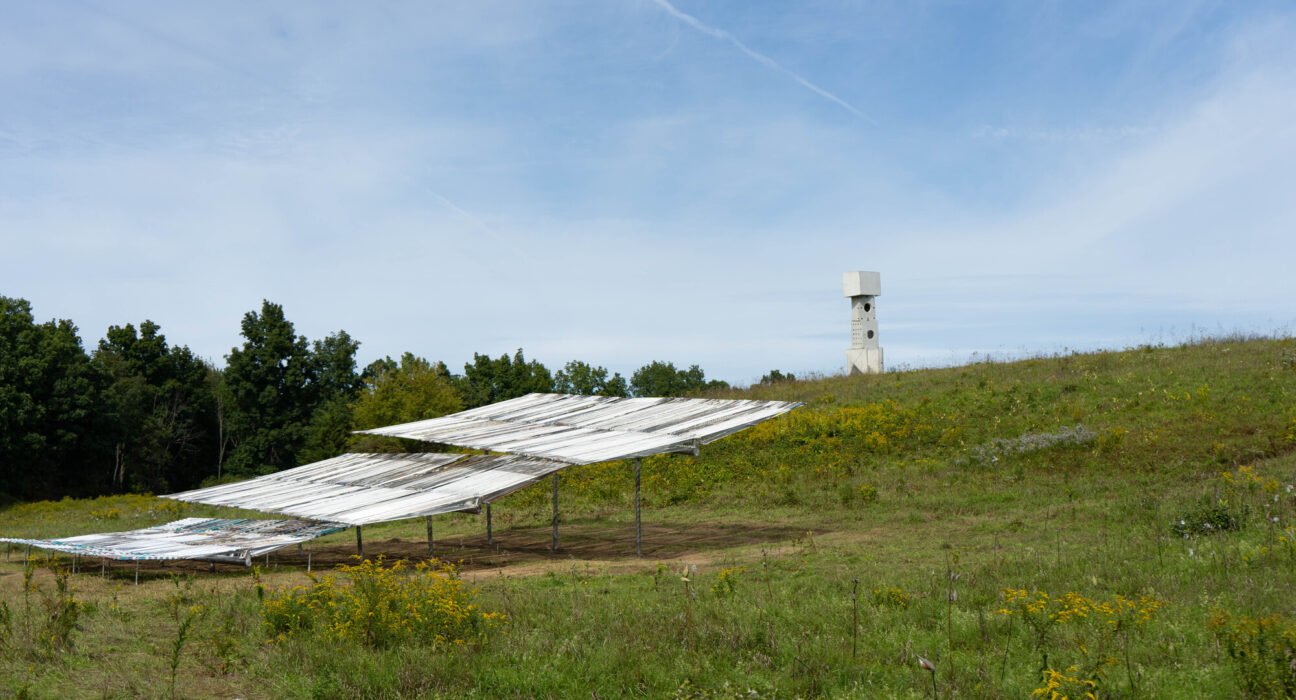
At Art Omi’s 120-acre Sculpture & Architecture Park, the context changes dramatically. Fields, wetlands, and wooded terrain replace the urban intensity and unfinished concrete of Accra. In this new setting, Limbo Engawa becomes a freestanding pavilion in the landscape, offering shade, pause, and framed views across the Hudson Valley environment.
This shift is why the project deserves close attention in architecture news reporting. The threshold is no longer between unfinished architecture and land; it becomes a transition between an object in the landscape and the openness surrounding it. The result is quieter, more expansive, and deeply attuned to the rhythms of nature.
Why Limbo Engawa Matters for Luxury Architecture and Design
Although the installation is temporary, its design values align with many ideas shaping luxury home, luxury decor, and luxury design today. Contemporary luxury is moving beyond excess and toward experience, flexibility, craftsmanship, and contextual sensitivity. Limbo Engawa captures all of these traits through a restrained yet evocative architectural language.
For readers interested in luxury architecture, several lessons stand out:
- Transitional space matters: Verandas, covered terraces, and in-between rooms are increasingly prized for the way they connect indoor comfort with outdoor experience.
- Adaptability adds value: Spaces that can evolve with use, season, and setting feel more intelligent and enduring.
- Material reuse can be elegant: Salvaged elements are no longer seen as compromises; they can become defining aesthetic features.
- Landscape integration is essential: High-end design increasingly emphasizes how structures frame views, climate, and movement rather than dominate them.
In that sense, this piece of architecture news speaks to a broader industry direction. Whether in a cultural installation or a luxury home decor concept, the most memorable spaces are often those that create atmosphere through proportion, shade, texture, and openness.
The Institutions Behind the Project
The collaboration between Limbo Museum and Art Omi is also significant. Limbo Museum, founded in Accra in 2024, is an experimental cultural institution housed within an unfinished concrete building. Art Omi, based in New York’s Hudson Valley, is widely known for its sculpture and architecture park, exhibitions, residencies, and education programs.
By commissioning Limbo Engawa together, the two institutions created more than an installation—they built a cultural dialogue across continents. The project demonstrates how architecture can connect places without flattening their differences. It retains a recognizable identity while allowing each site to shape the final experience.
The architect’s broader perspective
Juergen Benson-Strohmayer brings an international lens to the work, with professional ties to both Austria and Ghana and project experience across West and East Africa as well as Europe. That cross-cultural background is visible in the installation’s open-ended approach: it avoids imposing a fixed form and instead lets architecture emerge through site, use, and assembly.
What This Architecture News Story Tells Us About the Future
Among recent architecture news stories, Limbo Engawa stands out for showing that mobility and specificity do not have to be opposites. A project can travel, adapt, and remain deeply responsive. It can use modest materials yet deliver a sophisticated spatial experience. And it can function as a design object, a social setting, and a landscape intervention at once.
For architects, designers, and luxury-focused readers alike, the takeaway is clear: the future of meaningful design lies in flexible systems, thoughtful thresholds, and spaces that respond to where they are. Limbo Engawa is more than a temporary pavilion in this architecture news cycle—it is a persuasive model for how contemporary architecture can move, evolve, and still feel rooted.