
In a design culture often captivated by spectacle, Architecture news rarely pauses long enough to ask what buildings truly cost. The 8th Tallinn Architecture Biennale 2026 does exactly that, turning a deceptively simple question — How Much? — into one of the year’s most urgent conversations for luxury architecture, luxury design, and the future of responsible building.
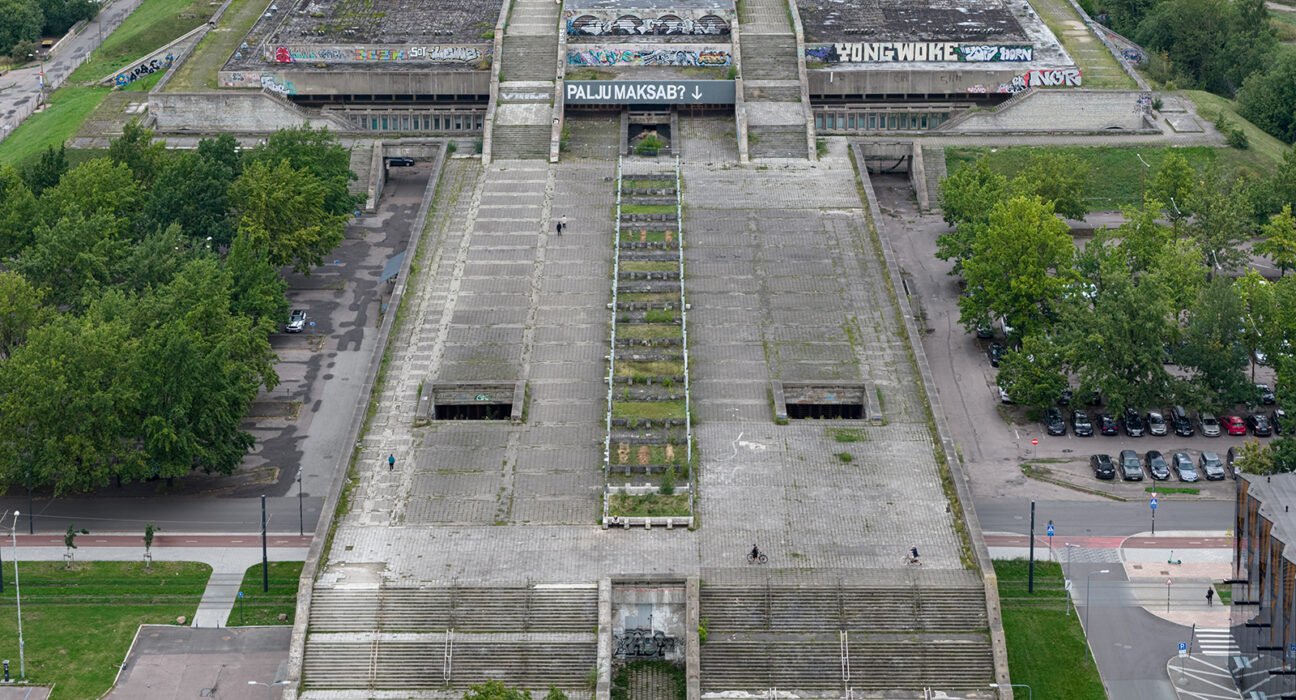
Running across Tallinn through November 30, 2026, the biennale is curated by Kertu Johanna Jõeste, Siim Tanel Tõnisson, Ra Martin Puhkan of Stuudio TÄNA, alongside Mark Aleksander Fischer and Mira Samonig. Its central exhibition unfolds inside Linnahall, the vast seaside structure originally built for the 1980 Summer Olympics. More than a dramatic venue, Linnahall becomes the biennale’s most powerful exhibit: a concrete reminder that the value of architecture cannot be measured by construction cost alone.
Architecture News From Tallinn: Why “How Much?” Matters Now
The key idea behind TAB 2026 is that “cheap” architecture is never truly simple. A low upfront budget may conceal far greater costs over time, including:
- Material extraction and resource depletion
- Labor and supply-chain pressures
- Environmental damage and carbon impact
- Maintenance and operational expense
- Social consequences for communities and public space
This broader definition of cost feels especially relevant for readers interested in luxury home design and high-end interiors. True luxury today is no longer just about rare finishes or oversized spaces; it is increasingly tied to longevity, craftsmanship, adaptability, and environmental intelligence. In that sense, TAB 2026 speaks directly to a more sophisticated design audience that understands value as something deeper than price.
Linnahall: A Monument to Architecture, Decay, and Deferred Value
If the biennale has a central character, it is Linnahall itself. Set on Tallinn’s waterfront, the monumental building has spent decades in a state of uncertainty. Renovation would require enormous investment. Demolition would also come at a price. Doing nothing, however, creates a slower but equally real cost through deterioration, lost urban opportunity, and cultural neglect.
That unresolved condition is precisely why the building is such a potent setting for the event. Visitors are not simply told about the economics of reuse, adaptation, and maintenance — they move through them physically. Raw concrete surfaces, traces of prior occupation, and unfinished edges transform abstract debates into lived spatial experience.
For the luxury architecture sector, Linnahall offers an important lesson: prestige alone does not secure a building’s future. Without stewardship, even iconic structures become liabilities. Enduring value depends on continued relevance, care, and the capacity for reinvention.
The Main Exhibition Explores Cost Beyond the Budget Sheet
The curatorial exhibition brings together architects and interdisciplinary practitioners from Estonia and abroad, including asphalt / Kollektiv für Architektur, Avarrus Arkkitehdit, baubüro in situ, HouseEurope!, KAVAKAVA, Mantas Peteraitis Architecture Studio, Studio TAKK, O–P, SALTO Architects, and VARES.
Rather than romanticizing austerity, the exhibition examines how constraint can produce new architectural intelligence. Key themes include:
- Adaptive reuse and transformation of existing structures
- Resource-conscious construction strategies
- Alternative development and ownership models
- The financial systems that shape design decisions
- Local responses to limited budgets and materials
An Estonian Collective Exhibit further grounds the conversation in local practice, showing how budget limitations can still lead to inventive structural and spatial outcomes. This is especially compelling within today’s luxury design market, where restraint, authenticity, and material honesty increasingly signal refinement.
Can Affordable Design Still Feel Luxurious?
One of the most intriguing threads in this Architecture news story is the biennale’s refusal to separate affordability from delight. At the Estonian Museum of Architecture, the installation program titled Budget Bougie asks whether spatial richness can be achieved without extravagant spending.
The winning pavilion, Resonance by Aru Ma- Architects, answers with a material palette of rebar, rope, limestone, and plywood. These are not conventionally “luxury” materials, yet their assembly creates atmosphere, tactility, and acoustic depth. It is a timely reminder for luxury home decor and luxury interiors alike: elegance is often a function of composition, proportion, and sensory experience rather than sheer expense.
That idea has growing influence across premium residential design, where clients are increasingly drawn to homes that feel calm, intelligent, and deeply considered instead of merely lavish. TAB 2026 captures that shift with unusual clarity.
Symposiums, Student Work, and Urban Vision Extend the Debate
The biennale expands beyond its main show through talks, academic exhibitions, and speculative urban projects. During opening week, the Sounds Expensive symposium at the Estonian Academy of Arts gathered architects, critics, researchers, and curators to discuss affordability, scarcity, and efficiency. Contributors include Phineas Harper, Claire Zimmerman, Thomas Flores, and Mathias Palazzi.
Meanwhile, the museum exhibition Capital-A Affordable Architecture brings together architecture schools from across Europe and beyond, including the University of Applied Arts Vienna, UMPRUM Prague, the Royal College of Art, Kharkiv School of Architecture, and the Estonian Academy of Arts. Their work highlights how affordability is understood differently across cultural and geographic contexts.
Later in the season, From Void to Value: Revisioning Tallinn’s Old Town will present proposals for an unresolved site at the edge of the historic center. The winning scheme, A Place Reclaimed, imagines how an urban void might generate new civic, social, and economic value.
Together, these programs make TAB 2026 more than an exhibition. It becomes a citywide platform asking how architecture can create lasting worth in a time of finite resources.
What Luxury Architecture Can Learn From TAB 2026
This edition of the biennale offers a powerful message for developers, designers, and homeowners operating at the high end of the market. Luxury is evolving. It is no longer defined only by exclusivity or costliness, but by qualities that hold up over time.
Key takeaways for the luxury sector
- Durability is a luxury: Buildings and interiors that age gracefully often outperform trend-driven design.
- Reuse can be prestigious: Adaptive projects carry cultural depth and environmental credibility.
- Material intelligence matters: Beauty does not depend on expensive finishes alone.
- Maintenance is part of design: Long-term care should be built into the original concept.
- Social value counts: Architecture gains significance when it supports public life and community identity.
For anyone following Architecture news, TAB 2026 stands out because it reframes an old question in a way that feels both practical and philosophical. How much does a building cost? How much does it give back? How much does it demand later?
Those questions resonate far beyond Tallinn. In an era shaped by climate pressure, housing debates, and shifting definitions of luxury, the most important projects may be the ones that balance beauty with accountability. That is the lasting takeaway from this chapter in Architecture news: the best architecture is not simply expensive or inexpensive — it is consciously valued.