Architecture news rarely captures the tension between politics, design ambition, and urban identity as clearly as the fate of Tbilisi’s Rike Park cultural complex. The Georgian capital has now approved the demolition of Studio Fuksas’ long-abandoned Music Theatre and Exhibition Hall, reopening a global debate over whether bold contemporary landmarks should be repurposed or erased.
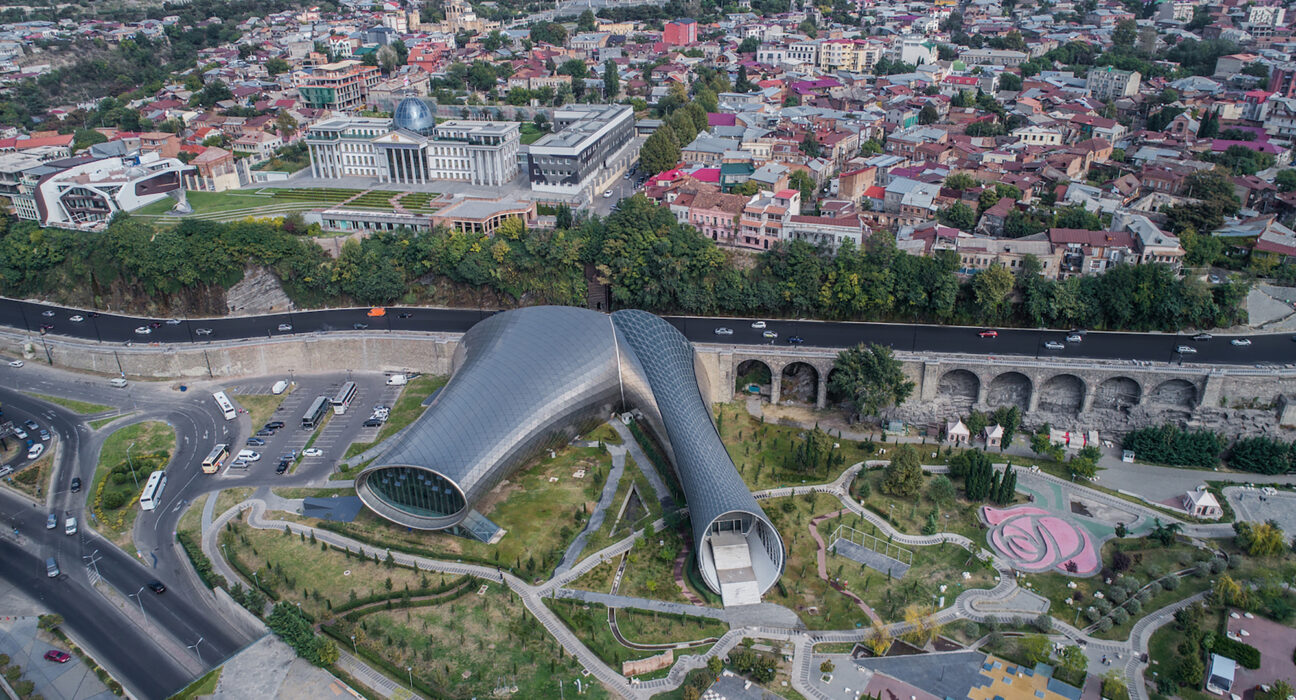
Designed by Italian firm Studio Fuksas and completed in 2012, the striking tube-shaped complex in Rike Park was envisioned as a major cultural destination on the banks of the Kura River. Instead, it spent more than a decade unopened, politically charged, and functionally unresolved. For followers of luxury architecture and luxury design, the story is about far more than one dramatic building: it is a case study in how architecture can become entangled with regime change, public taste, and the economics of preservation.
Architecture News: Why the Rike Park Complex Is Being Demolished
On July 13, 2026, Tbilisi City Hall issued a permit authorizing the dismantling of the Rike Park Music Theatre and Exhibition Hall. The decision followed formal backing from the city’s Cultural Heritage Protection Council and approval by the municipal Architecture Service.
The order reportedly requires the current owner to complete demolition by December 25, marking a definitive end for one of the city’s most debated pieces of contemporary architecture.
Several factors appear to have shaped the decision:
- Political symbolism: The project became closely associated with the former United National Movement government.
- Long-term abandonment: Despite being completed in 2012, the building never officially opened.
- Ownership instability: The property passed through multiple owners and redevelopment proposals without achieving a viable use.
- Safety concerns: Public scrutiny intensified after a teenager’s accidental death on the site in 2025.
- Official opposition: Senior public officials openly criticized the building’s appearance and value to the city.
In the latest architecture news from the region, this combination of politics, inactivity, and safety concerns proved more powerful than arguments for adaptive reuse.
The Design Vision Behind Studio Fuksas’ “Rike Tubes”
Whatever one thinks of the project, the building was never timid. The 10,000-square-meter complex consists of two fluid, connected volumes embedded into the retaining wall of Rike Park. One housed a 566-seat music theater, while the other was designed as an exhibition hall.
Its form and placement were carefully choreographed. The exhibition space was approached by a ramp rising from street level, while the theater volume elevated key public areas above ground to capture river views and panoramas of Old Tbilisi. The effect was intentionally sculptural and cinematic, with the structure acting almost like an urban viewing device focused on the city’s historic core.
From a luxury design perspective, the project represented the kind of high-visibility cultural architecture often used by governments to signal modernity and global ambition. Like many landmark-driven urban renewal projects, it aimed to reshape perception as much as function.
A Landmark Without a Life
The central irony of the Rike Park complex is that its bold architectural identity was never matched by an operational future. It was conceived as a destination, yet remained inaccessible. It was designed as public architecture, yet never became part of public life.
That disconnect is what makes this story so compelling in today’s architecture news cycle. Great architecture can command attention, but without governance, programming, and community support, even the most visually ambitious building can become vulnerable.
How Politics Shaped the Fate of the Building
The Rike Park complex was commissioned during an era when Georgia sought to project itself as a fast-modernizing, Western-facing nation. International architects were invited to contribute iconic civic buildings, while infrastructure upgrades and rapid construction transformed parts of Tbilisi.
After the 2012 change in government, however, the building’s identity shifted. Rather than being celebrated as a symbol of modernization, it increasingly came to be seen by critics as a monument to a previous political regime. That perception appears to have haunted every subsequent attempt to revive it.
This is a recurring theme in architecture news: buildings are never only about design. They also carry the ideology, ambitions, and conflicts of the era that produced them. When political meaning overwhelms civic value, preservation becomes far more difficult.
Could Adaptive Reuse Have Saved the Rike Park Complex?
Studio Fuksas has publicly argued against demolition, urging the city to consider a new use that would reconnect the complex to urban life. Their position aligns with a growing international movement that favors reuse over demolition, especially for large and resource-intensive structures.
Potential reuse strategies might have included:
- A contemporary arts and events venue
- A luxury cultural destination with dining and riverfront programming
- A design museum or architecture center
- A hybrid performance, exhibition, and hospitality concept
- A public-private innovation hub linked to tourism and creative industries
For audiences interested in luxury home decor, luxury architecture, and luxury home trends, the larger lesson is clear: exceptional design must remain adaptable. Buildings that cannot evolve with changing civic, cultural, or market conditions face a steeper path to survival.
What This Means in the Wider Architecture News Landscape
The demolition of the Rike Park complex also fits into a broader international conversation about what deserves preservation. Around the world, architects, preservationists, and city officials are increasingly debating the future of modern and contemporary landmarks that have become expensive, controversial, or difficult to maintain.
Recent cases globally show similar patterns:
- Contemporary structures facing demolition due to redevelopment pressure
- Modernist landmarks threatened by deferred maintenance
- Brutalist housing and civic buildings challenged by safety and repair costs
- Public campaigns pushing adaptive reuse over total removal
That makes this more than a local story. In global architecture news, Tbilisi’s decision raises difficult questions about sustainability, public memory, and the threshold at which a building is deemed too politically or economically burdened to save.
A Cautionary Tale for Luxury Architecture and Urban Development
The Rike Park saga is ultimately a cautionary tale for cities investing in signature design. Iconic forms can elevate a skyline and create instant recognition, but architecture alone cannot guarantee long-term success. A landmark needs a durable civic mission, political continuity, operational planning, and public legitimacy.
For developers, designers, and urban leaders working in luxury architecture, luxury decor, and luxury design, the message is especially relevant. Prestige projects must be resilient, not just photogenic. They need a future as carefully designed as their facade.
As this chapter closes, the most important takeaway from this architecture news story is not simply that a controversial building will disappear. It is that cities must think beyond spectacle. When architecture is cut off from use, consensus, and stewardship, even the boldest landmark can be lost.