In the latest Architecture news, one of Valparaíso’s most evocative cultural landmarks has returned to life. The reopening of Teatro Mauri in June 2026 is more than a renovation story—it is a powerful example of how modernist heritage, acoustic innovation, and urban identity can come together in a single, carefully restored destination.
Perched on Cerro Bellavista beside La Sebastiana, the former home of Pablo Neruda, Teatro Mauri occupies a privileged place in Chile’s architectural and cultural memory. Originally opened in 1951, the venue was designed by architect Alfredo Vargas Stoller, a key figure in Valparaíso modernism. After decades of decline following a fire in the early 1990s, the building has now been comprehensively restored under the direction of architects Laura Garrido and Gregorio Garretón, creating a refined new chapter for this historic performance space.
Architecture News: Why Teatro Mauri Matters
For followers of Architecture news, Teatro Mauri represents an important preservation milestone in Latin America. The project demonstrates how a deteriorated modernist structure can be revived without sacrificing its original character or its civic role.
The theater is deeply tied to Valparaíso’s layered identity. It was commissioned by businessman Sebastián Collado Mauri, who was also linked to La Sebastiana and to the region’s historic tile-making industry. That connection grounds the building in the material culture of the city, where craft, architecture, and public life have always overlapped.
Its revival also aligns with a wider cultural ambition. Since Valparaíso was named a UNESCO Creative City of Music in 2019, projects that support live performance and artistic exchange have taken on even greater significance. In that context, Teatro Mauri is not simply a restored building—it is cultural infrastructure with long-term urban value.
A Landmark Restoration Rooted in Modernist Heritage
Teatro Mauri’s restoration had to address decades of alterations that had obscured Vargas Stoller’s original concept. Over nearly 70 years, ad hoc interventions changed the building’s spatial clarity and material integrity. The challenge for the design team was to recover the original single-volume composition while adapting the venue for contemporary use.
The restoration unfolded in stages:
- 2015: The Sociedad Chilena de Autores e Intérpretes (SCD) acquired the building.
- 2017–2020: A first phase enabled a partial reopening with a provisional 70-seat hall in the foyer.
- 2024–2026: Full construction and restoration were completed, with technical site supervision by architect Alonso Pizarro.
One of the most important findings was that the structural system remained largely sound. The original concrete block construction, confined by reinforced concrete columns, beams, and slabs, showed mostly superficial damage. That allowed the architects to focus on restoration rather than replacement—a crucial distinction in high-quality heritage work.
Preserving the facade, transforming the interior
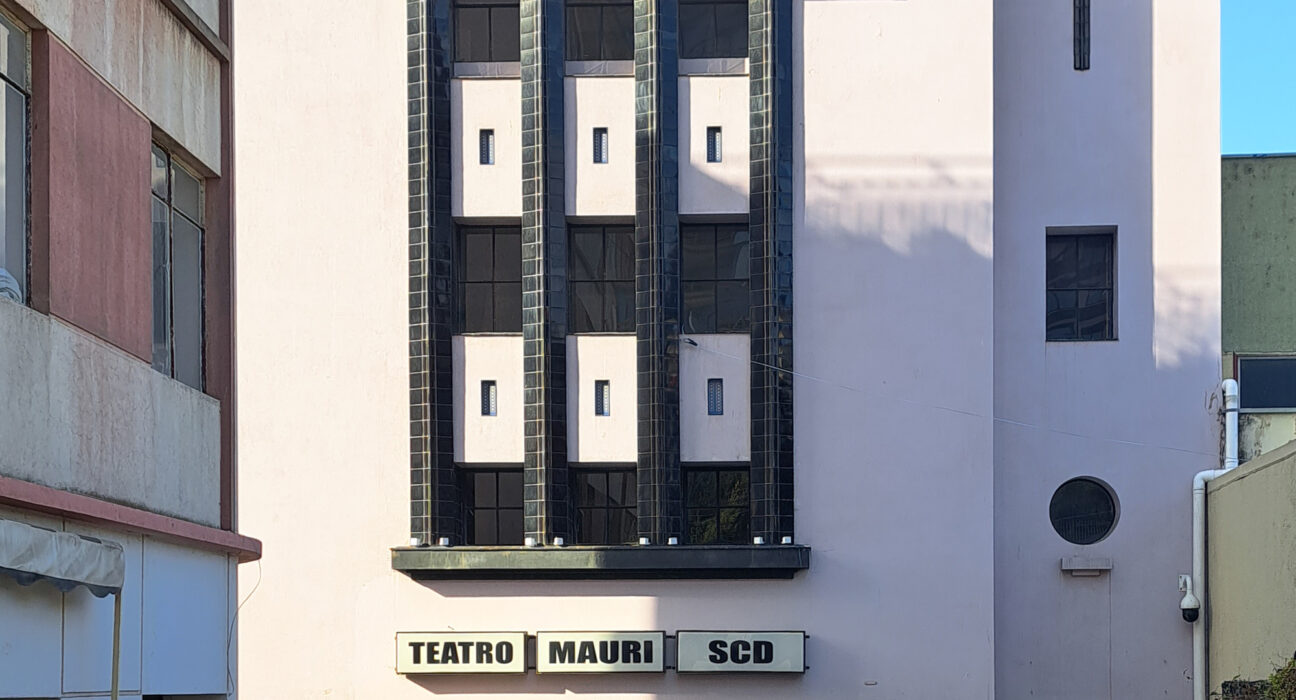
In a move that will resonate with preservation advocates and luxury design enthusiasts alike, the project retained the building’s recognizable Art Deco facade while reworking the 1,200-square-metre interior for present-day performance standards. This balance between visual continuity and technical reinvention is one of the project’s strongest achievements.
Notable interventions included:
- Removal of a provisional roof added in 1991
- Installation of a new steel roof with lattice beams
- Carbon-fibre reinforcement on columns and walls
- Excavation below the original structure for backstage support spaces
- Use of nationally sourced materials wherever possible
The result is a restoration that feels both disciplined and contemporary, honoring the original architecture while discreetly upgrading its performance capabilities.
Luxury Design Lessons from Teatro Mauri
Although Teatro Mauri is a public cultural venue, its restoration offers compelling insights for readers interested in luxury architecture, luxury home decor, and luxury design. The project shows that true luxury is not always about extravagance; often, it lies in restraint, craftsmanship, and the quality of spatial experience.
Several design principles stand out:
- Material authenticity: The use of locally sourced materials reinforces a sense of place.
- Spatial clarity: Restoring the building’s original volume enhances the experience of movement and gathering.
- Performance-driven design: Acoustic cladding, technical infrastructure, and adaptable seating all support a richer user experience.
- Contextual sensitivity: The intervention respects neighboring views and Valparaíso’s urban character.
These are the same values increasingly seen in luxury home and hospitality projects: timeless form, high-performing materials, and a design language rooted in local identity.
Inside the New Performance Space
From a functional perspective, the renewed theater has been completely reimagined. Originally conceived as both a cinema and performance venue, its contemporary version is dedicated exclusively to music. That focused purpose shaped every technical decision.
The updated staging system includes a motorized beam setup, a technical mezzanine dividing the two stall sections, and new acoustic treatments designed to accommodate a wide range of sound. Capacity is also highly flexible, thanks to retractable seating similar to systems used in advanced cultural venues.
The hall now accommodates between 195 and 780 people, including up to 514 standing attendees on the main floor. This flexibility gives the venue an edge in today’s live events landscape, where programming often shifts between intimate concerts, experimental performances, and larger public gatherings.
Why adaptive capacity matters
In current Architecture news, flexibility has become a defining feature of successful cultural design. Buildings that can host multiple formats are more resilient economically and socially. Teatro Mauri reflects this shift, pairing heritage preservation with operational adaptability.
That adaptability also helped prevent a far less inspiring outcome. Before restoration gained momentum, the building risked being converted into a supermarket warehouse. Instead, it now returns to the city as a dedicated music venue with a public-facing mission centered on Chilean artists and open programming.
What This Project Means for Valparaíso and Beyond
Teatro Mauri’s reopening arrives at a meaningful moment for Chilean culture, particularly amid wider pressures on arts funding. Its return sends a clear message: architectural restoration can do more than save buildings—it can support quality of life, creative economies, and neighborhood identity.
For those tracking global Architecture news, the project also fits within a broader wave of investment in cultural architecture, from museums in Latin America to major performing arts centers in Asia, Europe, and the Middle East. Yet what makes Teatro Mauri especially compelling is its scale and specificity. This is not a spectacle project. It is a precise, locally grounded intervention that proves modest-sized landmarks can have major civic impact.
In luxury architecture terms, that may be the biggest takeaway of all: enduring value comes from vision, stewardship, and design intelligence—not simply scale.
Conclusion
As a standout story in Architecture news, the restoration of Teatro Mauri shows how modernist landmarks can be revived with elegance, technical rigor, and cultural purpose. By preserving its historic identity while transforming it into a high-performance music venue, the project offers a model for future restorations in Valparaíso and beyond. For anyone passionate about heritage, luxury design, and meaningful placemaking, Teatro Mauri is proof that the most powerful architecture often begins with thoughtful renewal.