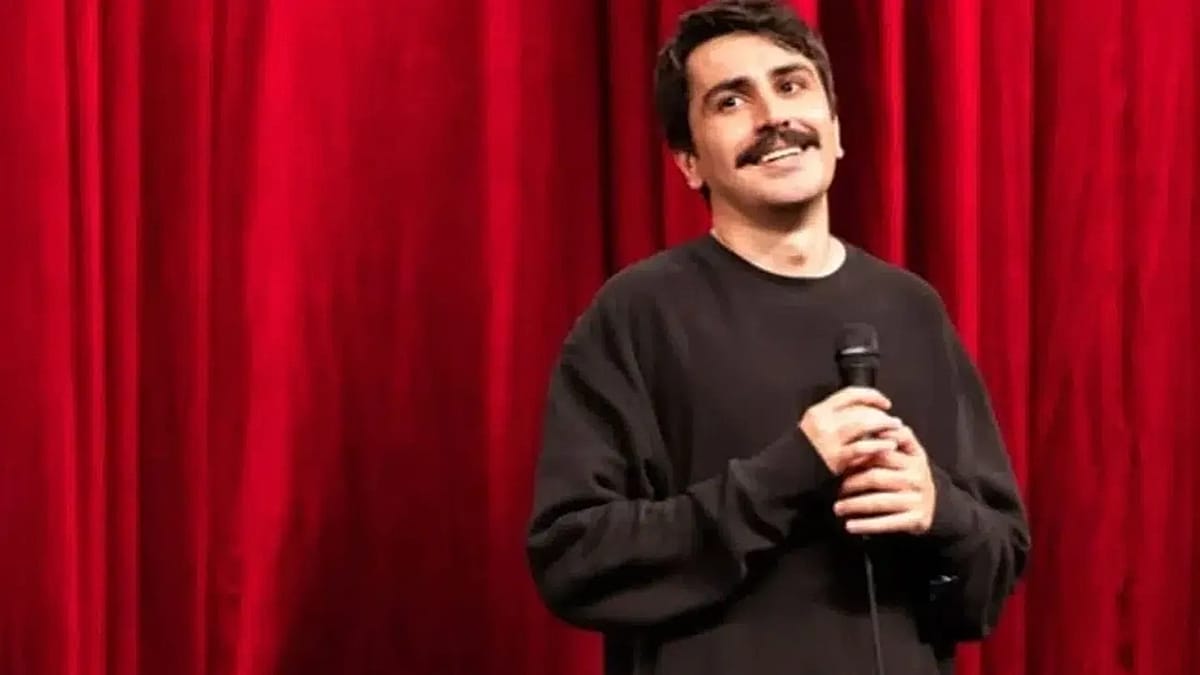
The arrest of Turkish comedian Deniz Göktaş has reignited debate over free expression in Turkey, where satire, politics and religion increasingly collide in courtrooms rather than comedy clubs. For audiences far beyond the country’s borders, the Deniz Göktaş arrest is more than a celebrity headline—it is a sharp indicator of how cultural speech is being policed in one of the region’s most closely watched political environments.
Göktaş, a 32-year-old stand-up comic, was detained at Istanbul Airport after returning from a trip abroad. Authorities launched multiple investigations tied to a recorded stand-up performance published on YouTube, including allegations of insulting religious values and insulting President Recep Tayyip Erdoğan. The case quickly drew attention because the performance had already gone viral, generating millions of views and sparking fierce discussion on social media.
Why the Deniz Göktaş Arrest Matters
The Deniz Göktaş arrest sits at the crossroads of comedy, censorship and state power. According to prosecutors, complaints were filed over material in his 90-minute stand-up set, prompting an official investigation. While one joke referencing holy texts has been widely cited, reporting suggests that authorities are also examining remarks directed at Erdoğan, including language describing him as a dictator.
In Turkey, insulting the president is a criminal offence under Article 299 of the Turkish Penal Code, a law that has repeatedly drawn criticism from human rights advocates. The additional accusation of publicly insulting religious values adds another layer of legal risk, particularly in a country where political identity and religious conservatism often overlap in public debate.
This makes the Deniz Göktaş arrest significant for several reasons:
- It tests the limits of political satire in a highly charged environment.
- It reflects broader pressure on cultural figures, including artists, musicians and journalists.
- It shows how viral digital content can rapidly become the subject of criminal scrutiny.
- It raises concerns about self-censorship among performers and media creators.
The Stand-Up Set at the Center of the Case
The performance in question was uploaded to YouTube in late June and reportedly attracted close to nine million views in a short period. Göktaş used the routine to comment on political developments in Turkey, taking aim across the ideological spectrum rather than targeting only one side. His material also referenced opposition figures, including Istanbul mayor Ekrem İmamoğlu, whose legal troubles have already made him a symbol of the country’s political tensions.
That context matters. Stand-up comedy traditionally relies on provocation, irony and exaggeration. In democratic societies, these devices are often protected as artistic speech. But in more restrictive settings, the same techniques can be reframed as insults, threats to public order or offences against religious values.
Before the Deniz Göktaş arrest, clips from the performance shared on X were reportedly blocked in Turkey on grounds tied to national security and public order. That move foreshadowed the legal escalation that followed and underscored the state’s willingness to control the circulation of politically sensitive material online.
A Broader Climate of Cultural and Political Pressure
The Deniz Göktaş arrest did not happen in isolation. It comes amid what many observers describe as a widening crackdown on critical voices in Turkey. In recent years, legal action has increasingly touched not only politicians and activists, but also public-facing cultural figures such as comedians, actors, musicians and journalists.
Several overlapping trends help explain why this case has resonated so strongly:
1. Expansion of speech-related prosecutions
Turkey has faced repeated scrutiny over laws used to prosecute allegedly insulting or offensive speech. Critics argue that such laws can be applied broadly, creating uncertainty around what kinds of commentary remain legally safe.
2. The rise of digital visibility
A local club performance can now become a national controversy overnight. YouTube, X and other platforms dramatically expand reach, but they also create permanent, shareable evidence that authorities can cite in investigations.
3. Intensifying political sensitivity
Political polarization in Turkey has made cultural commentary more combustible. When jokes touch on religion, state institutions or senior leaders, they can trigger formal complaints as well as online outrage.
4. Chilling effects on creative industries
Cases like the Deniz Göktaş arrest may prompt venues, producers and performers to avoid controversial themes altogether. That can weaken a country’s comedy scene and narrow the range of artistic expression available in public life.
What Happens Next in the Deniz Göktaş Arrest Case?
Göktaş was expected to appear in court shortly after his detention, with his legal team preparing to respond to the accusations. The immediate legal outcome will matter, but the larger implications may extend much further than one courtroom hearing.
Key questions now include:
- Will prosecutors focus primarily on the religion-related allegation or on remarks about Erdoğan?
- Could the case establish a precedent for how stand-up material is treated under Turkish law?
- Will international attention increase pressure around due process and freedom of expression?
- How will comedians and creators in Turkey adapt their work after the Deniz Göktaş arrest?
Because the performance circulated so widely, the case is likely to remain part of a larger conversation about online speech, political satire and criminal liability in modern Turkey.
Why Global Audiences Are Paying Attention
Although the story is rooted in Turkish domestic politics, it has broader relevance. Around the world, governments are grappling with the boundaries between offensive speech, public order and artistic freedom. The Deniz Göktaş arrest offers a particularly stark example of how those boundaries can be enforced through detention and criminal investigation.
For international observers, the case also illustrates the power of comedy as a political medium. Stand-up often captures public frustrations more directly than formal commentary, which is precisely why authorities may see it as influential—or threatening.
Whether viewed through the lens of civil liberties, media law or cultural politics, this case is a reminder that humor is never just entertainment in tense political climates. It can become evidence, controversy and resistance all at once.
Conclusion
The Deniz Göktaş arrest is a pivotal moment in the debate over free speech in Turkey. What began as a viral stand-up performance has evolved into a high-profile legal test involving religion, presidential insult laws and the shrinking space for satire. The clearest takeaway is this: when comedians face criminal scrutiny for political and religious jokes, the issue extends far beyond one performer—it becomes a measure of how much dissent a society is willing to tolerate.