
Architecture news rarely captures the imagination quite like a project that rethinks how dense cities can still feel communal. MVRDV’s Bihailou Art Village in Shenzhen does exactly that, proposing a bold “vertical village” that blends art, urban life, and layered public space into a fresh model for contemporary luxury design.
Set within one of China’s fastest-evolving metropolitan landscapes, the concept points to a larger shift in architecture: buildings are no longer just objects on a skyline, but ecosystems where culture, circulation, and social interaction are carefully choreographed. For readers following luxury architecture, luxury home trends, and elevated urban living, Bihailou Art Village is a project worth watching.
Architecture News: Why Bihailou Art Village Matters
In the world of architecture news, Shenzhen remains a laboratory for experimentation. The city’s rapid growth has encouraged architects to test new spatial typologies, and MVRDV has responded with a concept that reinterprets the intimacy of a village within a vertical framework.
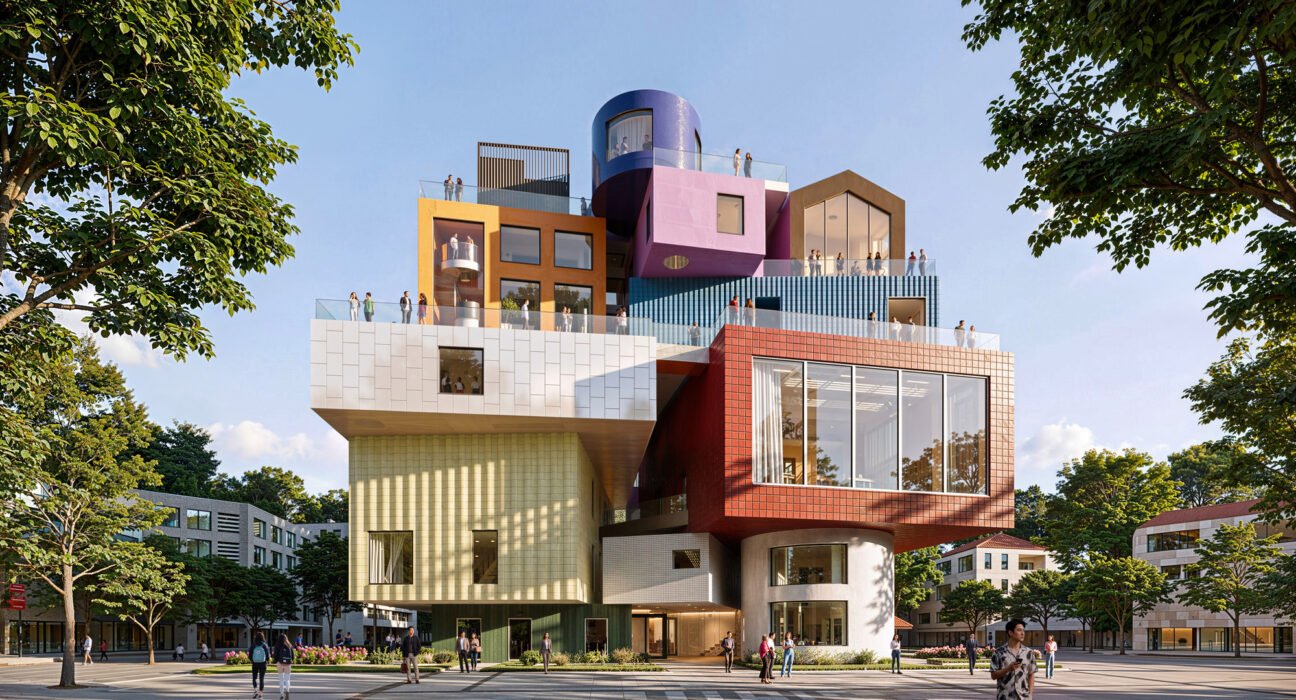
Rather than creating a sealed, monolithic tower, the design suggests a stacked composition of volumes, terraces, and shared spaces. This “vertical village” approach aims to preserve the social richness of a traditional neighborhood while embracing the efficiencies of urban density. It is an idea that resonates strongly across luxury architecture and luxury design, where exclusivity increasingly goes hand in hand with community, wellness, and experience.
Bihailou Art Village also positions culture at the center of the architectural narrative. As the name implies, the project is envisioned not simply as a building, but as an arts-oriented destination—one where exhibition, creativity, and everyday urban life overlap.
The Vertical Village Concept Reimagined
The phrase “vertical village” has become an important one in architecture news, especially in cities where land is limited and demand for mixed-use space continues to rise. MVRDV’s interpretation appears to build on this idea by breaking down the scale of a large development into more legible, human-centered pieces.
Human Scale in a High-Density City
One of the core challenges in high-rise design is maintaining a sense of identity and belonging. Large towers can feel impersonal, even when they are visually impressive. By contrast, a vertical village uses architectural layering to create smaller zones of occupation, each with its own atmosphere and function.
This can include:
- Stepped outdoor terraces that act like elevated courtyards
- Circulation paths designed as social streets rather than simple corridors
- Programmatic variety, from studios and galleries to communal amenities
- Visual porosity that connects interior life with the city beyond
For luxury home and luxury home decor audiences, this model is especially compelling because it translates the comfort and character of neighborhood living into a more elevated urban format.
Art as an Organizing Principle
Another standout aspect of this architecture news story is the role of art. Rather than treating creative programming as an afterthought, the village concept suggests that artistic production and display are built into the project’s DNA. That makes the development more than a real estate proposition; it becomes a cultural framework.
In premium design markets, this integration of art and architecture is increasingly valuable. Buyers, collectors, and design-conscious residents are drawn to spaces that offer curated experiences, tactile materials, and a stronger emotional connection to place. Bihailou Art Village aligns with that demand by framing architecture itself as a stage for cultural life.
What This Means for Luxury Architecture and Design
For those tracking architecture news through the lens of luxury architecture, Bihailou Art Village highlights several trends shaping the future of high-end development.
1. Mixed-Use Is Becoming More Sophisticated
Luxury design is moving beyond private amenity lists and toward richer, more layered environments. Developments are expected to offer not only comfort, but also identity, programming, and a sense of belonging. A vertical village model supports that evolution by combining multiple uses in a coherent architectural language.
2. Community Is the New Premium
Exclusivity once meant separation. Today, it often means access to meaningful communal experiences within a beautifully designed setting. In that sense, this project reflects a major shift in architecture news: the most desirable spaces are not isolated, but interconnected.
3. Outdoor Space Remains Essential
Terraces, planted platforms, and open-air gathering zones continue to define luxury home expectations, even in dense urban contexts. If the Bihailou Art Village concept follows through on its village-like ambition, these elevated exterior spaces could become some of its most important design features.
4. Cultural Value Enhances Real Estate Value
Art-driven developments often carry a stronger narrative, and narrative matters in luxury markets. Spaces associated with creativity, design excellence, and architectural innovation tend to stand out more clearly in a competitive landscape.
Shenzhen’s Role in Global Architecture News
No serious conversation about contemporary architecture news can ignore Shenzhen. The city has become a global reference point for ambitious urbanism, experimental forms, and future-facing development. Architects working here often engage with unusual density, fast-changing cultural expectations, and a client landscape open to bold ideas.
MVRDV’s proposal fits naturally into that context. Known for playful yet rigorous approaches to urban form, the firm often challenges conventional building typologies. In Shenzhen, that design mindset finds fertile ground. The result is a project that feels both site-specific and globally relevant.
For followers of luxury decor and luxury home decor, this is also a reminder that the future of refined living may not be defined solely by interior finishes. Increasingly, it is shaped by how architecture organizes lifestyle—how it frames views, encourages encounters, and supports culture as part of daily life.
A New Model for Elevated Urban Living
What makes this piece of architecture news especially compelling is its broader implication: cities do not have to choose between density and human experience. A vertical village suggests that the two can coexist, provided architects are willing to design with complexity, generosity, and imagination.
If realized as envisioned, Bihailou Art Village could become an influential precedent for future mixed-use cultural developments, especially in high-growth cities. It offers a persuasive model for combining public life, artistic identity, and premium urban design in one cohesive architectural statement.
For anyone interested in luxury architecture, luxury design, and the future direction of architecture news, MVRDV’s Bihailou Art Village is more than a striking concept image. It is a sign of where high-end urban living is headed: upward, outward, and toward a more connected idea of community.