
What if the next frontier in luxury design wasn’t confined to penthouses, yachts, or flagship boutiques, but embedded directly into national infrastructure? The rise of the solar railway suggests exactly that: a future where clean energy, engineering elegance, and smart design converge on the tracks beneath our feet.
After a promising Swiss pilot, Italy may soon become the next European country to test this striking energy concept. For readers interested in luxury brands, luxury decor, and luxury design, the story is bigger than transport policy. It signals a shift toward a new kind of prestige—one defined by innovation, sustainability, and beautifully integrated systems.
Why the Solar Railway Is Capturing Attention
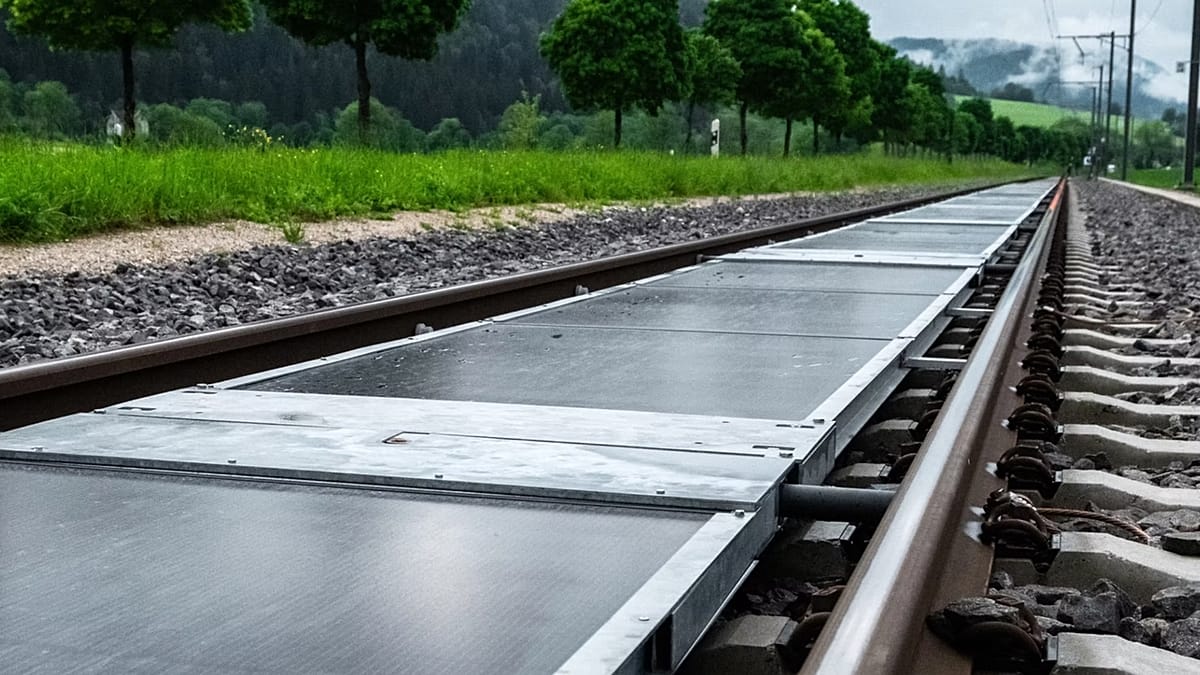
A solar railway uses photovoltaic panels installed between active train tracks to generate electricity without requiring entirely new land use. In Switzerland, start-up Sun-Ways deployed a 100-metre pilot installation in Buttes, fitting 48 specially designed solar panels with a total capacity of 18 kWp.
The trial was originally expected to run for three years, but early performance has reportedly been strong enough to raise the prospect of a permanent installation. In its first year, the project generated around 16,000 kWh of electricity, an impressive output for such a compact footprint.
That makes the solar railway compelling for several reasons:
- It turns underused infrastructure space into an energy asset
- It avoids the land competition associated with large solar farms
- It blends mobility and renewable power in one system
- It offers a visually discreet form of clean-energy design
For design-minded industries, this matters. The most influential luxury movements increasingly celebrate seamless integration—technology that works hard without overwhelming the aesthetic environment.
Switzerland’s Pilot Shows a Solar Railway Can Be Practical
One of the immediate questions around any solar railway is efficiency. Solar panels are usually tilted at specific angles to capture the most sunlight, while track-mounted panels lie comparatively flat. That naturally reduces output potential.
Even so, Sun-Ways estimates that the production loss linked to the lack of inclination is only about 10 per cent. In real-world terms, the Swiss pilot still delivered meaningful energy generation in its first year.
The scale potential is what makes the concept truly notable. If expanded across Switzerland’s entire railway network, the company estimates the system could generate about one terawatt hour of electricity annually—roughly 2 per cent of the country’s total energy consumption.
What makes the concept so attractive?
The appeal of a solar railway lies in how efficiently it rethinks existing assets. Rather than building outward, it builds smarter within a footprint that already exists. That principle mirrors some of the strongest currents in contemporary luxury design:
- Purposeful minimalism: fewer visible additions, more hidden performance
- Sustainable sophistication: eco-conscious systems with premium engineering
- Functional beauty: infrastructure designed to perform elegantly
In that sense, rail-based solar is not merely a utility story. It is also a design story about refinement, restraint, and high-value efficiency.
Could Italy Make the Solar Railway Mainstream?
Italy now appears to be the next market to watch. Following the Swiss trial, Sun-Ways has signed a collaboration agreement with an Italian business partner that is in contact with Rete Ferroviaria Italiana, the country’s national rail infrastructure manager. Plans for a pilot project are expected soon.
An Italian solar railway project would be especially significant. Italy has both a strong rail culture and a globally admired design identity, making it an ideal testing ground for infrastructure that combines performance with visual and environmental intelligence.
From a broader lifestyle perspective, Italy often leads in demonstrating how technology and aesthetics can coexist. Whether in architecture, fashion houses, furniture, or transport hubs, Italian design has long shown that utility does not need to come at the expense of elegance. A successful solar railway would fit naturally into that national narrative.
Why Italy is a strong candidate
- Extensive rail infrastructure capable of supporting pilot expansion
- Strong solar potential compared with many northern European regions
- A design-led culture that values innovation with visual discipline
- Growing clean-energy urgency across Europe’s transport networks
Safety, Durability, and the Engineering Challenge
Of course, a solar railway must do more than look innovative. It must operate safely in a demanding environment exposed to vibration, weather, debris, and repeated train traffic.
Critics have raised concerns such as:
- Potential micro-cracks in the panels
- Fire risk
- Reflections that could distract train drivers
- Maintenance complexity on active rail lines
According to the Swiss company, these risks have been addressed with reinforced panel construction, anti-reflection filters, built-in sensors, and cleaning brushes attached to trains to remove dirt from the panel surface. Notably, the company reported that the pilot operated smoothly in its first year and did not require special maintenance.
This kind of durability is essential if the solar railway is to move from demonstration project to normalized infrastructure. Luxury and premium design sectors understand this well: true quality is not only about first impressions, but about long-term performance under pressure.
What Solar Railway Innovation Means for Luxury Design
At first glance, train tracks and luxury decor may seem worlds apart. But the connection is stronger than it appears. Today’s luxury consumer increasingly values systems, spaces, and brands that align beauty with responsibility. Sustainable innovation is no longer a niche selling point; it is becoming a marker of modern prestige.
The solar railway embodies several ideas that are shaping high-end design culture:
- Invisible intelligence: advanced technology integrated without visual clutter
- Sustainability as status: cleaner solutions that signal forward-thinking taste
- Infrastructure as design: public systems treated as curated environments
As luxury brands rethink retail architecture, hospitality spaces, and urban collaborations, concepts like the solar railway may influence how future premium environments are imagined. Energy generation itself could become part of the design language.
The Takeaway
The solar railway is more than a renewable-energy experiment. It represents a sophisticated model for the future—one where infrastructure is cleaner, smarter, and more elegantly integrated into daily life. Switzerland has shown that the idea can work, and Italy could be the next country to prove it at scale.
For the world of luxury design, that matters. The next era of prestige may not be defined solely by what looks exclusive, but by what performs beautifully, responsibly, and intelligently. If Italy’s pilot moves forward, the solar railway could become a powerful symbol of that new standard.