

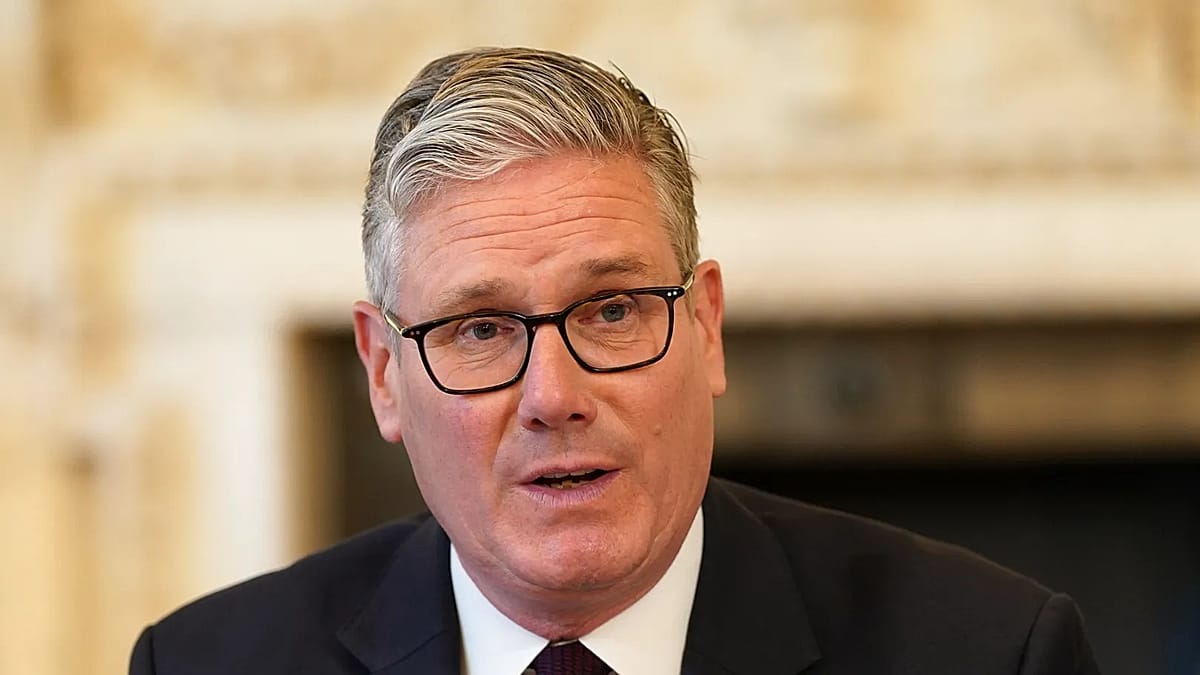
Keir Starmer’s resignation has triggered a pivotal moment in British politics, raising urgent questions about leadership, diplomacy and the pressures of governing during global instability. In his first interview since stepping down, Starmer described the move as an “intensely personal” choice, while making clear that the demands of the prime minister’s office now stretch far beyond Westminster.
Although this political shift sits outside the worlds of luxury architecture, luxury design and luxury interiors, it matters to those sectors more than it may first appear. Leadership changes influence investor confidence, construction sentiment, international trade and household spending — all of which shape high-end property, bespoke interiors and premium development pipelines across the UK.
Keir Starmer’s resignation and the weight of personal leadership
At the center of the story is Keir Starmer’s resignation itself. Speaking candidly, Starmer said he wrestled with what was best for himself, the country and the government before deciding to leave office. His remarks framed the departure not as a sudden tactical move, but as the result of private reflection under intense public pressure.
That tone matters. Modern prime ministers operate in a climate of relentless scrutiny, where domestic expectations collide with global crises. Starmer acknowledged the emotional weight of the role, signaling that political leadership is not only strategic but deeply personal. For voters, markets and industries alike, that admission underscores how fragile political continuity can be when the burden of office becomes overwhelming.
Why diplomacy remains central to the next prime minister
One of the clearest messages from Starmer was that his successor will not have the luxury of narrowing the job to domestic concerns. He argued that international affairs directly affect the cost of living in Britain, citing both the war in Ukraine and tensions involving Iran as major contributors to higher bills, weaker household income and broader economic strain.
This is a critical point in understanding Keir Starmer’s resignation and its wider implications. According to Starmer, foreign policy is no longer a distant matter for summit rooms and official communiqués. It shapes:
- Energy prices and transport costs
- Supply chain reliability
- Consumer confidence and household budgets
- Construction material pricing
- Business investment decisions
For luxury real estate and design-led development, these pressures are especially relevant. Imported stone, metals, lighting systems, custom furnishings and advanced home technologies all depend on stable global trade conditions. When geopolitical tensions rise, premium projects can face delays, price volatility and changing client priorities.
Andy Burnham and the contest over Labour’s future
Attention is now turning to Andy Burnham, widely seen as a likely successor after his recent return to Westminster. Burnham has positioned himself differently from Starmer, placing greater emphasis on domestic renewal and presenting Labour’s next phase as a chance to move away from trickle-down economics and neoliberal orthodoxy.
That contrast could define the coming leadership debate. Where Starmer stressed that diplomacy is inseparable from everyday living standards, Burnham has leaned into bread-and-butter issues at home. The leadership challenge for Burnham — or any successor — will be balancing both realities at once.
What Burnham’s domestic focus could mean
If Burnham secures the leadership, Britain may see stronger messaging around regional growth, public services and economic fairness. For property and design sectors, that could translate into greater interest in:
- Regeneration-led urban planning
- Infrastructure upgrades in regional cities
- Housing policy reform
- Support for local manufacturing and skilled trades
- Place-making strategies that blend heritage with modern design
These themes can have a direct bearing on luxury architecture and luxury interiors, particularly in markets where affluent buyers seek not just beautiful homes but thriving, well-connected communities.
How Keir Starmer’s resignation could affect business confidence
Keir Starmer’s resignation also introduces a period of uncertainty that businesses rarely welcome. Even when leadership transitions are orderly, they can create short-term hesitation across investment markets. Developers, international buyers, architects and interior specialists often look for predictability in tax policy, trade relationships and planning frameworks before committing to major projects.
In the high-end design world, confidence is everything. Luxury construction and interiors are often discretionary, long-cycle investments. A shift in political leadership can affect timelines for:
- Prime residential developments
- Cross-border real estate investment
- Hospitality design projects
- High-value refurbishments
- Procurement of rare or custom materials
While there is no immediate indication of abrupt policy upheaval, Keir Starmer’s resignation places renewed focus on whether the next government leadership team can maintain stability while responding to mounting global and domestic challenges.
The deeper lesson: global conflict shapes life at home
Perhaps the most important takeaway from Starmer’s comments is the link he drew between international conflict and everyday British life. He argued that any prime minister who cares about household bills must care about Ukraine, the Strait of Hormuz and wider geopolitical flashpoints. That view reflects a political reality that is increasingly hard to ignore: foreign policy now lands directly in the kitchen, the mortgage statement and the renovation budget.
For affluent homeowners, developers and designers, this connection is practical rather than abstract. Inflation in energy, logistics and materials can reshape budgets quickly. A bespoke interior scheme may be redesigned. A flagship residential launch may be delayed. A client may prioritize resilience, sustainability and long-term value over purely aesthetic upgrades.
Conclusion
Keir Starmer’s resignation is more than a dramatic leadership moment — it is a reminder that modern government is shaped by both personal limits and global pressure. His warning to the next prime minister is clear: no leader can afford to ignore international affairs when they directly influence living standards, investment confidence and economic stability at home.
As Britain prepares for a new chapter, Keir Starmer’s resignation will be judged not only by why he left, but by whether his successor can successfully navigate the overlap between diplomacy, domestic policy and an economy that touches every sector, from public life to luxury architecture and design.