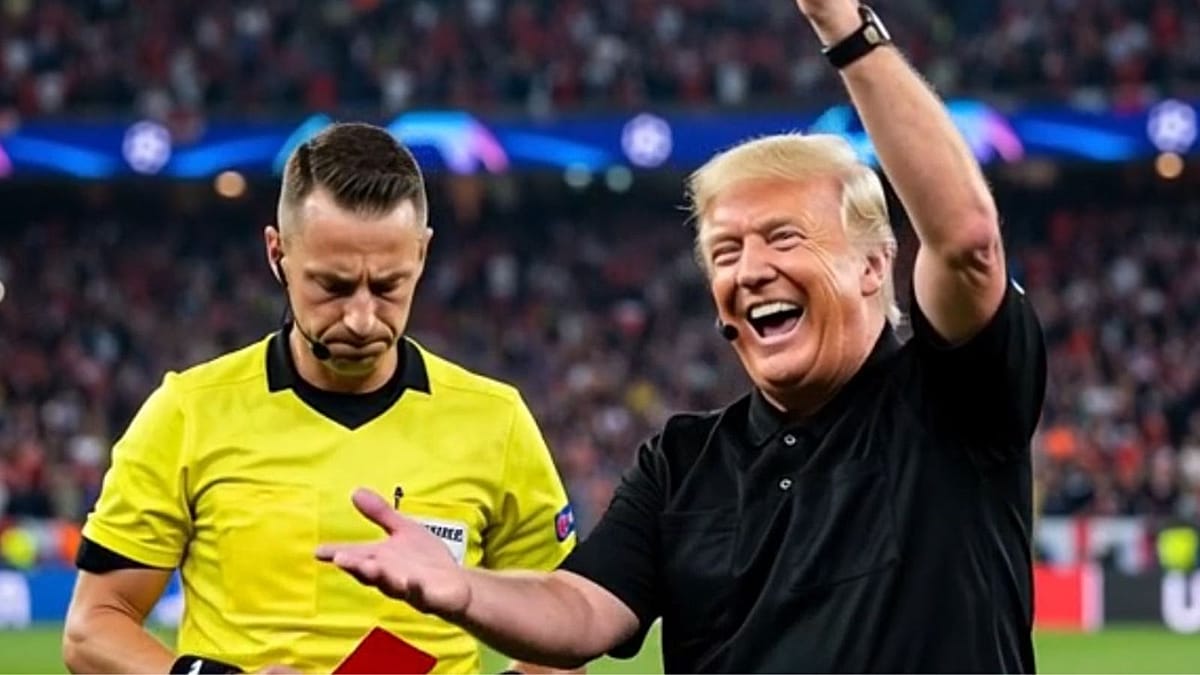
In a tournament built on rules, ritual and global spectacle, the latest World Cup controversy has ignited far beyond the football pitch. FIFA’s decision to reverse a suspension for a US star striker after reported intervention from Donald Trump has triggered political backlash, institutional outrage and a flood of viral memes that now define one of the most contentious moments of World Cup 2026.
Although the story comes from sport, its cultural aftershocks reach into the wider world of power, influence and public image—topics that resonate strongly across luxury architecture, luxury design and luxury interiors, where symbolism, authority and reputation are everything. In this case, the design of the spectacle may be immaculate, but the governance behind it is being publicly questioned.
Why This World Cup Controversy Has Exploded
The dispute centres on US striker Folarin Balogun, who had been due to miss the knockout match against Belgium after receiving a red card for a challenge in the previous round. According to reactions surrounding the decision, FIFA lifted the ban after a direct call from Donald Trump to FIFA president Gianni Infantino.
That sequence alone was enough to send shockwaves through the tournament. A red card suspension is one of football’s clearest disciplinary consequences, and any perceived political intervention instantly raises questions about integrity, fairness and institutional independence.
Trump publicly praised FIFA for reversing what he described as an injustice. But the response from critics was immediate and fierce, transforming the decision into a defining World Cup controversy of the 2026 tournament.
Belgium’s Furious Response to FIFA’s Decision
The strongest pushback came from Belgium, the team directly affected by the ruling. Political figures, football officials and the national team camp all voiced disbelief at what they saw as an unprecedented move.
Political backlash
Belgian politicians were among the first to condemn the reversal, arguing that bending rules under political pressure undermines the credibility of the World Cup itself. Their comments framed the issue not simply as a football dispute, but as a broader failure of institutional fairness.
Football authorities react
The Royal Belgian Football Association reportedly said it was astonished by the decision and suggested it could explore all available options. That language matters. It signals that the issue is not being treated as a routine refereeing debate, but as a serious challenge to tournament regulations.
The coach’s response
Belgium head coach Rudi Garcia struck a tone that mixed restraint with sarcasm, focusing publicly on the match while also implying the ruling was so extraordinary it bordered on absurd. His reaction helped crystallise the sense that this was no ordinary administrative adjustment.
Politics, Power and the Optics of Influence
What makes this World Cup controversy especially combustible is not only the decision itself, but the optics surrounding it. FIFA has long promoted political neutrality as a core principle. When a disciplinary outcome appears to change after a phone call from a powerful political figure, that neutrality looks fragile.
For global audiences, optics often matter as much as process. Even if FIFA believed it had procedural grounds to revisit the sanction, the perception that elite influence can reshape outcomes is deeply damaging. In high-visibility institutions, credibility depends on consistency. Once exceptions appear to be granted to the powerful, trust erodes quickly.
This is why the backlash has been so intense. The debate is no longer limited to whether the red card was harsh. It has expanded into concerns over:
- sporting integrity
- political interference in football
- FIFA governance and transparency
- unequal treatment between nations
- the long-term legitimacy of tournament results
How the Internet Turned the Scandal Into Viral Culture
No modern World Cup controversy remains confined to official statements. Within hours, social media transformed the incident into meme culture, with users across platforms mocking the reversal, attacking FIFA leadership and debating whether the tournament’s credibility had been permanently weakened.
AI-generated memes reportedly played a major role in amplifying the story. Supporters of Trump embraced the phrase “the Trump card,” framing the reversal as a show of strength. Critics, meanwhile, portrayed the episode as a symbol of corruption, privilege and institutional decay.
Several themes dominated online reactions:
- Fairness under fire: Many fans argued that if rules can be altered after political pressure, no disciplinary system can be trusted.
- Corruption allegations: FIFA and Gianni Infantino were accused by some users of compromising the organisation’s integrity.
- Tournament legitimacy: Others suggested that any deep US run in the competition would now be shadowed by suspicion.
- Boycott talk: Some online voices even called for the Belgium vs US match to be boycotted.
This blend of politics, sport and internet culture has made the story exceptionally shareable. It is part scandal, part spectacle and part digital performance.
What FIFA Risks Losing in This World Cup Controversy
Every global competition relies on a basic social contract: the rules apply equally to everyone. Once that premise is disputed, the tournament becomes vulnerable to reputational damage that can outlast any single match.
For FIFA, the risks are significant:
- Credibility loss: Fans may question whether future rulings are based on rules or relationships.
- Institutional distrust: National associations could challenge governance more aggressively.
- Brand damage: Sponsors and partners typically want prestige, not prolonged scandal.
- Historical stain: If this moment defines World Cup 2026, it may overshadow the football itself.
That is why this World Cup controversy matters beyond a single player or a single fixture. It touches the core architecture of trust that supports international sport.
The Bigger Cultural Meaning Behind the FIFA Backlash
At its heart, this story is about more than a suspended striker. It reflects a global unease with institutions that appear vulnerable to celebrity, wealth or political access. Whether in sports governance, design patronage, or cultural leadership, the same principle applies: prestige without fairness is unstable.
The World Cup remains one of the planet’s most powerful cultural stages. But when governance becomes the headline, the spectacle risks turning hollow. The same public that admires grandeur also demands legitimacy.
As the US prepares to face Belgium, one thing is clear: this World Cup controversy will follow every minute of the match. And if FIFA hopes to protect the tournament’s legacy, it will need more than silence or celebration—it will need transparency, consistency and a convincing defence of the rules. In the end, that is the real takeaway from this World Cup controversy: without trust, even the biggest stage in sport can start to look precarious.