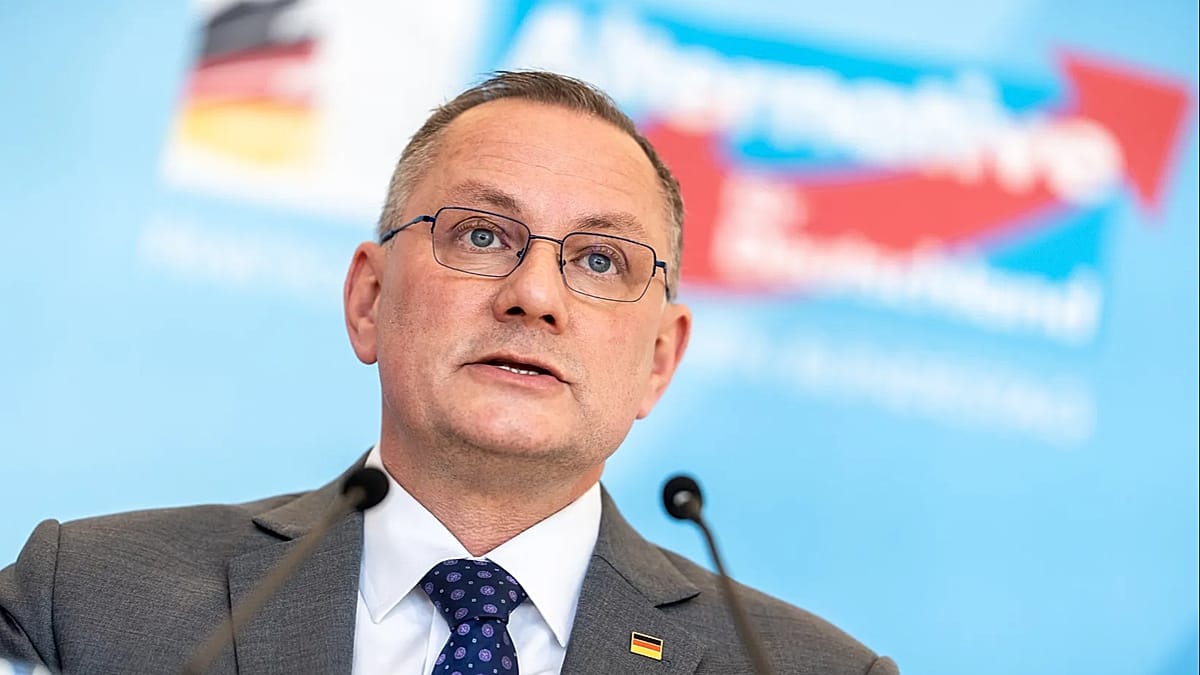
Luxury thrives on stability, reputation and shared cultural values. That is why the European Parliament ESN ban procedure is attracting attention far beyond Brussels political circles, including among observers of luxury brands, luxury decor and luxury design. The move targets the Europe of Sovereign Nations (ESN), a European political party linked to Alternative for Germany (AfD) and other far-right parties, and it could reshape how EU institutions police values, funding and public legitimacy.
At first glance, this may seem like a strictly political story. But for industries built on international prestige, creative openness and cross-border consumer confidence, developments inside the European Union often carry wider cultural and commercial significance.
What Is the European Parliament ESN Ban Procedure?
The European Parliament ESN ban procedure refers to a formal process expected to be initiated by the Parliament against ESN, a registered European political party founded in 2024 by several far-right national movements. If the process advances and ESN is ultimately found to have breached core EU values, it could lose its status as a European political party and forfeit access to EU funding.
Crucially, this would not automatically dissolve the ESN political group inside the European Parliament, nor would it directly sanction individual lawmakers. The legal focus is on the party’s registration and funding structure at EU level.
More than 180 lawmakers have reportedly backed the request to activate the mechanism. A vote in Strasbourg is expected to confirm whether the review will proceed, with major parliamentary groups said to support the move.
Why ESN Is Under Scrutiny
The case centers on whether ESN respects the European Union’s foundational principles, including:
- Human dignity
- Freedom
- Democracy
- Equality
- Rule of law
- Human rights, including minority rights
The Authority for European Political Parties and Foundations, or APPF, has compiled evidence reportedly including court decisions, public statements and social media activity linked to member parties. According to reporting, the dossier points to alleged antisemitic, anti-LGBT and anti-migrant rhetoric, as well as actions and messages that may conflict with EU standards.
Among the examples cited are references to “remigration,” rhetoric equating homosexuality with paedophilia, racist campaign imagery, attempts to block the broadcast of a film featuring homosexuality, and a German court ruling concerning AfD policy positions.
ESN, for its part, rejects the accusations and argues that it is being targeted for addressing controversial issues. Its defense emphasizes freedom of expression and political debate.
How the Procedure Could Unfold
The first parliamentary trigger
If Parliament votes in favor, the APPF will formally begin its assessment. That does not mean an instant ban. It opens a verification process.
Observation and response phase
Once triggered, the authority must communicate its concerns to ESN. The party would then have an opportunity to respond and potentially take corrective action.
Final decision and possible reversal
The APPF would later decide whether ESN should be deregistered. Even after that, the European Parliament and the Council would still retain the power to overturn the outcome.
So while the European Parliament ESN ban procedure is politically significant, it is also highly procedural, layered and subject to institutional checks.
Why This Matters to Luxury Brands and Design Culture
For readers focused on luxury brands, luxury decor and luxury design, the relevance lies in the broader ecosystem in which premium businesses operate. Europe’s luxury economy depends on a powerful mix of soft power, democratic credibility, social inclusion and cultural mobility. Political controversies that test EU values can ripple outward in several ways.
1. Brand reputation and market alignment
Luxury houses increasingly align themselves with values such as diversity, craftsmanship, heritage and internationalism. When major EU institutions intensify scrutiny of extremist rhetoric, brands may feel greater pressure to clarify where they stand on inclusion and civic responsibility.
2. Investor and stakeholder confidence
High-end sectors are sensitive to political uncertainty. Investors, partners and global consumers often view Europe not only as a marketplace but as a symbol of cultural refinement and institutional stability. Cases like the European Parliament ESN ban procedure can influence perceptions of governance and risk.
3. Creative industries and freedom of expression
Design, fashion, architecture and interiors flourish in open environments that encourage experimentation and pluralism. Debates over rights, identity and minority protections are not abstract for creative sectors; they shape talent mobility, campaigns, collaborations and public reception.
4. Public funding and legitimacy standards
The case also highlights a key European principle: access to public funds can be tied to respect for shared democratic values. That logic resonates well beyond politics, especially in cultural institutions, design foundations and public-private creative initiatives.
A Wider Test for European Institutions
The European Parliament ESN ban procedure is ultimately a test of whether the EU can enforce its own standards consistently. Supporters of the move argue that European institutions must defend their founding values when evidence suggests those values are being undermined. Critics warn that aggressive enforcement may blur the line between safeguarding democracy and policing political speech.
That tension is central to the story. Europe is trying to balance pluralism with red lines. The outcome will likely shape future debates over party funding, democratic accountability and the responsibilities that come with EU-level recognition.
What to Watch Next
In the coming days and weeks, several developments will be important:
- The Strasbourg vote confirming whether the procedure is triggered
- The APPF’s formal review and evidence assessment
- ESN’s response and any corrective measures
- A final decision on party registration and funding
- Any intervention by Parliament or the Council afterward
Each step will help determine whether this becomes a landmark enforcement case or a prolonged institutional battle.
Conclusion
The European Parliament ESN ban procedure is more than a headline about one far-right alliance. It is a revealing moment for Europe’s legal standards, political identity and cultural credibility. For luxury brands, luxury decor and luxury design sectors that depend on Europe’s image as a center of openness, sophistication and trust, that matters. The key takeaway is simple: when European values are put on trial, the effects can extend well beyond politics and into the reputation of the entire continent.