

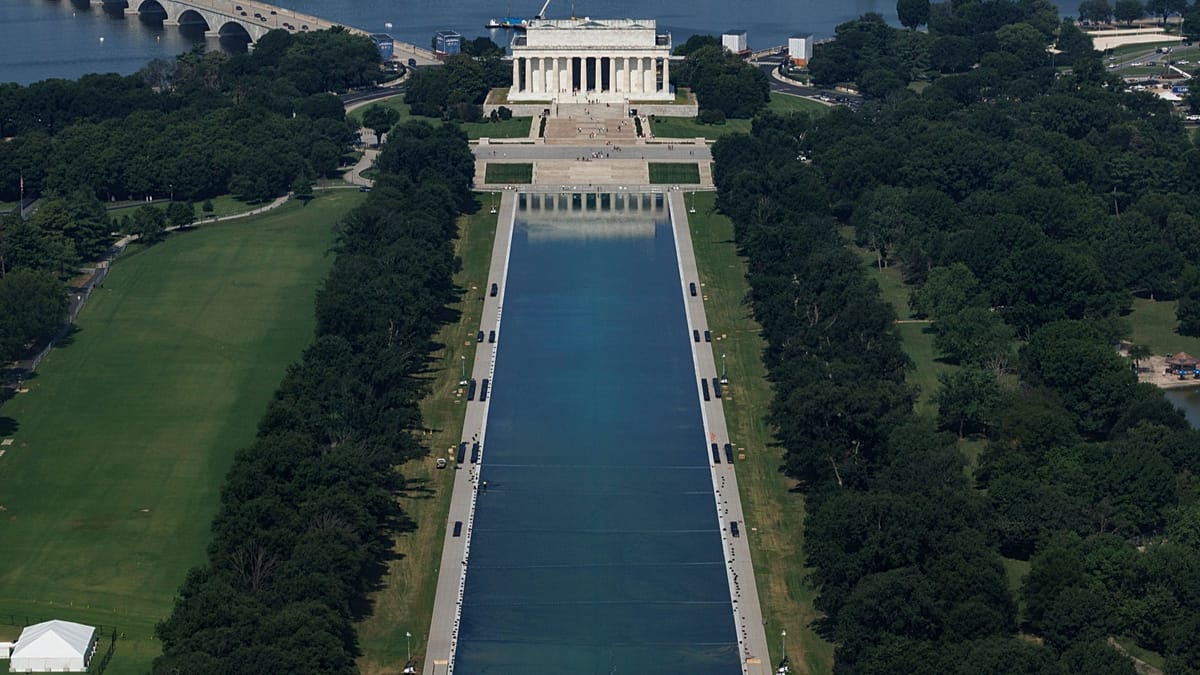
Few public spaces are as instantly recognisable as the Lincoln Memorial Reflecting Pool, where architecture, landscape and national symbolism meet in a single, carefully composed vista. Now, a criminal case tied to alleged damage at the site is drawing new attention to the Reflecting Pool vandalism case and to the high-stakes challenge of preserving iconic design landmarks that must endure both heavy tourism and political scrutiny.
According to reports from Washington, former Olympian David Hearn has been indicted on a felony property destruction charge connected to alleged damage at the Lincoln Memorial Reflecting Pool. Prosecutors say recently installed sealant was deliberately pulled up, causing more than $1,000 in damage. Hearn has previously said he only briefly touched an already peeling section before stopping when told to do so. The legal process will determine responsibility, but the broader conversation already extends far beyond the courtroom.
Why the Reflecting Pool vandalism case matters for landmark design
The Reflecting Pool vandalism case is not only a criminal justice story. It is also a reminder that major civic environments are finely balanced design systems. The Lincoln Memorial Reflecting Pool is more than a body of water; it is a monumental composition linking memorial architecture, axial planning, material performance and visitor experience.
When a site like this undergoes rehabilitation, every intervention must serve multiple goals at once:
- Protect the visual integrity of the landmark
- Improve durability under constant public use
- Support water quality and environmental performance
- Respect historical character and national symbolism
- Withstand weather, maintenance cycles and visitor contact
Even seemingly small damage to sealants, liners or surface systems can create outsized maintenance problems. In high-profile locations, a minor failure can quickly become a public controversy, especially when recent restoration work is involved.
Inside the design complexity of the Lincoln Memorial Reflecting Pool
From a luxury architecture and design perspective, the Reflecting Pool deserves attention as a masterclass in restrained monumentality. Its power comes from proportion, alignment and atmosphere rather than ornament. The long mirror of water is designed to amplify the surrounding architecture, reflecting both the Lincoln Memorial and the Washington Monument while creating a ceremonial sense of depth and calm.
A public landmark built on precision
Spaces like this succeed only when technical systems remain invisible. Visitors may see still water and historic stone, but beneath that elegance is a layered infrastructure involving waterproofing, edge detailing, circulation systems and ongoing conservation work.
That is why any damage allegation tied to recently installed materials matters. Surface sealants and liners are not cosmetic afterthoughts; they are essential to preserving the intended visual effect. If they fail, the design experience changes immediately.
When restoration becomes part of the story
The case also arrives after criticism surrounding the site’s recent rehabilitation. Reports noted that the $14 million project, launched ahead of the United States’ 250th anniversary, faced problems when the water reportedly turned green with algae soon after completion instead of maintaining the clear blue appearance officials had highlighted.
For preservation professionals, that detail is significant. Water features at civic landmarks are among the most challenging design elements to maintain. They require the right balance of:
- Material compatibility
- Water treatment and circulation
- Sunlight and temperature management
- Durable installation practices
- Realistic maintenance planning
When one variable slips, public confidence in the entire project can erode quickly.
What luxury design can learn from the Reflecting Pool vandalism case
Although the Lincoln Memorial Reflecting Pool is a public monument, the lessons from the Reflecting Pool vandalism case apply equally to luxury interiors, hospitality projects and bespoke residential landscapes. In premium design, clients often focus on the visible finish, but long-term value depends on the hidden systems below the surface.
Material performance is part of beauty
Whether designing a spa pool in a private residence, a water wall in a five-star hotel or a reflecting basin in a cultural institution, materials must be selected for both aesthetic and physical performance. Sealants, membranes and composite components should withstand touch, moisture, temperature shifts and maintenance demands without compromising the visual concept.
High-traffic design needs defensive thinking
Luxury architecture often celebrates openness and interaction, yet highly accessible spaces require subtle forms of protection. Designers and operators increasingly need to plan for:
- Physical contact from visitors
- Curiosity-driven interference with materials
- Maintenance missteps
- Environmental stressors
- Security and monitoring without visual intrusion
The best projects anticipate misuse without looking over-engineered. That is especially true for minimalist designs, where the smallest flaw becomes instantly visible.
Preservation, politics and public perception
One reason the Reflecting Pool vandalism case has gained traction is that the site is loaded with political meaning. High-profile public works are rarely judged only on technical merit. They are also evaluated through symbolism, cost, timing and public expectations.
In this case, prosecutors allege a deliberate act, while the defendant’s prior account suggests a more limited interaction with a section that had already peeled. At the same time, the wider controversy around the restoration itself has placed the Reflecting Pool at the centre of debate about stewardship and project execution.
For architects, designers and conservation teams, this is a familiar challenge: once a landmark enters the public imagination, every maintenance issue can become a narrative about competence, heritage or national identity.
The bigger takeaway for civic and luxury spaces
The Reflecting Pool vandalism case underscores a simple truth: exceptional design is fragile without exceptional stewardship. Landmark water features and high-end architectural environments depend on invisible craftsmanship, disciplined maintenance and a deep respect for materials.
As the legal case unfolds, the most lasting lesson may not be about one alleged act of damage alone. It may be about how vulnerable even the most iconic spaces are when design ambition, public access and preservation pressures collide. For anyone working in luxury architecture, luxury design or luxury interiors, the Reflecting Pool vandalism case is a powerful reminder that true prestige lies not just in creating beautiful spaces, but in protecting them for the long term.