

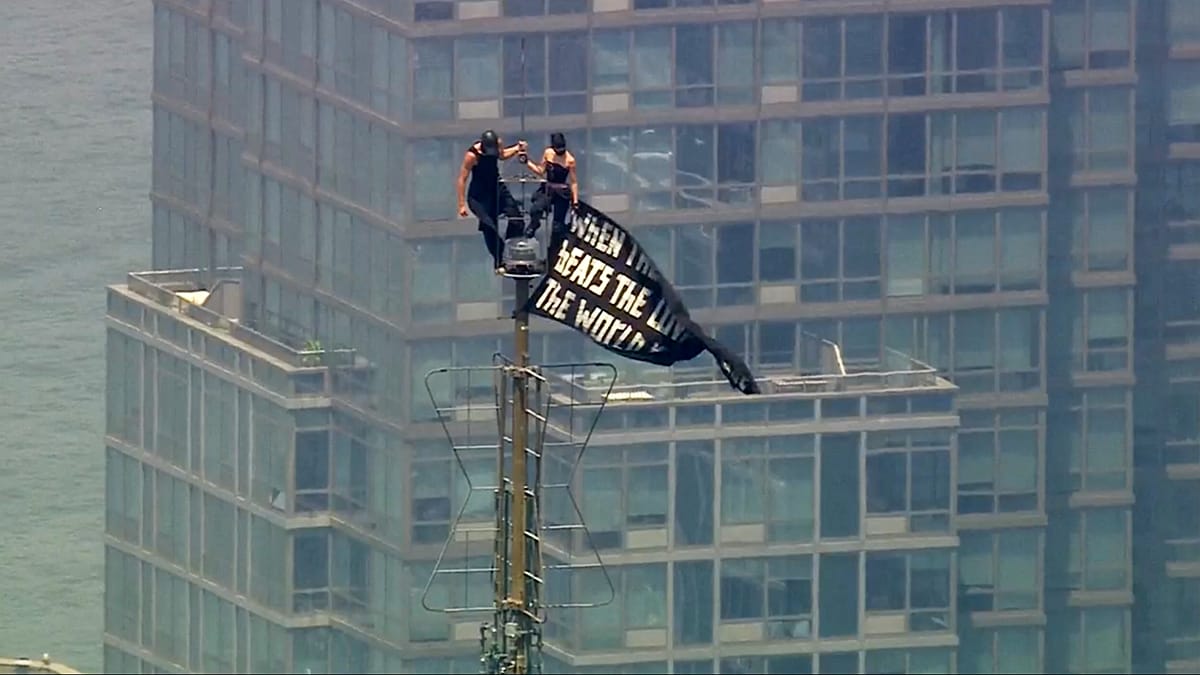
Few buildings capture the imagination like the Empire State Building, a symbol of ambition, romance and New York glamour. But this week, an Empire State Building proposal stunt turned that fantasy into a legal and safety controversy, after a daredevil couple allegedly climbed the skyscraper’s restricted antenna to unfurl a banner and stage an engagement high above Manhattan.
The incident has drawn global attention not only because of the couple’s social media fame, but also because it involved one of the world’s most recognizable landmarks. For readers interested in luxury architecture, luxury design and landmark interiors, the story is a reminder that iconic buildings are carefully choreographed environments where access, preservation and security are as important as spectacle.
What happened in the Empire State Building proposal stunt?
According to prosecutors in New York, the couple climbed beyond the public areas of the Empire State Building and reached the broadcast antenna, rising roughly 443 metres above Midtown Manhattan. Once at the top, they reportedly displayed a black banner with a message about love and peace before descending to a lower ledge, where a marriage proposal took place.
Authorities later charged them with felony reckless endangerment, burglary and other offenses. Court documents also state that police found a broken lock on a restricted-access security door on the 104th floor, an area that leads to the antenna. The public can visit up to the 102nd-floor observation deck, but higher levels require authorized access.
Police reportedly waited for the antenna to be powered down before emergency officers began climbing to intercept the pair, underscoring how technically complex and dangerous the response was.
Why this story matters in luxury architecture
The Empire State Building proposal stunt is more than a viral headline. It highlights the tension between public fascination and the protected reality of a world-famous skyscraper. In the luxury architecture world, elite buildings are designed to inspire awe while also operating with strict logistical and safety systems behind the scenes.
The Empire State Building is not simply a tourist attraction. It is a functioning commercial, broadcast and hospitality environment with highly controlled circulation zones. Its layered access system is central to how landmark towers protect:
- Guests and observation deck visitors
- Tenants and staff
- Historic building fabric
- Mechanical and broadcast infrastructure
- Emergency responders
When unauthorized access occurs, the issue is not just trespassing. It can affect life safety, operations and the integrity of a globally important architectural icon.
The design reality behind iconic skyscraper access
Public glamour versus restricted infrastructure
Luxury towers often present a seamless experience to visitors: elegant lobbies, curated lighting, polished finishes and dramatic skyline views. Yet beyond the public-facing interiors lies a different world of service corridors, mechanical floors, secured doors and technical platforms.
That hidden framework is what makes a landmark building function. In the case of the Empire State Building, the upper tower and antenna are not experiential spaces designed for public wandering. They are highly specialized areas tied to telecommunications and building operations.
Why vertical circulation is tightly controlled
In celebrated high-rise design, vertical circulation is part of the architecture itself. Elevators, stairwells, observation levels and restricted transitions are carefully planned to separate public movement from operational zones. This protects both the visitor experience and the building’s infrastructure.
The Empire State Building proposal stunt shows what can happen when those boundaries are breached. Even a visually romantic act can create risk for multiple parties, including emergency teams forced to respond at extreme height.
How social media is reshaping the perception of landmark buildings
The couple involved were already known for “rooftopping,” a subculture built around climbing tall structures for dramatic images and videos. In the social media era, architecture increasingly becomes content as much as place. The more iconic the setting, the greater the viral potential.
That creates a difficult challenge for famous properties, especially those associated with luxury design and aspirational travel. Buildings such as the Empire State Building are marketed through emotion, exclusivity and unforgettable views. But those same qualities can attract people who want to push beyond approved experiences.
For landmark operators, this means security now extends beyond physical barriers. It also involves:
- Monitoring social media-driven behavior trends
- Reassessing access control systems
- Training staff for nontraditional risk scenarios
- Balancing openness with preservation
What the Empire State Building represents in design culture
Part of why the Empire State Building proposal stunt resonated so widely is that the building occupies a rare place in cultural memory. It is both an engineering landmark and a luxury-era symbol of New York aspiration. Its Art Deco identity, instantly recognizable silhouette and cinematic legacy give it an emotional charge that few towers can match.
For architecture and interiors audiences, the building remains compelling because it combines:
- Historic prestige
- Monumental vertical form
- Refined public spaces
- A premium visitor experience
- A powerful sense of romance and drama
That symbolic power helps explain why it continues to attract attention far beyond traditional architecture circles. It is not merely a building people visit; it is a building people project meaning onto.
The legal fallout and the larger lesson
The Empire State Building proposal stunt may be framed online as daring, cinematic or even poetic, but the legal system is treating it as a serious breach. Prosecutors say the climb endangered not only the couple but also responding officers who had to ascend hundreds of metres to intercept them.
That distinction matters. In elite architecture, beauty does not cancel risk. Great design often depends on invisible discipline: locked thresholds, controlled access, operational protocols and respect for spaces that were never intended for public performance.
For owners and managers of luxury properties, the story is likely to renew conversations around surveillance, restricted zones and crisis response planning. For the public, it is a sharp reminder that the romance of a skyline can coexist with real structural and legal boundaries.
Conclusion: a spectacle that reveals the hidden side of landmark design
The Empire State Building proposal stunt captured the internet because it fused romance, danger and one of the most legendary towers in the world. Yet beneath the viral imagery lies a more important story about how iconic skyscrapers actually work: through security, planning and carefully protected layers of access.
In the end, the takeaway is simple. Landmark buildings may symbolize freedom, ambition and wonder, but preserving their legacy requires rules that are as deliberate as their design. The Empire State Building proposal stunt is a dramatic example of what happens when spectacle crosses into restricted space.