





Rare Declaration of Independence Discovery in the UK Reveals a Transatlantic Design Legacy
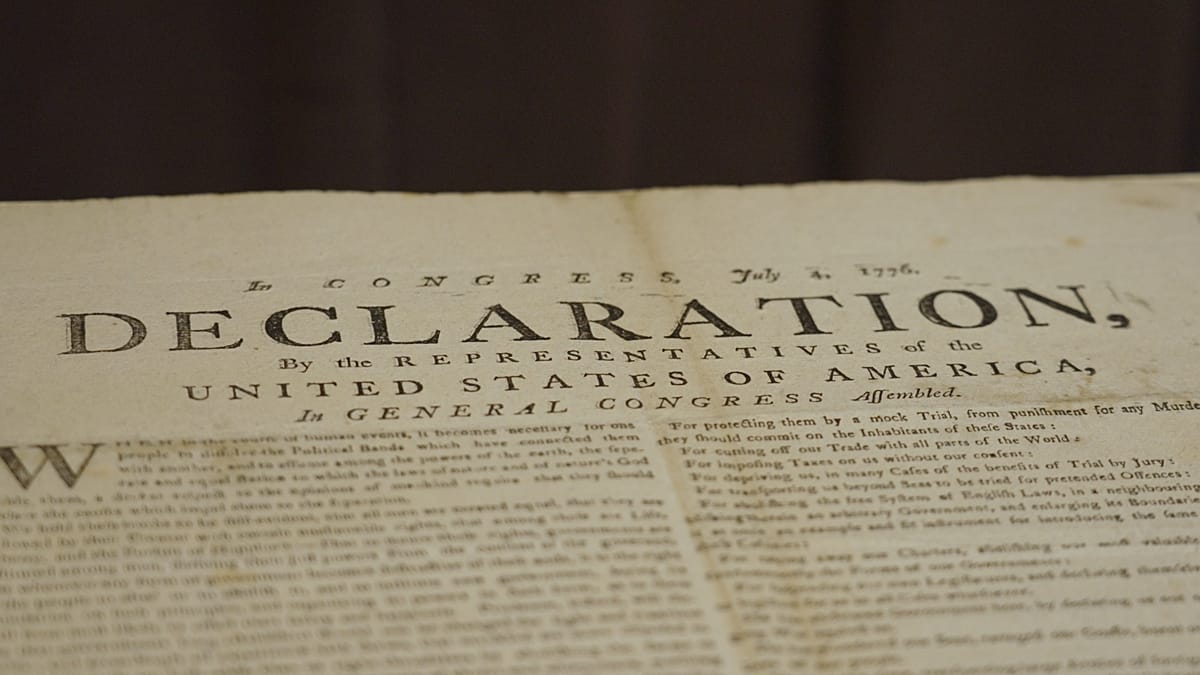
A vanishingly rare copy of the Declaration of Independence discovery in the UK is doing more than exciting historians. It is also reopening a fascinating conversation about how power, identity, craftsmanship, and preservation shaped the visual culture of the late 18th century—an era that still influences luxury architecture, luxury design, and refined interiors today.
Found at the UK National Archives during a cataloguing project, the printed Declaration was reportedly seized by the Royal Navy after the capture of the privateer ship Dalton in December 1776. Ahead of the 250th anniversary of American independence, this remarkable find offers a rare material link between Britain and the emerging United States, underscoring how documents, objects, and design histories often travel together across borders.
Why the Declaration of Independence discovery in the UK matters
The significance of this Declaration of Independence discovery in the UK lies not only in its scarcity, but in its documented journey. According to the National Archives, the copy was captured at sea after HMS Raisonable pursued the Dalton off the coast of Portugal. That wartime paper trail gives the artifact unusual provenance—something collectors, curators, and preservation experts value immensely.
Only one original engrossed and signed Declaration exists in Washington, D.C., while printer John Dunlap is believed to have produced roughly 200 early printed copies. Just 26 surviving Dunlap broadsides are known today, making any newly identified example an extraordinary archival event.
For audiences interested in luxury spaces and collectible heritage, provenance is everything. Whether discussing a neoclassical townhouse, an 18th-century commode, or a rare founding-era document, value is deepened by:
- Authenticity
- Documented ownership history
- Craft and material quality
- Cultural significance
- Rarity and survival rate
This is exactly why the Declaration of Independence discovery in the UK resonates far beyond political history.
From archive to aesthetic: what this find says about luxury design
Historic documents are often discussed as texts, but they are also design objects. Paper size, typography, layout, margins, ink, printing technique, and preservation all contribute to their visual authority. In that sense, the newly uncovered Declaration belongs to the same cultural world that produced grand Georgian interiors, stately libraries, and transatlantic neoclassical architecture.
The late 18th century was an age of formal balance and symbolic design. Across elite homes and civic buildings, ideals such as order, reason, symmetry, and permanence were expressed through architecture and decorative arts. Founding-era printed materials mirrored those values.
Shared visual values of the period
Luxury designers and architectural historians may recognize several parallels between archival print culture and high-end interiors of the era:
- Symmetry: a hallmark of both broadside composition and Georgian room planning
- Restraint: elegance achieved through proportion rather than excess
- Material gravitas: fine paper, wood paneling, stone, brass, and linen all conveyed status
- Authority through form: visual clarity reinforced institutional power
- Longevity: objects were created to endure physically and culturally
Seen this way, the Declaration of Independence discovery in the UK also serves as a reminder that design history is inseparable from political and social history.
How archival discoveries influence luxury interiors today
In the world of luxury interiors, historical rediscoveries often spark fresh appreciation for heritage-led design. While few homes will display a revolutionary broadside, many sophisticated spaces borrow from the same sensibility: curated meaning, museum-quality presentation, and a respect for the narrative power of objects.
Designers increasingly use archival influence in subtle, elevated ways, including:
- Framed historical prints and facsimiles in studies, libraries, and hallways
- Custom millwork inspired by Georgian and Federal-era proportions
- Patinated materials such as aged brass, parchment tones, and dark timber
- Scholarly styling with rare books, maps, and collectible paper objects
- Gallery lighting that gives documents and artworks a museum-like presence
These choices transform interiors into intellectual as well as visual statements. The best luxury homes are not merely expensive—they are layered, referential, and culturally literate.
The transatlantic story behind the discovery
One reason the Declaration of Independence discovery in the UK feels so compelling is that it highlights a shared Anglo-American heritage. The American Revolution is often framed as a story of separation, yet many of its visual languages remained deeply connected to Britain and Europe.
Architectural styles such as Georgian and neoclassical design crossed the Atlantic with ease. Craftsmen, books, printed matter, and decorative ideas moved between cities, ports, and private collections. Even amid conflict, culture remained interconnected.
This newly identified copy of the Declaration—captured by the Royal Navy and preserved in British state records—makes that point vividly. It is a historical object born in revolutionary America, intercepted in wartime, and rediscovered centuries later in a British archive. Few objects better illustrate how design, politics, and material culture circulate across nations.
Why collectors and design enthusiasts should pay attention
For collectors, archivists, and luxury property owners, the lessons are clear:
- Extraordinary objects can remain hidden in plain sight
- Cataloguing and preservation are forms of cultural stewardship
- Historical context amplifies aesthetic value
- Objects with documented narratives carry enduring prestige
That same logic applies to homes and interiors. A restored manor with intact joinery, original stone floors, or archived plans is always more compelling than a space without story.
A rare document with lasting design relevance
As America approaches its 250th anniversary, the Declaration of Independence discovery in the UK stands as an extraordinary archival moment. Yet its relevance extends beyond historians and institutions. It also speaks to anyone drawn to heritage, craftsmanship, and the enduring allure of objects that define an era.
In luxury architecture and interiors, the finest spaces are often those that preserve memory as beautifully as they present form. This discovery reminds us that paper can be as powerful as stone, typography as lasting as ornament, and provenance as valuable as any material finish. The clear takeaway: the Declaration of Independence discovery in the UK is not just a historical headline—it is a masterclass in why rarity, narrative, and preservation will always matter in design.