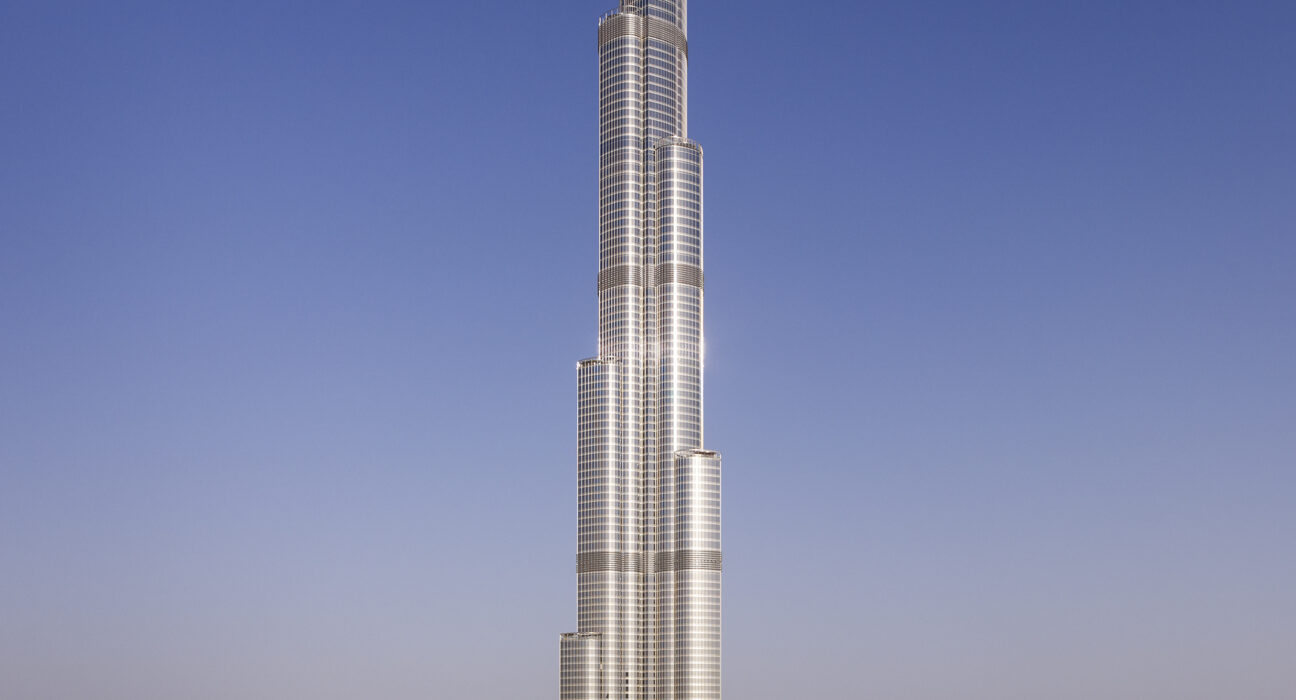
Architecture news rarely arrives with the global impact of the Burj Khalifa. Rising 828 meters above Dubai, this landmark by Skidmore, Owings & Merrill (SOM) is more than the world’s tallest building—it is a defining statement in luxury architecture, engineering ambition, and high-performance design.
Completed in 2010, the 162-story tower reshaped not only Dubai’s skyline but also the conversation around luxury design and vertical living. From its culturally rooted form to its advanced response to the harsh desert climate, the Burj Khalifa remains one of the most influential skyscrapers ever built.
Architecture News Spotlight: Why the Burj Khalifa Still Matters
In the world of architecture news, many projects generate buzz for a season. The Burj Khalifa has endured because it represents a rare convergence of scale, beauty, technical precision, and lifestyle aspiration. Designed by SOM, the tower encompasses approximately 454,249 square meters, making it not just tall, but intensely complex in program, structure, and experience.
Its significance goes beyond record-breaking height. The building became a global benchmark for:
- Luxury architecture in mixed-use high-rise design
- Climate-responsive engineering in extreme environments
- Integrated structural, mechanical, and interior planning
- Urban branding through iconic architecture
For readers tracking architecture news across luxury home, decor, and design categories, the Burj Khalifa continues to serve as a reference point for what happens when architecture becomes both a symbol and a system.
A Luxury Architecture Landmark Rooted in Regional Identity
One of the most compelling aspects of the Burj Khalifa is that its futuristic silhouette is not arbitrary. SOM drew on local cultural influences to shape the tower’s form, proving that luxury architecture can be globally admired while still remaining regionally grounded.
The building’s geometry evokes patterns associated with Islamic design traditions and desert flora, translating these references into a contemporary supertall profile. This layered approach is part of what gives the tower its timeless quality. Rather than relying solely on spectacle, the design balances symbolism with performance.
That balance matters in today’s architecture news landscape, where truly lasting projects are increasingly judged by how well they connect aesthetics, context, and function.
Design qualities that define its visual impact
- A sculpted, tapering form that enhances elegance and stability
- A shimmering façade that responds dramatically to changing desert light
- A tiered massing strategy that reduces visual bulk despite immense scale
- A skyline presence that feels ceremonial, not simply monumental
These qualities place the Burj Khalifa firmly within the upper tier of luxury design, where refinement matters as much as engineering prowess.
Engineering Innovation Behind the World’s Tallest Building
No discussion of the Burj Khalifa in architecture news is complete without acknowledging its extraordinary technical execution. SOM handled architecture, structural engineering, MEP, and interior design, enabling an unusually unified design process. That integration is one reason the project performs so successfully at such an extreme height.
Building in Dubai’s desert conditions required a high-performance approach. The tower had to address heat, wind, vertical transportation, water systems, and occupant comfort on a massive scale. Every major system was part of a coordinated strategy rather than a series of isolated solutions.
Key project facts
- Architect: Skidmore, Owings & Merrill (SOM)
- Location: Dubai, United Arab Emirates
- Height: 828 meters
- Stories: 162
- Area: 454,249 m²
- Completion: 2010
This level of technical coordination is why the tower remains essential reading in architecture news for architects, developers, and design enthusiasts alike.
Luxury Design and Interior Experience at a Global Scale
The Burj Khalifa is often celebrated for its exterior, but its interior environment is just as important to its legacy. Luxury design in a project of this magnitude is not only about premium materials or dramatic views. It is about orchestration—how arrival, circulation, lighting, finishes, and amenities work together to create a seamless experience.
Because SOM also led the interior design, the project maintains a coherent language from macro scale to detail. This is especially relevant for audiences interested in luxury home decor and luxury interiors, where consistency and atmosphere are key markers of sophistication.
The tower’s interiors support a high-end lifestyle through:
- Refined material palettes suited to an international audience
- Vertical mobility systems that support comfort in a supertall building
- Lighting design that enhances both drama and spatial clarity
- Amenity planning that aligns prestige with usability
Even at the scale of a global icon, the principles overlap with luxury home design: proportion, finish, ambiance, and the emotional effect of space.
What the Burj Khalifa Teaches Luxury Home and Decor Enthusiasts
Not every reader of architecture news is designing a skyscraper, but the Burj Khalifa offers lessons that translate beautifully into luxury homes and interiors. Its success comes from disciplined design thinking—an approach that can inform everything from a penthouse renovation to a statement living room.
Takeaways for luxury residential design
- Cohesion matters: Architecture, structure, and interiors are strongest when conceived together.
- Context adds value: Referencing local culture creates spaces that feel authentic, not generic.
- Performance is luxurious: Comfort, climate control, and efficiency are as important as appearance.
- Light shapes experience: Strategic use of daylight and reflection can elevate any interior.
- Elegance often comes from restraint: Powerful forms do not need excessive ornament to feel opulent.
For those following architecture news through the lens of luxury decor and home inspiration, the tower proves that bold design is most convincing when it is deeply resolved.
The Lasting Legacy of a Dubai Superstructure
More than a decade after completion, the Burj Khalifa remains a cornerstone of global architecture news. It stands as a symbol of Dubai’s ambition, but also as a masterclass in how luxury architecture can merge cultural intelligence, technical innovation, and unforgettable form.
Its enduring relevance lies in the fact that it is not merely tall—it is deliberate. Every aspect, from its regional references to its environmental performance and integrated interiors, contributes to a project that still feels definitive in the luxury design conversation.
For anyone interested in architecture news, the Burj Khalifa is more than a headline. It is a lasting reminder that the world’s most extraordinary buildings succeed when vision and execution rise together.