
Architecture news rarely captures the tension between politics, public taste, and design legacy as vividly as the planned demolition of Tbilisi’s Rike Park Music Theatre & Exhibition Hall. Designed by Studio Fuksas, the striking riverfront complex has stood unopened for years, and its approved dismantling now raises larger questions for luxury architecture, adaptive reuse, and the future of landmark cultural buildings.
On July 13, 2026, Tbilisi City Hall issued a permit to dismantle the tube-shaped complex in Rike Park, a 10,000-square-meter project completed in 2012 but never formally activated. Known informally as the “Rike Tubes,” the building was conceived as a music theater and exhibition venue, yet it became entangled in political change, stalled redevelopment efforts, and public controversy. For followers of high-end design and urban transformation, this is more than a local story—it is a case study in how ambitious architecture can become vulnerable when vision, governance, and long-term use fall out of alignment.
Architecture News: The Story Behind the Rike Park Complex
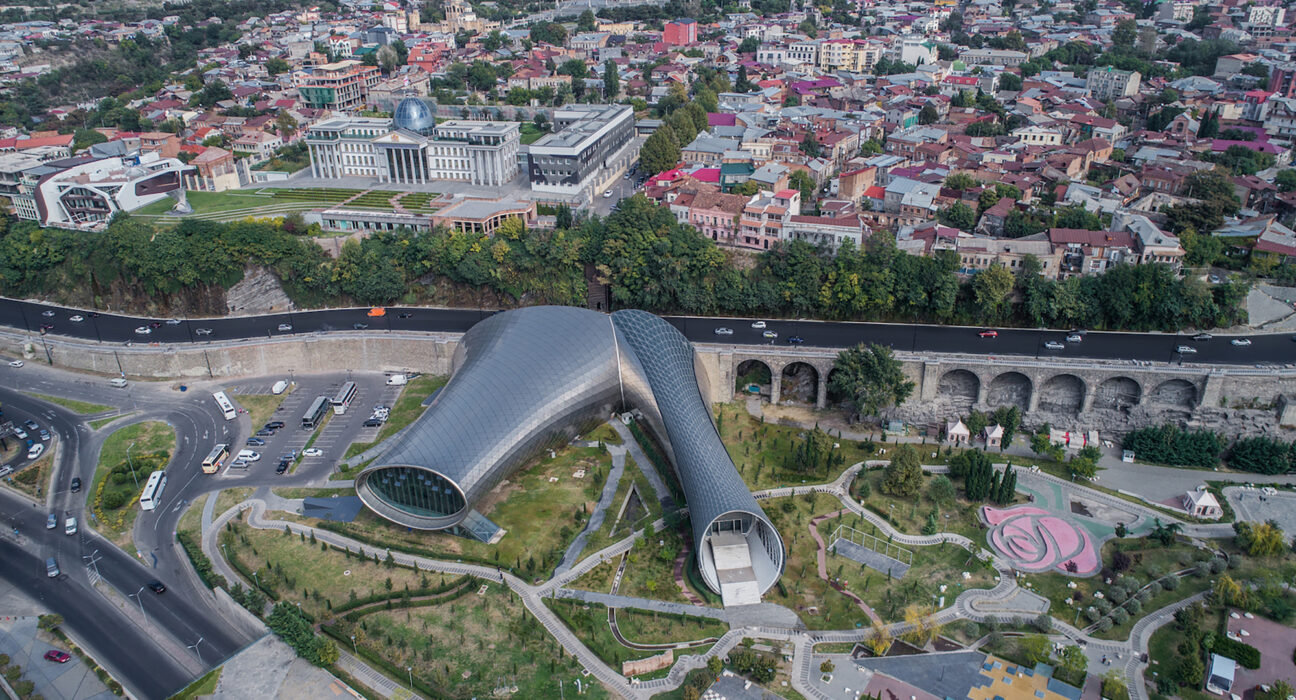
The Studio Fuksas project occupies a prominent site on the banks of the Kura River in Tbilisi. Its sculptural form, metallic skin, and soft, tubular geometry set it apart from the city’s historic fabric, making it one of the most recognizable pieces of contemporary architecture in Georgia.
The complex was designed as two connected volumes:
- Musical Theater Hall: a 566-seat performance venue with foyer spaces, technical areas, and back-of-house support
- Exhibition Hall: an event and display space accessed by a rising ramp from street level
One of its most compelling design gestures is the elevated theater foyer, which frames panoramic views of the river and Old Tbilisi. The building was imagined almost as a periscope to the city, connecting visitors to the skyline while projecting a bold, future-facing civic identity.
That ambition placed the project squarely within a broader urban renewal strategy of the early 2010s, when international architecture firms were invited to help present Tbilisi as a modernizing, globally engaged capital. In luxury design terms, the Rike Park complex embodied statement architecture: expressive, iconic, and engineered to define a place through form alone.
Why the Building Became So Controversial
This piece of architecture news cannot be separated from its political background. The complex was commissioned during the government of the United National Movement and construction continued through a period of intense transformation in the city. After the change of government in 2012, the project lost momentum and was never put into official use.
Over time, the building became associated less with cultural potential and more with political symbolism. Critics saw it as a costly emblem of a previous administration. Supporters, meanwhile, viewed it as a daring work of contemporary architecture that deserved a second life rather than demolition.
Several factors deepened the dispute:
- Its long period of vacancy after completion
- Repeated ownership changes and failed redevelopment proposals
- Public criticism from officials over its appearance
- Growing safety concerns linked to an abandoned and inaccessible site
In 2025, the accidental death of a teenager on the grounds intensified scrutiny. That tragedy shifted the conversation from aesthetics and politics to immediate public safety, helping accelerate the demolition decision.
Luxury Architecture and the Cost of Abandoning Vision
For readers interested in luxury architecture, the Rike Park story is especially significant because it reveals a hard truth: iconic design alone is never enough. Even a landmark by a globally recognized firm can fail if it lacks a durable operating model, institutional support, and a clear public purpose.
In the world of luxury home, luxury decor, and luxury design, value is often tied to craftsmanship, rarity, and visual distinction. Civic architecture operates differently. A building must also sustain maintenance, programming, access, and community relevance. Without that ecosystem, even a dramatic structure can become a burden instead of an asset.
The Rike Park complex highlights three lessons:
- Design needs long-term stewardship. Signature architecture requires more than capital investment at construction.
- Adaptive reuse should be explored early. Unused cultural venues can sometimes be reinvented as mixed-use event, hospitality, or public experience spaces.
- Public perception matters. Buildings that divide opinion need proactive cultural engagement if they are to survive shifts in political leadership.
Could Adaptive Reuse Have Saved the Rike Tubes?
One reason this architecture news story resonates internationally is that the architects themselves have argued for reimagining the building instead of tearing it down. Studio Fuksas has suggested that a new program could reconnect the complex to public life while preserving the value already embedded in the structure.
That argument aligns with a growing global preference for reuse over demolition, especially as sustainability becomes central to architecture news and urban planning. Demolition erases embodied carbon, wastes material investment, and removes the opportunity to reinterpret a building for a new generation.
Possible reuse models could have included:
- A contemporary arts and performance center
- A luxury event venue with panoramic hospitality spaces
- A design museum or exhibition platform
- A hybrid cultural and commercial destination tied to riverfront tourism
Whether any of these options were financially or politically realistic is another matter. Still, the debate underscores a wider industry question: when does a difficult building deserve reinvention rather than removal?
A Global Pattern in Architecture News
The planned demolition in Tbilisi also fits a broader international pattern. Around the world, notable buildings are increasingly threatened by deferred maintenance, redevelopment pressure, safety concerns, or changing political priorities. While many preservation battles focus on modernist landmarks, contemporary architecture is not immune.
What makes the Rike Park case unusual is its age. Unlike aging civic monuments that have served the public for decades, this complex barely had the chance to function at all. Its likely demolition by December 25, under the city-approved timeline, would mean the loss of a major contemporary cultural building before it ever fulfilled its intended role.
For the luxury design community, that is a sobering reminder that architectural prestige does not guarantee permanence. Landmark status must be continuously reinforced through use, relevance, and care.
What Tbilisi’s Decision Means Going Forward
This chapter in architecture news is ultimately about more than one controversial building. It reflects the fragile relationship between bold design and civic continuity. Tbilisi’s decision signals that architectural ambition without consensus, activation, and stewardship can leave even the most visually memorable projects exposed.
The clearest takeaway is simple: great architecture must be lived in, programmed, maintained, and defended if it is to endure. As this architecture news story unfolds, the fate of the Rike Park complex will remain a powerful lesson for cities, developers, and designers investing in the next generation of cultural landmarks.