
Architecture news rarely arrives at the scale of a World Cup, but the 2026 tournament is as much a design story as it is a sporting event. Spanning 16 stadiums across the United States, Mexico, and Canada, the 2026 FIFA World Cup offers a rare look at how major venues, urban infrastructure, and architectural upgrades intersect on a continental stage.
Set to run from June 11 to July 19, 2026, this edition of the tournament marks several historic firsts: it will be the first men’s World Cup co-hosted by three countries and the first to feature 48 teams. For architecture and luxury design audiences, the event also highlights a different kind of milestone: the power of existing world-class stadium architecture, strategic renovation, and premium fan experience rather than a rush to build from scratch.
Architecture News: Why the 2026 World Cup Matters for Design
The most compelling architectural dimension of the 2026 FIFA World Cup is that North America already possesses the core infrastructure needed to host it. Unlike recent tournaments that depended heavily on newly constructed venues, the United States, Mexico, and Canada are relying on established stadiums, many of which are iconic pieces of contemporary architecture.
That decision reflects broader trends in architecture news and urban development:
- Adaptive modernization over new construction, reducing pressure on timelines and resources
- Infrastructure efficiency, with transport, hospitality, and public space already integrated into host cities
- Luxury-driven upgrades, including premium seating, hospitality suites, technology, and fan amenities
- Global visibility for regional design, placing North American venue architecture under an international spotlight
For readers interested in luxury architecture and luxury home design, stadiums may seem outside the residential sphere. Yet these venues often shape broader design culture, from material innovation and lighting systems to hospitality interiors, VIP lounges, and the blending of technology with experiential design.
The Full Host Stadium Network Across North America
The 2026 World Cup will be played across 16 venues: 11 in the United States, 3 in Mexico, and 2 in Canada. Together, they form a cross-border portfolio of sports architecture that ranges from historic landmarks to technologically advanced contemporary arenas.
United States Venues
The United States will host the majority of matches, with 11 stadiums spread across major metropolitan markets. These venues are known for scale, engineering sophistication, and premium spectator environments. Among the most discussed are:
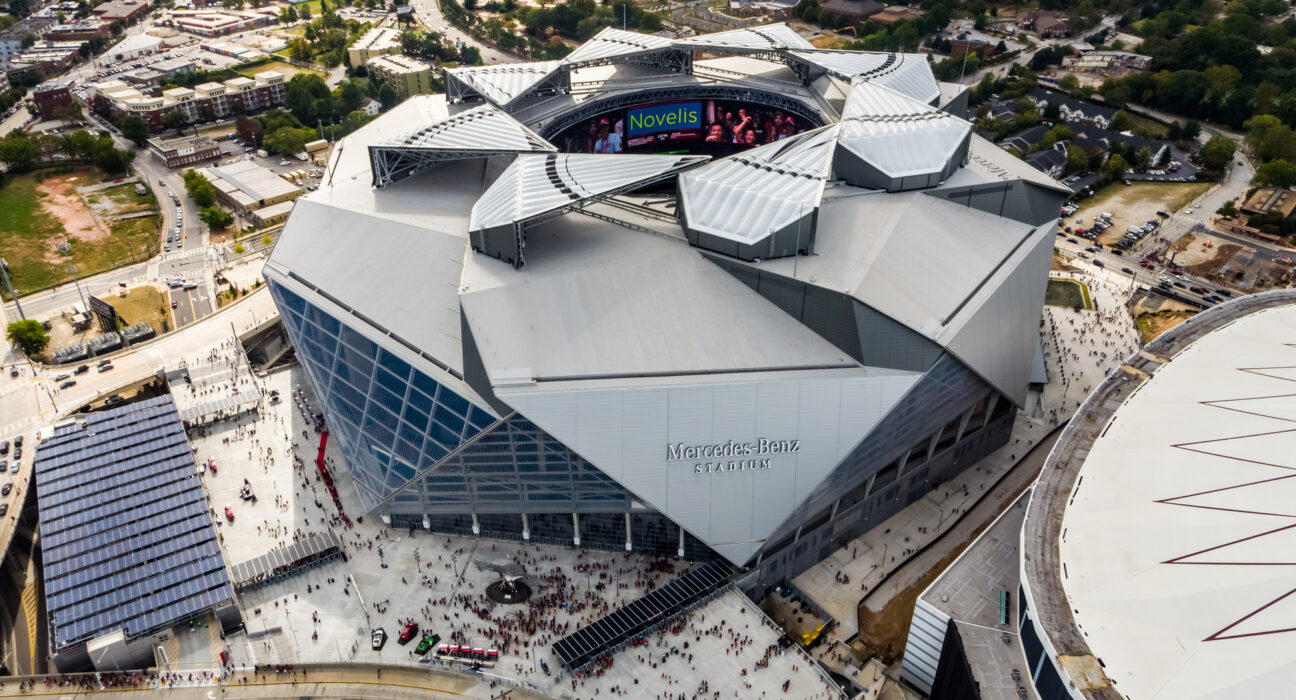
- Mercedes-Benz Stadium, Atlanta — celebrated for its dramatic retractable roof and striking oculus-inspired form
- AT&T Stadium, Arlington — a benchmark in large-span engineering and luxury sports hospitality
- MetLife Stadium, East Rutherford — a massive multi-event venue positioned within the New York metropolitan region
- SoFi Stadium, Inglewood — one of the most technologically ambitious stadium environments in North America
Additional U.S. host cities further reinforce the architectural diversity of the tournament, connecting stadium design with broader urban identity.
Mexico Venues
Mexico’s three host venues bring deep football heritage and cultural significance. Most prominent is Estadio Azteca in Mexico City, one of the most iconic football stadiums in the world. Its upgrades are especially notable in current architecture news because they represent the challenge of modernizing a historic venue while preserving its symbolic value.
Mexico’s role in the tournament also underscores how legacy architecture can remain globally relevant through carefully planned renovation rather than replacement.
Canada Venues
Canada’s two host stadiums extend the tournament’s architectural reach northward, with BMO Field in Toronto drawing particular attention for improvements tied to World Cup readiness. These upgrades demonstrate how mid-sized venues can be elevated to international standards through targeted interventions in seating, circulation, operations, and fan experience.
Upgrades, Not Overbuilding: A Smarter Stadium Strategy
One of the most important themes in architecture news surrounding the 2026 World Cup is restraint. Rather than commissioning a wave of entirely new stadiums, the host countries are investing in upgrades to venues that already perform at a high level.
This approach offers several advantages:
- Lower construction risk compared with delivering multiple brand-new mega-projects on a fixed deadline
- Better long-term utility because the venues already serve active sports and entertainment markets
- Improved sustainability outcomes through renovation, retrofitting, and infrastructure optimization
- Enhanced luxury experiences via targeted improvements to suites, concourses, technology, and amenities
For design professionals, this strategy is particularly significant. It suggests that the future of major-event architecture may depend less on spectacle-driven newness and more on resilient, upgradeable buildings that can evolve over time.
How FIFA Selects Host Nations and Stadiums
Beyond the stadiums themselves, the World Cup hosting process is a major story in architecture news because it reveals how global sporting events evaluate built environments. FIFA’s selection process unfolds over several years and includes technical review, documentation, and a final vote.
In simple terms, host bids must demonstrate capacity in areas such as:
- Stadium quality and readiness
- Transportation systems
- Hospitality and accommodation
- Operational infrastructure
- Risk management and delivery planning
Only bids meeting these standards move forward for review by FIFA leadership and, eventually, a public vote by member associations. The process begins many years before kickoff, giving host nations time to align facilities with FIFA requirements.
This long runway is why the 2026 tournament can emphasize upgrades so effectively. Planning began well in advance, allowing cities and venue operators to refine architecture, logistics, and guest experience without the urgency of emergency construction.
What Luxury Design Audiences Should Watch
For readers focused on luxury architecture, luxury decor, and luxury home inspiration, the World Cup’s host stadiums offer more than engineering headlines. They also showcase how high-end environments are curated at scale. Expect attention on:
- Premium hospitality interiors with elevated materials, lighting, and bespoke furnishings
- Wayfinding and spatial flow designed for seamless guest movement
- Integrated technology that supports comfort, security, and immersive entertainment
- Renovation detailing that balances heritage character with contemporary expectations
These are the same principles increasingly shaping luxury homes and upscale residential developments: personalization, flexibility, experiential quality, and timeless materials enhanced by smart systems.
Conclusion: A Continental Showcase for Stadium Design
The 2026 FIFA World Cup is more than a sports calendar highlight—it is one of the year’s most fascinating architecture news stories. With 16 stadiums across three countries, the tournament showcases how existing landmark venues can be updated, refined, and reintroduced to the world through strategic design investment.
The clearest takeaway is this: the future of global event architecture may not lie in building more, but in building smarter. For anyone following luxury architecture, renovation strategy, and high-performance design, the 2026 World Cup stadiums are a masterclass in scale, legacy, and reinvention.