Architecture news rarely feels as consequential as this. The Getty Foundation’s latest round of preservation funding is doing more than restoring buildings—it is helping protect a vital chapter of American design history that has too often been overlooked.
For 2025, the Getty Foundation has added five significant U.S. landmarks to its Conserving Black Modernism initiative, a grant program launched in 2022 to preserve the work and legacy of African American architects within the Modernist movement. Developed in partnership with the National Trust for Historic Preservation’s African American Cultural Heritage Action Fund, the program supports conservation planning, professional training, historical research, and public engagement around culturally important sites.
For readers following architecture news across luxury architecture, luxury design, and heritage-led placemaking, this announcement is especially meaningful. It shows how preservation can elevate not only iconic buildings, but also the stories, communities, and design intelligence embedded within them.
Architecture News Spotlight: Why Conserving Black Modernism Matters
The Getty Foundation’s initiative addresses a longstanding imbalance in architectural recognition. Black architects made profound contributions to American modernism, yet many of their buildings have lacked the visibility, documentation, and protection routinely afforded to other landmarks.
That gap is exactly what this program aims to close. Since its launch, Conserving Black Modernism has supported more than 20 sites nationwide, ranging from churches and academic buildings to community institutions. The 2025 cycle extends that reach even further, including the program’s first funded projects in Chicago and the Pacific Northwest.
This is notable architecture news because preservation today is no longer just about stabilizing aging materials. It also involves:
- Expanding public awareness of underrecognized architects
- Creating preservation and reuse plans for long-term stewardship
- Supporting accessibility and community engagement
- Training professionals to care for historically significant modern buildings
- Strengthening cultural continuity through design history
In an era when adaptive reuse and heritage conservation are shaping the future of luxury home decor, luxury home design, and urban identity alike, these projects offer important lessons in thoughtful stewardship.
The Five New Getty-Funded Landmarks for 2025
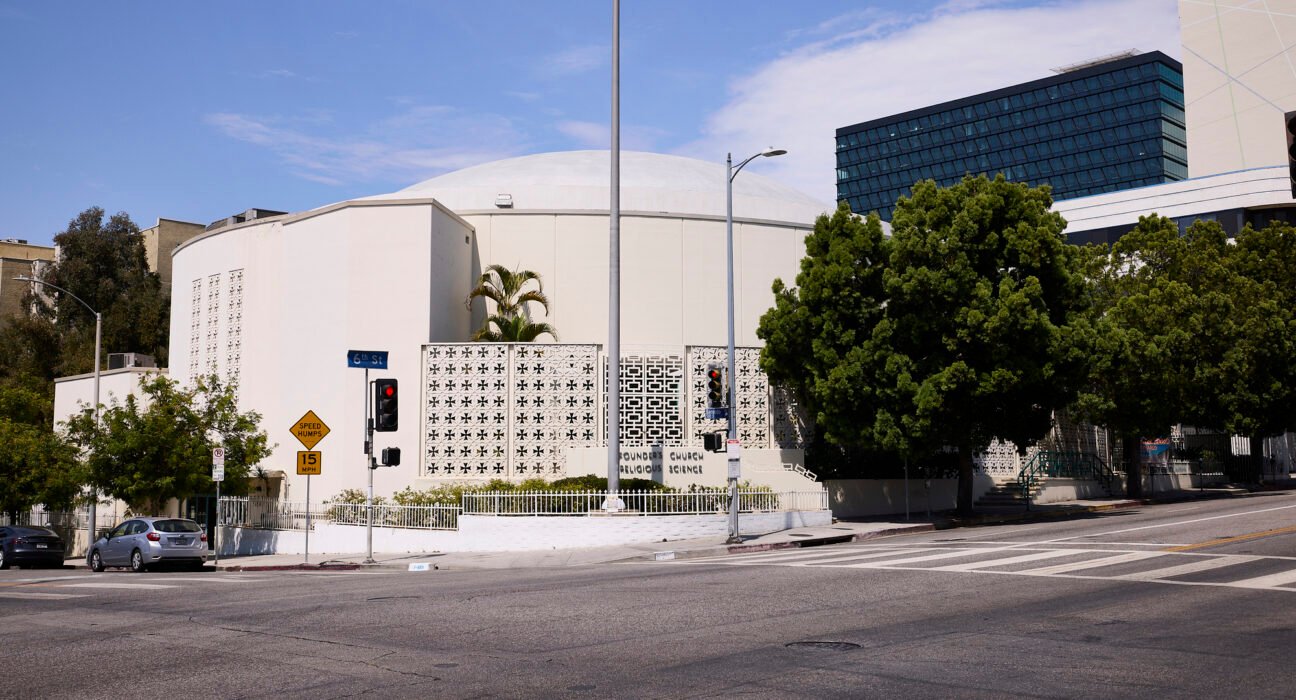
Founders Church of Religious Science, Los Angeles
Designed by the legendary Paul R. Williams and completed in 1960, Founders Church of Religious Science stands as a striking example of late modern religious architecture. Williams, the first Black member of the American Institute of Architects, created a nearly 20,000-square-foot concrete structure capped by a dramatic steel-framed dome and articulated with a decorative concrete screen.
The building also reflected technological ambition, incorporating a closed-circuit television system to broaden access to services. Getty funding will now support an accessibility plan for the landmark and its community spaces. In today’s architecture news landscape, this is a reminder that preservation and inclusion must move together.
ITC Administration Building, Atlanta
Completed in 1961, the Administration Building at the Interdenominational Theological Center was designed by Edward C. Miller, Georgia’s first licensed Black architect. Its modern brick expression gives the campus a strong civic presence, and as the oldest building on site, it anchors the institution’s historical identity.
The grant will fund a historic structures report, building assessments, a reuse study, and expanded research into Miller’s career. For anyone tracking architecture news, this kind of work is foundational: before a building can be preserved well, it must be properly documented and understood.
First Church of Deliverance, Chicago
One of the most compelling additions this year is Chicago’s First Church of Deliverance, redesigned in 1939 by Walter T. Bailey, the first licensed Black architect in Illinois. Bailey transformed a former hat factory into a vibrant Art Moderne church featuring glazed terra cotta, glass block, and interiors engineered to support gospel music and radio broadcasting.
This grant will fund the site’s first comprehensive preservation plan, covering the main sanctuary as well as associated community buildings. It is standout architecture news not only for preservationists, but also for those interested in adaptive reuse, acoustical design, and sacred space.
McKenzie Hall, Eugene
At the University of Oregon, McKenzie Hall highlights the work of DeNorval Unthank Jr., the first Black graduate of the school’s architecture program. Completed in 1968, the exposed brick and concrete building is recognized as a significant example of Brutalist architecture in the Pacific Northwest.
Getty funding will support a preservation and interpretation plan, while also encouraging educational programming around Unthank’s legacy. In the wider stream of architecture news, McKenzie Hall reflects growing interest in conserving Brutalist architecture before shifting tastes and deferred maintenance put such buildings at greater risk.
2500 New Hackensack Building, Vassar College
Designed by Jeh Vincent Johnson and completed in 1963, this Vassar College building demonstrates a refined minimalist language of brick, steel, and glass. Johnson was a co-founder of the National Organization of Minority Architects and an influential voice in design, housing, and education.
The new grant will support a facilities management and preservation plan while deepening public engagement with Johnson’s architectural legacy. As a piece of architecture news, it underscores the importance of campus buildings as cultural assets, not just functional infrastructure.
What This Means for Luxury Architecture and Design Culture
At first glance, preservation grants may seem distant from the worlds of luxury architecture or luxury decor. In reality, they are deeply connected. The highest level of design culture is not only about new materials, bespoke interiors, or statement residences—it is also about understanding lineage, craft, and architectural authorship.
These five landmarks reveal how modernist design can express:
- Material restraint with lasting elegance
- Strong spatial identity rooted in community purpose
- Adaptive reuse as a creative design strategy
- Cultural storytelling through form, structure, and detail
For professionals in luxury home, luxury home decor, and luxury design, this preservation movement offers inspiration far beyond institutional architecture. It shows how meaningful spaces are built when design excellence and cultural significance intersect.
A Bigger Shift in Architecture News
The Getty Foundation’s 2025 announcement points to a broader shift in architecture news: heritage is being redefined to include stories and designers long left at the margins. That change matters not only for historical accuracy, but also for the future of the profession.
When preservation initiatives invest in Black modernist landmarks, they do more than protect buildings. They create new opportunities for education, scholarship, and public appreciation. They also give emerging architects a richer, more inclusive history from which to draw inspiration.
As conversations around equity, adaptive reuse, and cultural memory continue to shape the built environment, this program stands out as a model for how philanthropy can drive lasting impact.
Conclusion
The most important takeaway from this architecture news story is clear: preserving Black modernist landmarks is essential to preserving American architectural history itself. By funding these five sites in Los Angeles, Atlanta, Chicago, Eugene, and Poughkeepsie, the Getty Foundation is helping safeguard a design legacy of remarkable creativity, innovation, and civic value.
In a design world often focused on what comes next, this architecture news moment is a powerful reminder that the future of architecture also depends on who—and what—we choose to remember.