
Few buildings in modern history feel as spiritually charged as Notre-Dame du Haut in Ronchamp. More than a celebrated chapel, it remains a touchstone in Architecture news, proving that bold form, emotion, and place can coexist in one unforgettable work of design.
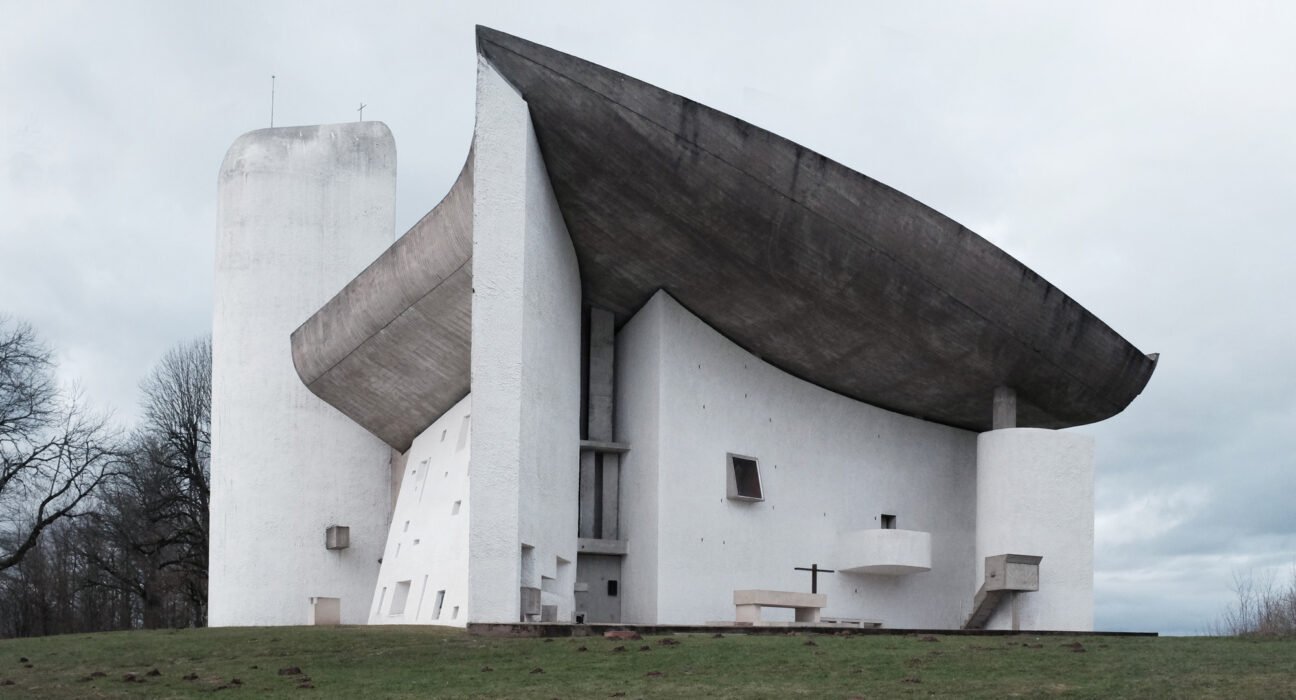
Completed in 1954 in eastern France and designed by Le Corbusier, Ronchamp stands apart from the rigid geometry often associated with early modernism. Its thick white walls, sculptural roof, and poetic use of light transformed the language of sacred architecture. For readers interested in luxury architecture, luxury design, and elevated interiors, Ronchamp offers a masterclass in how restraint, craftsmanship, and atmosphere create lasting value far beyond decoration alone.
Architecture news spotlight: Ronchamp and the reinvention of modern sacred design
In Architecture news, Ronchamp is frequently revisited because it represents a pivotal shift in twentieth-century architecture. Rather than relying on strict functional grids or industrial repetition, Le Corbusier embraced curvature, asymmetry, and symbolism. The result was a building that feels ancient and futuristic at the same time.
Set on a hill in the French commune of Ronchamp, the chapel replaced an earlier pilgrimage site destroyed during World War II. That historical context matters. The building was not conceived merely as a replacement structure, but as a spiritual and cultural response to loss, memory, and renewal. This emotional depth is one reason the project continues to feature in Architecture news and design criticism today.
A radical departure from conventional modernism
Le Corbusier was famous for rational planning and machine-age ideals, yet Ronchamp challenged those expectations. Instead of flat planes and pilotis, visitors encounter:
- Massive curving walls that appear both protective and expressive
- A dramatic roof that seems to float above the structure
- Irregular window openings that animate the interior with shifting light
- Thick surfaces that give the chapel a deeply tactile presence
This departure is central to its legacy in Architecture news. Ronchamp demonstrated that modern architecture could be emotional, sculptural, and deeply human without abandoning innovation.
What makes Ronchamp a luxury architecture icon?
Luxury architecture is not always about size, rarity of materials, or visual excess. In many cases, true luxury lies in experience, intention, and atmosphere. Ronchamp exemplifies this idea. Its power comes from proportion, silence, craftsmanship, and the careful choreography of light.
For designers and homeowners drawn to luxury home and luxury decor, the chapel offers a reminder that the most memorable spaces often rely on a few timeless principles:
- Material honesty: The chapel’s textured surfaces feel authentic and grounded.
- Spatial drama: Every curve and opening contributes to emotional effect.
- Light as design: Natural illumination becomes an active architectural element.
- Sense of place: The hilltop setting strengthens the building’s identity.
These ideas continue to influence contemporary residential design, boutique hospitality, and high-end interiors. That is why Ronchamp remains relevant not only in Architecture news, but also across luxury design conversations.
The sculptural roof and poetic silhouette
The roof is perhaps the chapel’s most recognizable feature. Heavy yet seemingly weightless, it hovers above the walls with a narrow gap that lets light slip inside. This visual tension creates a sense of mystery and movement. From a distance, the silhouette is instantly iconic; up close, it reveals remarkable nuance.
In luxury home decor and architectural styling, this teaches an important lesson: a single bold gesture can define an entire project when supported by strong composition. Statement design works best when it is purposeful rather than decorative for decoration’s sake.
Interior atmosphere: lessons for luxury design and luxury home decor
Inside Ronchamp, the experience changes dramatically throughout the day. Small, deeply set windows puncture the thick walls at varying sizes and angles, casting colored and diffused light into the chapel. The effect is intimate, contemplative, and immersive.
This interior approach resonates strongly with current Architecture news coverage focused on wellness, sensory design, and emotionally intelligent spaces. Ronchamp anticipated these priorities decades ago.
Key takeaways for luxury interiors include:
- Use light to shape mood, not just visibility
- Create depth through wall thickness, shadow, and reveal details
- Allow irregularity when it serves a larger artistic vision
- Design for feeling as much as function
For luxury home projects, these principles can translate into chapel-like reading rooms, serene spa bathrooms, gallery-inspired corridors, or sculptural stair halls. Ronchamp proves that minimal ornament does not mean minimal impact.
Why Ronchamp still leads Architecture news conversations
The reason Ronchamp still appears in Architecture news is simple: it continues to influence how architects think about form, spirituality, and site. Its legacy extends well beyond religious buildings. Museums, private residences, memorials, and boutique retreats all borrow from its lessons in massing, light, and emotion.
It also holds an essential place in discussions about Le Corbusier’s broader body of work. Ronchamp reveals a more expressive side of the architect, one willing to bend modernist rules in pursuit of transcendence. For students, critics, and design enthusiasts, it remains one of the clearest examples of architecture as art.
Enduring influence on contemporary practice
Today, architects across the luxury sector revisit Ronchamp when exploring:
- Sculptural concrete and plaster forms
- Monumental yet serene residential spaces
- Context-sensitive design on dramatic sites
- Sacred minimalism in private homes and retreats
Its relevance is not nostalgic. Instead, it speaks directly to present-day interests in authenticity, emotional resonance, and timeless design value. That sustained relevance keeps Ronchamp firmly in the world of Architecture news.
Conclusion: what Ronchamp teaches us now
Ronchamp is far more than a historic chapel in France. It is a lasting argument for architecture that moves people, honors place, and dares to break convention. In an era crowded with visual noise, its quiet intensity feels more valuable than ever.
For anyone following Architecture news, or seeking inspiration in luxury architecture, luxury design, and luxury home decor, Ronchamp remains essential viewing. Its lesson is clear: the most powerful spaces are not always the most elaborate, but the ones that transform light, form, and emotion into something unforgettable.