Architecture news rarely carries as much cultural weight as a preservation story that changes how we value design history. The Getty Foundation’s latest expansion of its Conserving Black Modernism program does exactly that, adding five remarkable sites that spotlight the legacy of Black architects and the lasting significance of Modernist design across the United States.
For readers interested in luxury architecture, luxury design, and the future of heritage-rich places, this announcement is more than a grant update. It is a reminder that architectural excellence is not only about new builds and polished interiors, but also about protecting visionary spaces that shaped communities, institutions, and urban identity.
Architecture News: Why Getty’s Conserving Black Modernism Program Matters
The Conserving Black Modernism initiative was launched by the Getty Foundation in 2022 as part of the National Trust’s African American Cultural Heritage Action Fund. Its mission is clear: preserve and elevate the contributions of African American architects within the Modernist movement.
What makes this program especially important in today’s architecture news cycle is its dual focus on conservation and storytelling. Funding does not simply support repairs. It also backs archival research, historical documentation, management plans, and community engagement that help ensure these sites are understood as living cultural assets.
The initiative has already grown beyond its original scope, now supporting 26 historic modern places and entering a fourth funding cycle. With the addition of five new grantee sites, the program continues to reshape the conversation around design preservation in America.
Five Newly Added Sites Bringing Black Modernism Into Focus
This latest round of architecture news spans five states and a diverse range of building types, from transit infrastructure and academic spaces to sacred architecture and commercial development. Together, they show the breadth of Black Modernist innovation.
1. Southwest Corridor / Stull & Lee, Inc. — Boston, Massachusetts
The Southwest Corridor Project stands out as a major example of architecture shaped by civic activism and inclusive planning. Built on land originally cleared for the canceled I-95 Southwest Expressway, the project transformed a threatened urban zone into a 52-acre park and transit route linking historically Black neighborhoods.
Black-led firm Stull & Lee, Inc. guided the planning of the MBTA Orange Line extension and Ruggles Station, embedding community participation into the design process. The station’s barrel-vaulted form, sunburst windows, and integrated artwork make it a compelling work of public modernism.
Getty funding will support:
- Historical documentation of key Stull & Lee projects
- Archival research and photography
- 3D modeling and design analysis
- Oral and professional engagement with architect M. David Lee
2. St. Mark AME Zion Church / Wendell Campbell — East Chicago, Indiana
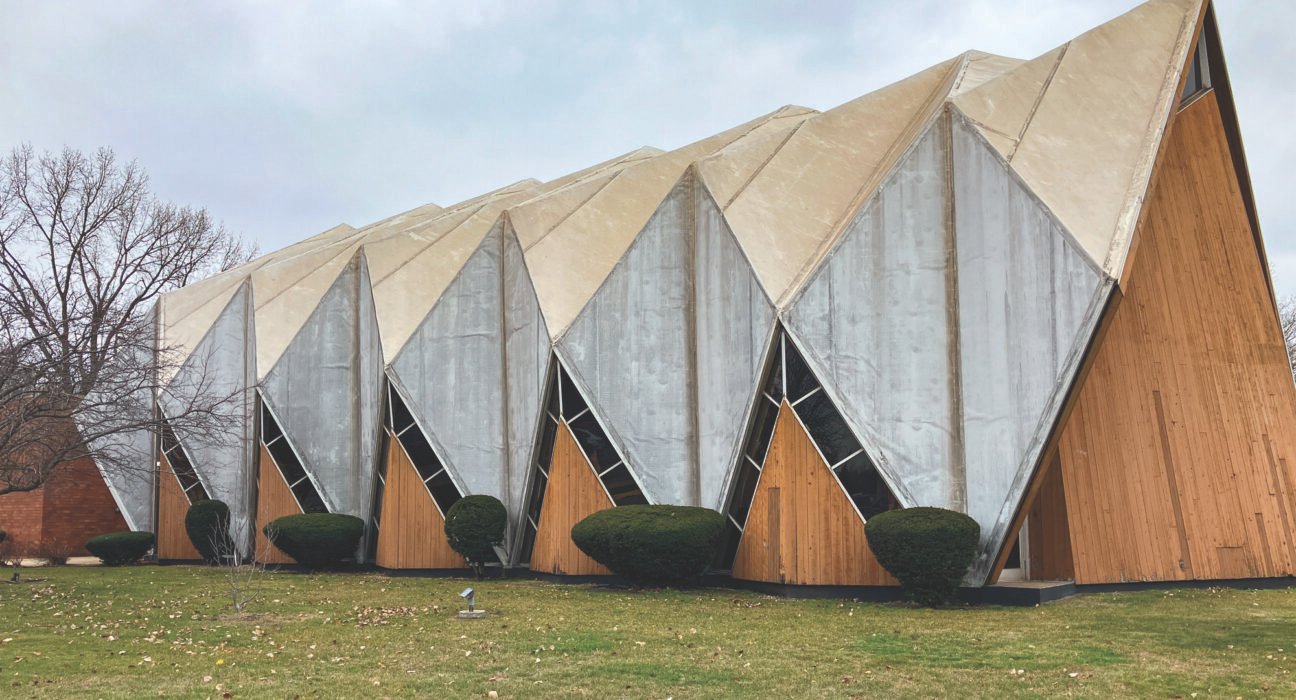
One of the most visually striking stories in this architecture news update is St. Mark AME Zion Church, completed in 1973. Designed by Wendell Campbell, the church features a multi-planed triangular roof and ribbon windows that evoke two hands interlocked in prayer.
Campbell was a major force in American architecture as co-founder and first president of the National Organization of Minority Architects. The church represents a bold fusion of Modernist and neo-expressionist religious architecture, proving that sacred spaces can be both symbolic and formally daring.
The new grant will fund a conservation management plan to assess conditions, identify preservation priorities, and guide future rehabilitation.
3. Park-Johnson Hall at Fisk University / McKissack & McKissack — Nashville, Tennessee
At Fisk University, Park-Johnson Hall reflects the refined clarity of mid-century academic architecture. Built in 1954, the three-story brick-and-glass structure houses classrooms, offices, and a lecture hall within the Fisk University Historic District.
Its architects, McKissack & McKissack, hold a singular place in American design history as the oldest Black-owned architecture firm in the United States. The Getty grant will support a comprehensive conservation and management plan while placing the building within the wider architectural legacy of the firm on Fisk’s campus.
For followers of luxury architecture and heritage campus design, Park-Johnson Hall demonstrates how elegance often lies in proportion, material restraint, and institutional permanence.
4. Martin Luther King Jr. Humanities Center / John Saunders Chase Jr. — Houston, Texas
Texas Southern University’s Martin Luther King Jr. Humanities Center adds another essential chapter to this round of architecture news. Designed by John Saunders Chase Jr. and completed in 1969, the building is known for its cylindrical massing and extended wings, a form often interpreted as symbolic of Dr. King’s enduring influence.
Chase was the first licensed Black architect in Texas and a foundational figure in the profession. His career included leadership roles in the National Organization of Minority Architects and service on the U.S. Commission of Fine Arts.
Getty funding here will support a historic structures report, documenting the building’s significance, existing condition, and preservation needs.
5. Central City Plaza / Alonzo Robinson Jr. — Milwaukee, Wisconsin
Central City Plaza may be the most commercially significant site among the new grantees. Completed in 1973 and designed by Alonzo Robinson Jr., Wisconsin’s first licensed Black architect, it was the first Black-owned, designed, and operated shopping center in Milwaukee.
The complex is also a rare local example of New Formalist architecture, defined by arched porticos, fluted concrete panels, and arcaded storefronts. Today, part of the site supports humanitarian services, including emergency housing and meals.
The Getty grant will fund studies and a historic structures report to guide rehabilitation and adaptive reuse, helping the site continue serving the community while preserving its design character.
What This Architecture News Means for Luxury Design and Preservation
While these projects are rooted in preservation, their relevance extends directly into luxury design and luxury home culture. High-end design increasingly values authenticity, craftsmanship, narrative, and legacy. These landmark buildings embody all four.
Key themes that connect this preservation story to contemporary design include:
- Architectural storytelling: Great design carries meaning beyond appearance.
- Material integrity: Preservation reinforces the value of original construction and thoughtful detailing.
- Adaptive reuse: Reimagining historic sites is becoming central to sustainable luxury architecture.
- Cultural prestige: Design leadership today includes knowing whose histories have been overlooked.
In that sense, this architecture news is also a design leadership story. It shows how the future of beautiful spaces depends on a fuller understanding of the past.
A Broader Shift in Architectural Recognition
The Getty Foundation’s announcement arrives amid a wider global push to protect 20th-century architecture, from UNESCO’s recent recognition of modernist sites to debates over threatened civic landmarks in the United States and restoration efforts in Latin America and Europe.
But this program stands apart because it addresses a historic imbalance in recognition. By funding both preservation planning and public interpretation, Conserving Black Modernism helps ensure that major Black architects are not footnotes in design history, but central figures within it.
That shift matters for professionals, collectors, homeowners, and design enthusiasts alike. It expands the canon and deepens the aesthetic vocabulary of American modernism.
Conclusion
This latest architecture news from the Getty Foundation is a powerful reminder that preservation is one of the most meaningful forms of design investment. By supporting five newly added Black Modernist landmarks in Boston, East Chicago, Nashville, Houston, and Milwaukee, the program is safeguarding not only buildings, but also stories of innovation, community, and cultural excellence.
The clearest takeaway is simple: when preservation is done well, it enriches the future of architecture. And in today’s architecture news, few initiatives are doing more to redefine whose modern masterpieces deserve lasting visibility.